Lighting & heat
When to replace a reptile UVB bulb
Every 12 months for a T5 fluorescent. Still producing visible light is not the same as still producing UVB, and that gap is where animals quietly develop problems.
By Brijon M.Last updated
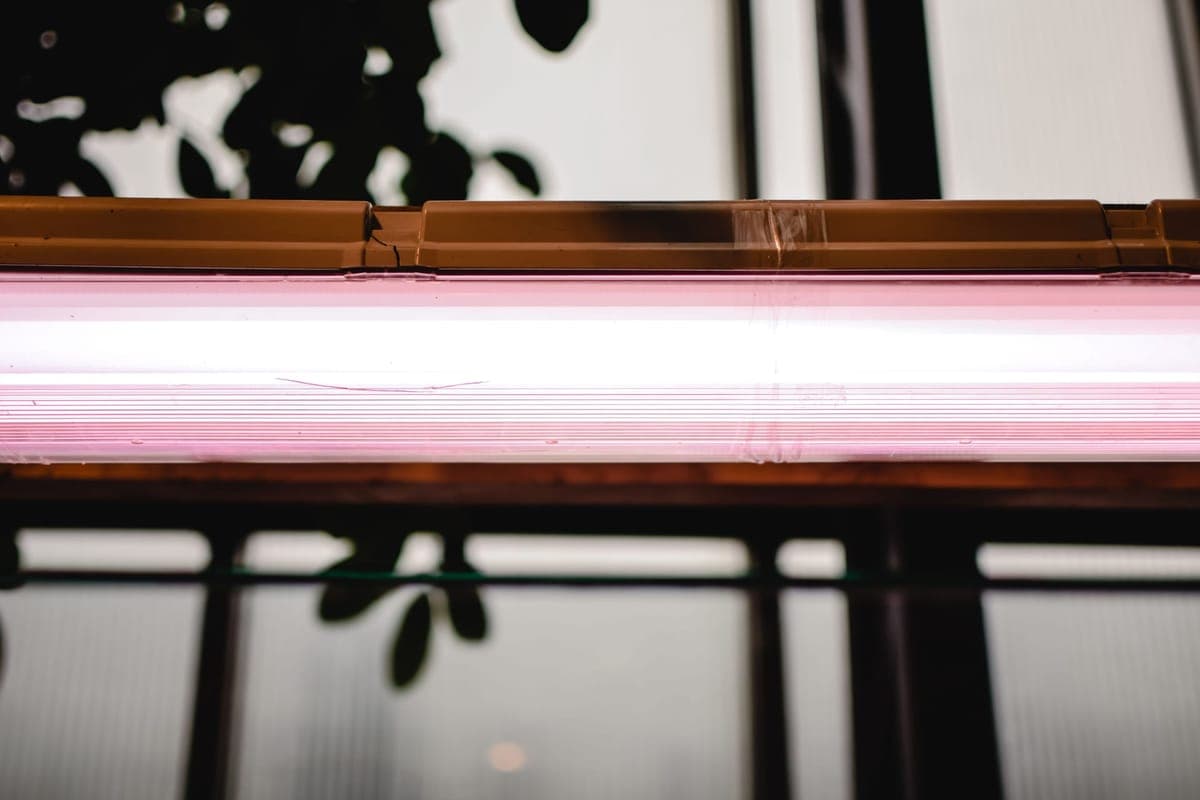
Replace a T5 fluorescent UVB lamp every 12 months. UVB output declines steadily while the visible light output stays roughly constant, so the lamp looking fine tells you nothing. A Solarmeter 6.5 turns the calendar rule into a measurement.
Shed & Bask earns a commission from qualifying Amazon purchases made through links on this page. It does not change what we recommend or the order we rank things in. Read the full disclosure.
Why the calendar rule exists
A fluorescent UVB lamp degrades in a way that is invisible. The phosphors that produce visible light are not the phosphors that produce UVB, and they do not decline at the same rate. The care guidance states the practical consequence directly: UVB bulbs must be replaced regularly to continue to function properly, and just because a lamp is still producing visible light does not mean it is still producing UVB.
The published interval for T5 fluorescent lamps is 12 months, and it is the same across every species page we cite. That interval is a conservative default for keepers without a meter.
What a declining bulb actually does to the animal
Nothing visible, for a long time. The animal continues basking under a lamp that looks identical. UVB exposure falls below the Ferguson zone target, vitamin D3 synthesis declines, and dietary calcium is progressively less well used. The first signs are slow and non-specific. This is precisely why the rule is a calendar rule rather than a symptom-based one: by the time there is something to see, the deficit has been running for months.
How to track it without thinking about it
- Write the date on the tube. A permanent marker on the end cap, the day you install it. This single habit solves the problem for most keepers.
- Put a 12-month reminder in your phone calendar at the same moment.
- Buy the replacement before you need it if your lamp is a specialist line that is not stocked locally.
- Replace the bulb and the fixture check together. Confirm the reflector is clean - dust on a reflector reduces output in exactly the way you are trying to avoid.
How a meter changes the answer
With a Solarmeter 6.5 the question stops being "has a year passed" and becomes "is the reading at the basking surface still inside the target". The guidance recommends investing in one for exactly this purpose: it tracks the UVI inside the enclosure and tells you whether the animal is getting too much or too little. In practice a meter will often tell you the lamp was out of range before 12 months, or that it is still in range at 13 - and either way you are working from the enclosure rather than from a general rule.
Turns the calendar rule into a measurement
Solarmeter Model 6.5 UV Index Meter
Take a reading at the basking surface when you install a lamp, then every few months. The decline is a number, not a guess.
The replacement, for a dragon
Arcadia T5 HO Desert 12% UVB Lamp
Same lamp, same published distance. Mark the date on the end cap when you fit it.
Which lamps this applies to
- T5 fluorescent (HO and SO): 12 months, every time.
- Compact coil: we do not recommend these as a primary UVB source at all. See the bulb roundup.
- LED UVB: not recommended. Reptile lighting researchers have concluded the technology is not yet ready for safe reptile use, and nonsolar UV spectra carry risks that are still being characterized.
Frequently asked questions
How long does a reptile UVB bulb last?
A T5 fluorescent should be replaced every 12 months. It will keep producing visible light considerably longer than it produces useful UVB, which is why the interval is a calendar rule.
How do you know if a UVB bulb is still working?
You cannot tell by looking. A Solarmeter 6.5 reading at the basking surface is the only reliable test. Without one, replace on the 12-month schedule.
Can you use a UVB bulb for more than a year?
Only if a meter confirms the reading at the basking surface is still inside the species target. Otherwise the animal is receiving less UVB than you think, with no visible sign.
Sources
- Bearded Dragon Temperatures & UVB Requirements — ReptiFiles
- Leopard Gecko Temperatures & Humidity — ReptiFiles
- Solarmeter Model 6.5 UV Index Meter — Solarmeter
- UVB-emitting LEDs for reptile lighting: identifying the risks of nonsolar UV spectra — Captive and Zoo Animal Welfare (CZAW)
Read next
Hub
Reptile UVB, heat and thermostats
Wattage and percentage tell you almost nothing on their own. UV index at a stated mount distance is the number that decides whether a lamp is right for your animal.
Lighting & heat
6 best reptile UVB bulbs (2026), judged by UVI at a stated distance
UVB bulbs ranked by whether they reach the species UVI target at a distance your enclosure allows.
Lighting & heat
Best reptile UVB meters (2026)
What a UV index meter measures, why only the Solarmeter 6.5 class is accepted, and how to use one.
Lighting & heat
UVB distance and Ferguson zones
Ferguson zones with published UVI ranges and the mount distance for every lamp class.

Guides
9 beginner reptile setup mistakes that cost the most
The nine setup mistakes that cost beginners the most, and what to buy instead in what order.