Guides
Types of reptile enclosures
Six form factors are sold as reptile housing. Two of them are wrong for almost every animal this site covers, and the reason is always humidity or lamp mounting.
By Brijon M.Last updated
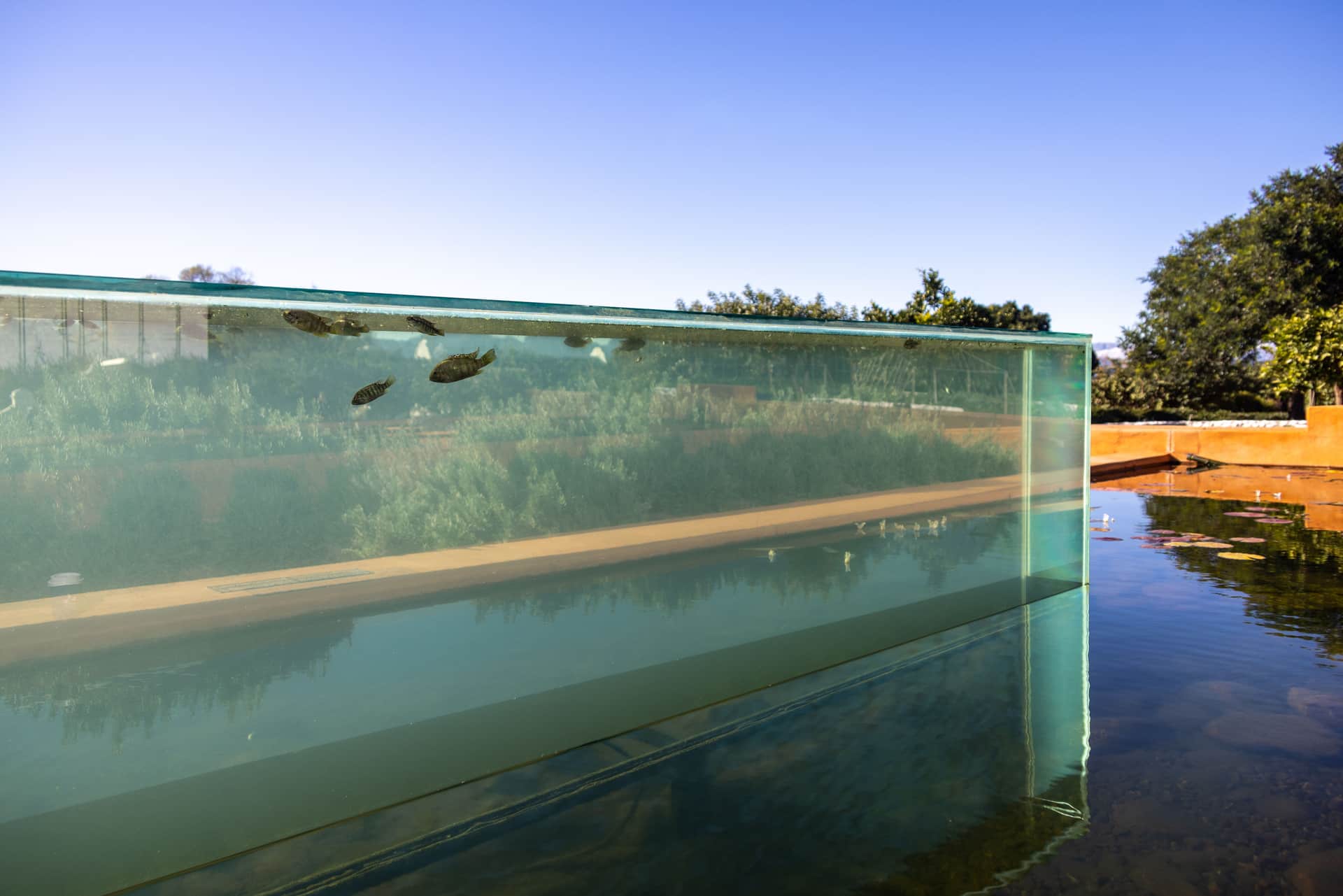
There are six types in common use: front-opening glass terrariums, PVC panel enclosures, wooden vivariums, screen cages, rack systems and converted aquariums. Glass suits dry species and dissipates heat well; PVC holds humidity and takes a ceiling-mounted heater; wood is the DIY route; screen cages cannot hold humidity; racks have no room for overhead lighting; a top-opening aquarium is the least suitable of the six.
Shed & Bask earns a commission from qualifying Amazon purchases made through links on this page. It does not change what we recommend or the order we rank things in. Read the full disclosure.
The six types, and what each one is actually for
| Type | Humidity | Overhead lamp mounting | Access | Suits |
|---|---|---|---|---|
| Front-opening glass terrarium | Sheds it through the screen top | Easy - rest a T5 on the mesh | Front doors | Leopard geckos, dragons, arboreal geckos |
| PVC panel enclosure | Holds it well | Needs an internal mount, or a mesh-top model | Front doors | Ball pythons, dragons, humid setups |
| Wooden vivarium | Holds it once sealed | Internal mount | Front doors or sliding glass | DIY builds and unusual sizes |
| Screen cage | Cannot hold it | Easy | Front or top | Chameleons - not the species on this site |
| Rack system | Holds it | None - no vertical room | Pull-out tub | Breeder-scale snake keeping only |
| Converted aquarium | Sheds it | Easy | Top only | Nothing we would recommend |
Front-opening glass terrarium
The default retail form factor and the right answer more often than its reputation suggests. Glass dissipates heat well, which makes a warm-to-cool gradient easier to build, and the screen top is a genuine advantage for a species that wants a dry ambient range - a leopard gecko sits at 30-40% ambient, with a humid hide at 70-80%. Front doors matter: every care reference we cite prefers front access because reaching in from above reads as a predator approach.
Where it fails is humidity. Holding 60-80%, allowed to dry back to 40-50% between mistings for a crested gecko through a screen top means misting on a schedule, and for a ball python it means fighting the lid every day.
PVC panel enclosure
The serious-keeper default for humidity species, and increasingly for everything. Opaque panels give a snake visual security without taping paper to glass, PVC holds a humidity level rather than leaking it, and a solid ceiling is what a radiant heat panel needs to mount to. The cost is higher per square foot and overhead UVB needs either an internal fixture mount or a model with a mesh top section.
Wooden vivarium
The form factor you build rather than buy, and the only practical route to a size the market does not sell. Once the interior is properly sealed it behaves like PVC on humidity. Unsealed wood absorbs moisture, swells and harbours bacteria, so the sealing step is the whole decision - the materials and cure times are in how to build a reptile enclosure.
Screen cage
Four mesh sides. Excellent airflow, no humidity retention, and no thermal gradient worth the name. It is the correct enclosure for a chameleon and the wrong one for every species this site covers. If you have been sold one for a gecko, that is the mismatch to fix first.
Rack system
Stacked pull-out tubs with heat tape on a thermostat, used at breeder scale. Racks hold humidity and temperature well and have one structural problem for a single-animal keeper: there is no vertical room for overhead lighting, so UVB provision is effectively off the table. A ball python has a published UVB target of UVI 2.0-3.0 at the basking area, low but not zero, and a rack removes your ability to meet it.
Converted aquarium
A fish tank with a screen lid. It is the cheapest thing in the room and the weakest option on this page: top-only access, humidity gone through the lid, and the gallon rating that comes with it hides the floor area completely. A 20-gallon long is about 2.5 sq ft of floor against a published adult leopard gecko minimum of 4.5 sq ft.
How the type changes what you have to buy alongside it
The form factor decides more of your shopping list than most buyers expect. A glass terrarium with a mesh top lets a T5 HO fixture rest straight on the lid at its published distance, which means you buy a lamp and a fixture and nothing else. A solid-topped PVC enclosure needs an internal fixture mount, so there is an extra part and an extra decision about how low the fixture can hang before the animal can reach it.
Heat splits the same way. A ceiling-mounted radiant panel needs a solid PVC or wooden ceiling to bolt to, so it is simply unavailable on a screen-topped glass tank - there the heat source is a guarded dome sitting above the mesh instead. That one structural difference is why two keepers with the same species and the same budget end up with completely different equipment lists, and it is worth knowing before you buy the box rather than after.
Substrate volume follows the footprint rather than the type, but the type decides how well the substrate holds its moisture. A deep soil layer in a sealed PVC enclosure stays damp for days; the same layer under an open screen lid dries from the top down and needs rewetting on a schedule.
Stacking, and why it needs care
Two enclosures stacked share heat: the lower unit's lamps warm the floor of the upper one, which quietly lifts the cool end of the top enclosure and removes part of its gradient. If you stack, measure the cool side of the upper enclosure with a probe rather than assuming it matches the one below. Load is the other question - a filled 4x2x2 with substrate is heavy, and the stand or cabinet underneath has to be rated for it.
The glass terrarium case
REPTI ZOO Front-Opening Glass Terrarium
36 x 18 x 18 in front-opening glass is 4.5 sq ft of floor - the published adult leopard gecko figure - in the form factor that suits a dry species best.
The PVC panel case
Zen Habitats 4x2x2 PVC Reptile Enclosure
PVC panels in an aluminum frame, with a mesh top that still takes a T5 HO fixture at its published distance - the humidity retention of PVC without losing overhead lighting.
The tall terrarium case
Exo Terra Glass Terrarium 18 x 18 x 36
18 x 18 x 36 in is the published adult crested gecko minimum, and height is the one dimension no other form factor on this page supplies cheaply.
Frequently asked questions
What are the main types of reptile enclosures?
Front-opening glass terrariums, PVC panel enclosures, wooden vivariums, screen cages, rack systems and converted aquariums. The first three cover almost every pet-keeping case; screen cages suit chameleons, racks suit breeder-scale snake keeping, and a top-opening aquarium is the weakest of the six.
Which type of reptile enclosure is best for humidity?
PVC, or a properly sealed wooden vivarium. Both hold a humidity level rather than venting it through a screen lid, which is what a crested gecko at 60-80% or a ball python needs.
Are screen cages suitable for geckos or snakes?
No. A screen cage has four mesh sides, so it cannot hold a humidity range or a useful thermal gradient. It is the right enclosure for a chameleon and the wrong one for every species covered on this site.
Can you use a fish tank as a reptile enclosure?
It is the weakest option. Access is from the top only, which reads as a predator approach; humidity escapes through the lid; and the gallon rating hides the floor area that actually decides whether the enclosure is big enough.
Sources
- Leopard Gecko Terrarium Size & Lighting Requirements — ReptiFiles
- Ball Python Terrarium Size & Lighting — ReptiFiles
- Crested Gecko Terrarium Size & Cohabitation Notes — ReptiFiles
- What Are Ferguson Zones? Reptile UVB Information — Zen Habitats
Read next
Hub
Reptile enclosure guides and comparisons
The cross-species decisions: what material to buy, how big it has to be, whether to build it yourself, and which beginner mistakes are expensive.
Guides
PVC vs glass vs wood reptile enclosures
Material comparison on weight, humidity, heat behavior and off-gassing, with a per-species verdict.
Guides
7 best reptile enclosures (2026), judged against published footprint minimums
Enclosures ranked against the published adult minimum for each species, not against gallon ratings.
Guides
4x2x2 reptile enclosure: the dimensions, and which species it fits
What a 4x2x2 enclosure measures in inches, centimeters and gallons, and the species it does and does not cover.
Guides
Reptile enclosure ventilation
How much ventilation an enclosure needs, where to place it for cross-flow, and the failures at each extreme.
Guides
Reptile enclosure size chart
Minimum enclosure footprints by species and life stage, in inches, cm and gallons.