Ball python
Ball python enclosure requirements checklist
The published figures for this species are hide temperatures, which changes where every probe goes.
By Brijon M.Last updated
Shed & Bask earns a commission from qualifying Amazon purchases made through links on this page. It does not change what we recommend or the order we rank things in. Read the full disclosure.
The checklist
| Requirement | Figure | How you check it |
|---|---|---|
| Enclosure | 48 x 24 x 24 in (120 x 60 x 60 cm), about 8 sq ft of floor area, at least as long as the snake | Tape measure, internal dimensions |
| Warm hide | 86-90 F (30-32 C) | Probe placed inside the hide |
| Cool hide | 72-80 F (22-27 C) | Probe placed inside the hide |
| General air temperature ceiling | Never above 95 F (35 C) | Probe thermometer |
| Night | 70-78 F (21-26 C) | Probe thermometer, logged overnight |
| Basking UVI | UVI 2.0-3.0 at the basking area | Solarmeter 6.5 at the basking area |
| UVB tube length for a 4x2x2 | 22 in | Measure the enclosure |
| Photoperiod | 12 hours on, 12 hours off (equatorial origin) | Timer |
| Substrate | Moisture-retentive, deep enough to burrow | Tape measure, and whether it dries back |
| Ventilation | Enough that the substrate dries back between mistings | Observation, plus a hygrometer |
Equipment, in buying order
- Enclosure at the adult footprint, front-opening, lockable.
- Dimming or proportional thermostat.
- Two halogen bulbs in guarded fixtures, clustered.
- Moisture-retentive substrate at depth.
- Probe thermometer and hygrometer, plus an infrared gun.
- Two tight hides, warm and cool, ideally identical so the snake does not have a preference.
- A water bowl large enough for the snake to soak in.
- Low-output T5 HO UVB and fixture.
- Branches and climbing structure.
- Lightless night heat only if the room falls below 70 F.
One per hide, ideally
Zoo Med Digital Thermometer and Humidity Gauge
You need a reading inside the warm hide and inside the cool hide. These are cheap enough to run two.
Half the humidity system
Coconut Husk / Cypress Mulch Humid Substrate
Deep enough to burrow in, holding moisture across a day and still drying back. Pair it with real ventilation, not a sealed box.
The routine
- Daily: spot-clean every defecation including the contaminated substrate, check the water bowl.
- Weekly: probe readings inside both hides, plus a humidity check.
- Around each shed: raise humidity, then let it fall back. Check the shed came off complete, including the tail tip and eye caps.
- Every 3-4 months: replace the substrate.
- Every 6 months: deep clean the enclosure and all accessories with F10SC, Rescue or a 10% bleach solution.
- Every 12 months: replace the UVB tube.
The rest of the setup
Sizing, heating, temperature and humidity, lighting, substrate, decor and cost.
Frequently asked questions
What does a ball python need in its enclosure?
Two tight hides at opposite ends of a thermal gradient, a clustered halogen heat source on a dimming thermostat, a moisture-retentive substrate deep enough to burrow in, a soaking-sized water bowl, climbing structure, and probes inside both hides.
What temperature should a ball python warm hide be?
Warm hide 86-90 F (30-32 C), measured with a probe inside the hide. The cool hide should be Cool hide 72-80 F (22-27 C); air never above 95 F (35 C), and general air temperature should never exceed 95 F.
How often should you clean a ball python enclosure?
Spot-clean every time the snake defecates, including the contaminated substrate. Replace the substrate every 3 to 4 months and deep-clean the enclosure and accessories every 6 months.
Sources
- Ball Python Terrarium Size & Lighting — ReptiFiles
- Ball Python Humidity & Temperature Requirements — ReptiFiles
- Ball Python Substrate Options — ReptiFiles
- Solarmeter Model 6.5 UV Index Meter — Solarmeter
Read next
Hub
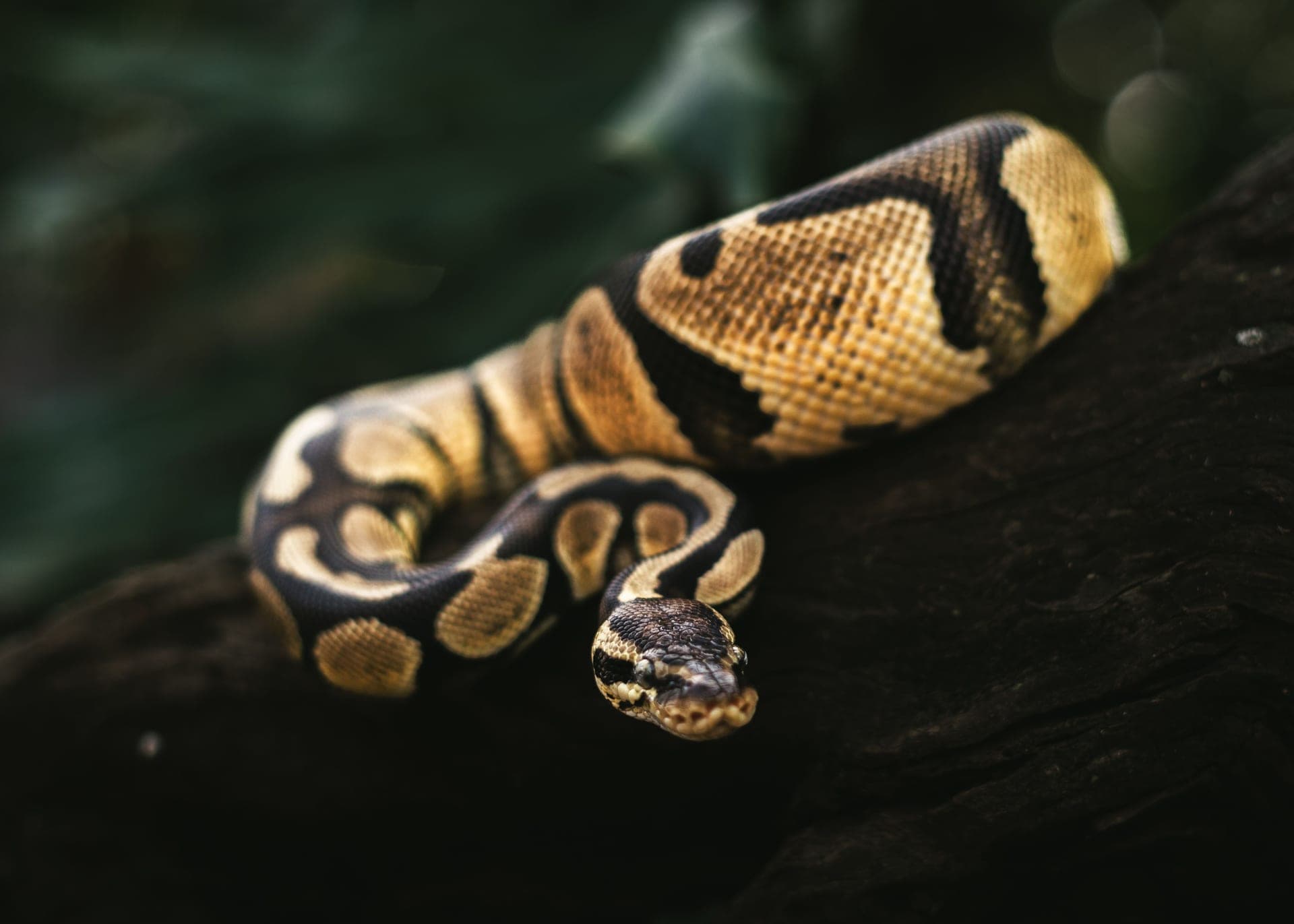
Ball python enclosures, heating and substrate
The enclosure should be at least as long as the snake. The idea that ball pythons want to be crammed into a small dark box is a myth the published guidance names as one.
Ball python
Ball python enclosure size
Ball python enclosure minimums by snake size, with the as-long-as-the-snake rule.
Ball python
Ball python heating requirements
Ball python heating: the hide figures, the air ceiling, and the two-bulb rule.
Ball python
Ball python temperature and humidity
Ball python temperature and humidity, and why ventilation is part of the humidity system.
Ball python
Best substrate for a ball python enclosure
Ball python substrate options, depth, and why ventilation is part of the choice.

Ball python
Ball python setup cost, line by line
Ball python setup line items in priority order, with recurring costs and where not to save.