Lighting & heat
6 best reptile UVB bulbs (2026), judged by UVI at a stated distance
Percentage on the box is not a specification. A UVB bulb is right or wrong only in combination with a mount distance, a reflector and your species' Ferguson zone.
By Brijon M.Last updated
Pick the bulb by your species' Ferguson zone and basking UVI target, then set the mount distance the manufacturer or care reference publishes: UVI 4.0-4.5 for a bearded dragon, 2.0-3.0 for a ball python, 0.5-1.5 for a leopard gecko and 1.0-2.0 for a crested gecko. Replace any T5 fluorescent every 12 months.
Shed & Bask earns a commission from qualifying Amazon purchases made through links on this page. It does not change what we recommend or the order we rank things in. Read the full disclosure.
How we picked
Every pick below is scored against these thresholds, stated as numbers. Publishing them is the point: of the competitor roundups we surveyed, not one published a numeric selection threshold.
Can hit the species UVI target
Reaches the Ferguson zone basking figure for the species at a distance the enclosure actually allows - UVI 4.0-4.5 for a bearded dragon, 2.0-3.0 for a ball python, 0.5-1.5 for a leopard gecko
Source: ReptiFiles - Bearded Dragon Temperatures & UVB Requirements
Manufacturer or care reference publishes a mount distance
A stated distance in inches, with a mesh correction, not just a percentage on the box
Source: ReptiFiles - Bearded Dragon Temperatures & UVB Requirements
Linear tube, not a compact coil
T5 HO or T5 SO linear tube, so output covers a basking zone rather than a point
Source: ReptiFiles - Bearded Dragon Temperatures & UVB Requirements
Usable in an unshielded fixture
No glass or plastic over the lamp - both block UVB completely
Source: ReptiFiles - Bearded Dragon Temperatures & UVB Requirements
Stated replacement interval
12 months for a T5 fluorescent, regardless of whether visible light continues
Source: ReptiFiles - Bearded Dragon Temperatures & UVB Requirements
These are the same criteria every roundup on this site applies. See the full methodology.
Quick picks
Every row is scored against the published criteria below. Tap a row to read the full write-up.
| # | Product | Best for | Criteria met | Price |
|---|---|---|---|---|
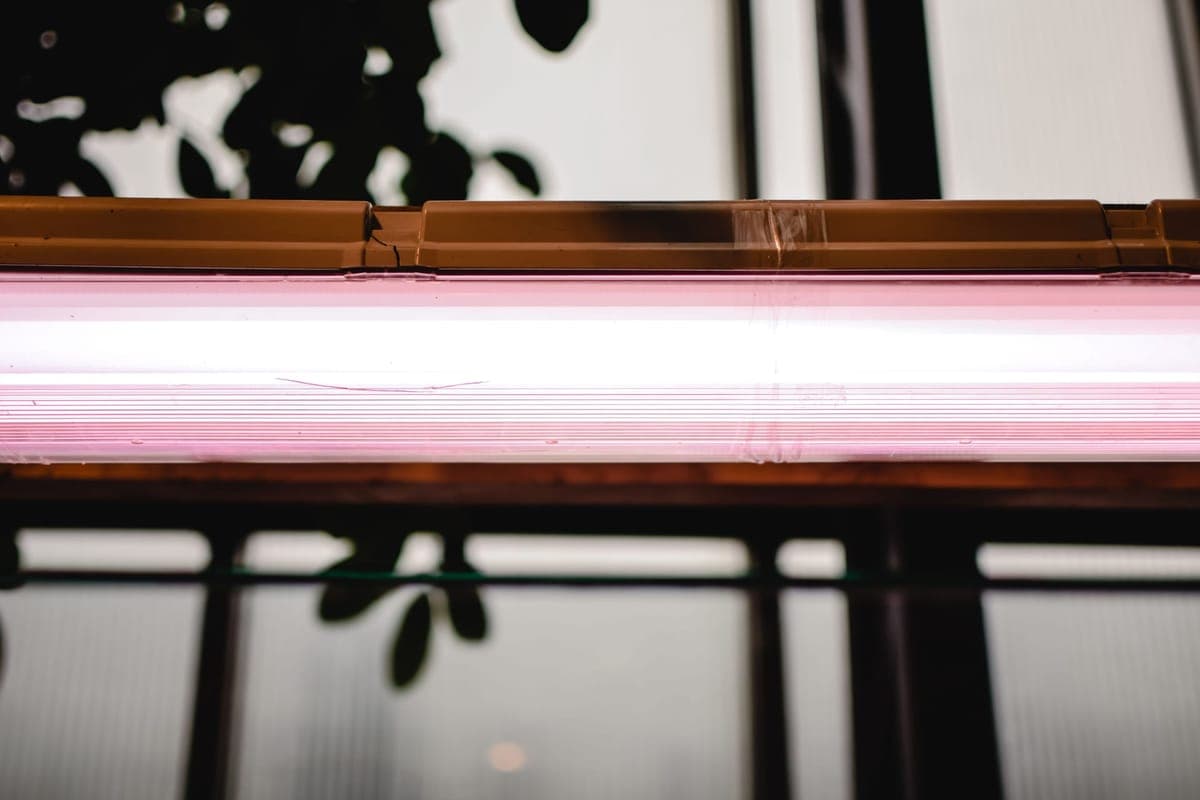
| 1 | Arcadia T5 HO Desert 12% UVB Lamp Best for a bearded dragon in a mesh-top enclosure | A bearded dragon in a standard mesh-top enclosure | 5/5 | Check price on Amazon#ad We may earn a commission. Price and stock are resolved at Amazon. |
| 2 |  Arcadia T5 HO Dragon 14% UVB Lamp Best for a tall dragon enclosure | A tall dragon enclosure where the lamp sits further from the basking surface | 5/5 | Check price on Amazon#ad We may earn a commission. Price and stock are resolved at Amazon. |
| 3 |  Zoo Med ReptiSun T5 HO 5.0 UVB Lamp Best for a ball python | A ball python in a 4x2x2 (use the 22 in tube) | 5/5 | Check price on Amazon#ad We may earn a commission. Price and stock are resolved at Amazon. |
| 4 |  Arcadia ShadeDweller ProT5 Kit (7% UVB) Best for leopard and crested geckos | Leopard geckos and crested geckos | 5/5 | Check price on Amazon#ad We may earn a commission. Price and stock are resolved at Amazon. |
| 5 | 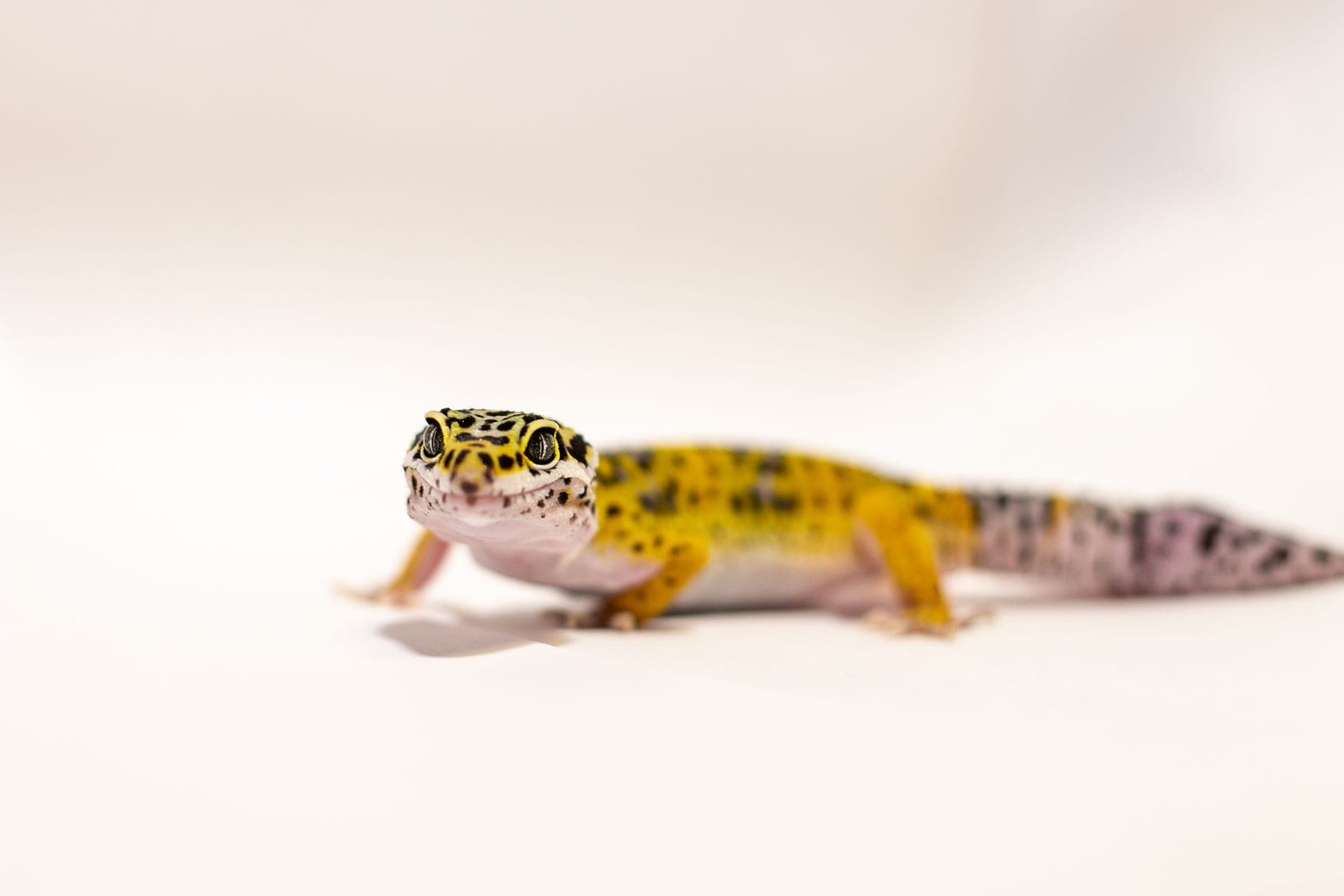 Arcadia ShadeDweller Max 2.5% UVB Lamp Best for albino and reduced-pigment geckos | Albino, patternless and other reduced-pigment geckos | 5/5 | Check price on Amazon#ad We may earn a commission. Price and stock are resolved at Amazon. |
| 6 |  Zoo Med ReptiSun T5 HO 10.0 UVB Lamp Best availability | Availability: the T5 HO you can actually buy locally | 4/5 | Check price on Amazon#ad We may earn a commission. Price and stock are resolved at Amazon. |
Why the percentage on the box tells you almost nothing
A 12% T5 HO lamp is not a UV index. It becomes one only once you add a fixture with a reflector, a mount distance, and a correction for how much of the output your mesh lid absorbs. Published mesh corrections in the sources we cite assume somewhere between a 30% and a 45% block, which is a wide enough spread that two keepers running identical lamps at identical heights can be exposing their animals to meaningfully different UVI.
That is why this roundup ranks on "can it hit the target at a distance your enclosure allows" rather than on output. A lamp that needs 17 inches of clearance is the wrong lamp for an 18 inch tall enclosure no matter how good it is.
Targets by species, with the published distances
| Species | Ferguson zone | Basking UVI target | Example lamp and distance |
|---|---|---|---|
| Bearded dragon | Zone 3, edging into Zone 4 | UVI 4.0-4.5 at the basking surface | Arcadia Desert 12%: 11 in through mesh, 16-17 in without |
| Ball python | Zone 2 | UVI 2.0-3.0 at the basking area | ReptiSun T5 HO 5.0 / Arcadia 6%: 10-14 in, about 35% mesh |
| Leopard gecko | Zone 1 | UVI 0.5-1.5 at the basking spot | ShadeDweller 7%: 10-18 in, about 30% mesh |
| Crested gecko | Zone 1 | UVI 1.0-2.0 at the basking branch | ShadeDweller 7% (12 in): 8-12 in, about 35% mesh |
Four rules that apply to every lamp on this list
- Linear tube, never a compact coil. A coil lights a point; a basking area is a zone. Every published distance figure assumes a linear tube in a reflector.
- No glass or plastic over the lamp. Both block UVB completely. A fixture with a protective shield renders the bulb useless for its actual purpose while the visible light continues to look fine.
- Replace every 12 months. UVB output declines long before the visible light does. Still glowing is not still working. Details here.
- Tube length matters. The published guidance for a bearded dragon is a tube about half the length of the enclosure, on the same side as the heat lamps - 22 inches for a 4 ft enclosure, 34 inches for a 6 ft.
What to avoid
- LED UVB. Reptile lighting researchers have concluded the technology is not yet ready for safe use with reptiles, regardless of manufacturer claims. This is not a performance quibble; it is a safety position.
- Compact coil bulbs as the primary UVB source. The output profile is wrong for a basking zone and the historical burn record for this product class is poor.
- Any "UVB and heat in one" mercury vapor bulb run without a meter. Combining the two functions removes your ability to adjust one without moving the other.
- Measuring UVI with anything other than a Solarmeter 6.5 or 6.5R. The care guidance is explicit that no other device measures reptile UVI accurately.
One question about your own exposure
These lamps emit real ultraviolet, so it is reasonable to ask what that means for the people in the room. The short answer is that distance and duration do the work, and that switching the lamp off before you put your head inside the enclosure removes the question entirely. We set out what is established and where the evidence runs out.
The instrument that makes all of this verifiable
Solarmeter Model 6.5 UV Index Meter
Every UVI figure on this page is measured with this meter. Without one you are working from a distance chart and a mesh assumption; with one you are working from a reading.
The fixture the distances assume
Arcadia ProT5 Reflector Fixture
A reflector roughly doubles usable output, which is exactly why published distance charts assume one. Running a bare tube and a chart figure together gives you neither.
The picks in full
1. Best for a bearded dragon in a mesh-top enclosure
Arcadia T5 HO Desert 12% UVB Lamp
Arcadia Reptile · A bearded dragon in a standard mesh-top enclosure
This is the lamp the published bearded dragon distance figures are written around: about 11 inches above the basking surface through mesh, or 16 to 17 inches with no mesh, to land the UVI 4.0-4.5 target. Having a published distance at all puts it ahead of most of the category, because it turns a guess into a setup instruction.
Specifications
- Output
- 12% UVB, T5 HO linear
- Mount distance (mesh)
- 11 in / 27 cm
- Mount distance (no mesh)
- 16-17 in / 40.5-42 cm
- Replace
- Every 12 months
How it scored against our criteria
| Can hit the species UVI targetReaches the Ferguson zone basking figure for the species at a distance the enclosure actually allows - UVI 4.0-4.5 for a bearded dragon, 2.0-3.0 for a ball python, 0.5-1.5 for a leopard gecko | Meets |
|---|---|
| Manufacturer or care reference publishes a mount distanceA stated distance in inches, with a mesh correction, not just a percentage on the box | Meets |
| Linear tube, not a compact coilT5 HO or T5 SO linear tube, so output covers a basking zone rather than a point | Meets |
| Usable in an unshielded fixtureNo glass or plastic over the lamp - both block UVB completely | Meets |
| Stated replacement interval12 months for a T5 fluorescent, regardless of whether visible light continues | Meets |
What works
- Published distance figures, so you can set it correctly before you own a meter
- T5 HO spreads UVB across a basking zone rather than a single point
- Pairs with a reflector fixture for predictable output
What to know
- Distances assume roughly a 45% mesh block; your mesh may differ
- Needs a dedicated T5 HO fixture, which is a separate purchase
Who should look elsewhere
For a reduced-pigment dragon (hypo, translucent, silkback) the target drops to no more than UVI 3.0. Use a lower-output lamp or more distance, verified with a meter.
2. Best for a tall dragon enclosure
Arcadia T5 HO Dragon 14% UVB Lamp
Arcadia Reptile · A tall dragon enclosure where the lamp sits further from the basking surface
The 14% version buys you distance: 11 to 12 inches through mesh or 17 to 18 inches without. That matters when the basking platform cannot be raised closer to the lid. It is the same discipline as the 12% lamp with more headroom - and the same risk of overshooting if the animal can climb nearer than you planned.
Specifications
- Output
- 14% UVB, T5 HO linear
- Mount distance (mesh)
- 11-12 in / 28-30 cm
- Mount distance (no mesh)
- 17-18 in / 43-45 cm
- Replace
- Every 12 months
How it scored against our criteria
| Can hit the species UVI targetReaches the Ferguson zone basking figure for the species at a distance the enclosure actually allows - UVI 4.0-4.5 for a bearded dragon, 2.0-3.0 for a ball python, 0.5-1.5 for a leopard gecko | Meets |
|---|---|
| Manufacturer or care reference publishes a mount distanceA stated distance in inches, with a mesh correction, not just a percentage on the box | Meets |
| Linear tube, not a compact coilT5 HO or T5 SO linear tube, so output covers a basking zone rather than a point | Meets |
| Usable in an unshielded fixtureNo glass or plastic over the lamp - both block UVB completely | Meets |
| Stated replacement interval12 months for a T5 fluorescent, regardless of whether visible light continues | Meets |
What works
- Extra output buys usable distance in a 24 in tall enclosure
- Same published-distance discipline as the 12% lamp
- Correct choice when the basking platform cannot be raised
What to know
- Easy to overshoot the target if the dragon can climb closer than planned
- Wrong lamp for a reduced-pigment morph
Who should look elsewhere
If your basking platform is already within 11 in of the lid, the 12% lamp is the right one. More output at the same distance just pushes UVI past the target.
3. Best for a ball python
Zoo Med ReptiSun T5 HO 5.0 UVB Lamp
Zoo Med · A ball python in a 4x2x2 (use the 22 in tube)
The published ball python figure is UVI 2.0-3.0 at the basking area, reached at 10 to 14 inches from the snake's back through roughly 35% mesh. A 22 inch tube suits a 4x2x2. The output class is the whole point here: a stronger lamp at the same distance is simply wrong for a Zone 2 animal.
Specifications
- Output
- 5.0, T5 HO linear
- Distance for UVI 2.0-3.0
- 10-14 in / 25-35 cm through about 35% mesh
- Tube length for a 4 ft enclosure
- 22 in
- Replace
- Every 12 months
How it scored against our criteria
| Can hit the species UVI targetReaches the Ferguson zone basking figure for the species at a distance the enclosure actually allows - UVI 4.0-4.5 for a bearded dragon, 2.0-3.0 for a ball python, 0.5-1.5 for a leopard gecko | Meets |
|---|---|
| Manufacturer or care reference publishes a mount distanceA stated distance in inches, with a mesh correction, not just a percentage on the box | Meets |
| Linear tube, not a compact coilT5 HO or T5 SO linear tube, so output covers a basking zone rather than a point | Meets |
| Usable in an unshielded fixtureNo glass or plastic over the lamp - both block UVB completely | Meets |
| Stated replacement interval12 months for a T5 fluorescent, regardless of whether visible light continues | Meets |
What works
- Correct output class for a Ferguson Zone 2 animal
- Published distance range, not guesswork
- Linear tube, not a coil, so output is even across the basking zone
What to know
- Needs a reflector fixture rated for T5 HO
- Too weak for a bearded dragon at any sensible distance
Who should look elsewhere
A bearded dragon needs UVI 4.0-4.5 at the basking surface. This lamp cannot deliver that at a safe mount distance. Use a 12-14% Arcadia or a ReptiSun 10.0.
4. Best for leopard and crested geckos
Arcadia ShadeDweller ProT5 Kit (7% UVB)
Arcadia Reptile · Leopard geckos and crested geckos
Purpose-built for Ferguson Zone 1 rather than a de-rated desert lamp, and sold as a matched kit so the fixture and tube are not a guess. Published distances cover both species: 10 to 18 inches for a normally pigmented leopard gecko, 8 to 12 inches for a crested gecko on a 12 inch lamp.
Specifications
- Output
- 7% UVB, T5 SO
- Leopard gecko (normal pigment)
- 10-18 in / 25-45 cm, about 30% mesh
- Crested gecko (12 in lamp)
- 8-12 in / 20-30 cm, about 35% mesh
- Replace
- Every 12 months
How it scored against our criteria
| Can hit the species UVI targetReaches the Ferguson zone basking figure for the species at a distance the enclosure actually allows - UVI 4.0-4.5 for a bearded dragon, 2.0-3.0 for a ball python, 0.5-1.5 for a leopard gecko | Meets |
|---|---|
| Manufacturer or care reference publishes a mount distanceA stated distance in inches, with a mesh correction, not just a percentage on the box | Meets |
| Linear tube, not a compact coilT5 HO or T5 SO linear tube, so output covers a basking zone rather than a point | Meets |
| Usable in an unshielded fixtureNo glass or plastic over the lamp - both block UVB completely | Meets |
| Stated replacement interval12 months for a T5 fluorescent, regardless of whether visible light continues | Meets |
What works
- Purpose-built for Zone 1 targets instead of a de-rated desert lamp
- Sold as a kit, so the fixture and lamp are already matched
- Published distances for both normal and reduced-pigment morphs
What to know
- Short tube lengths only, so it lights a zone rather than the whole enclosure
- Still needs a meter if you keep an albino
Who should look elsewhere
For an albino or patternless leopard gecko the ceiling drops to UVI 0.5-0.7. Use the ShadeDweller Max 2.5% at the published distance instead of this 7%.
5. Best for albino and reduced-pigment geckos
Arcadia ShadeDweller Max 2.5% UVB Lamp
Arcadia Reptile · Albino, patternless and other reduced-pigment geckos
The one case on this site where buying the weaker lamp is the correct decision. Albino and patternless leopard geckos have a published ceiling of UVI 0.5-0.7 and can be burned by excess UVB, so a 2.5% lamp at 12 to 14 inches is the right tool and a 7% at the same distance is not.
Specifications
- Output
- 2.5% UVB, T5 SO
- Leopard gecko (normal pigment)
- 8-14 in / 20-35 cm
- Leopard gecko (hypo pigment)
- 12-14 in / 30-35 cm
- Crested gecko (24 in lamp)
- 6-9 in / 15-23 cm
How it scored against our criteria
| Can hit the species UVI targetReaches the Ferguson zone basking figure for the species at a distance the enclosure actually allows - UVI 4.0-4.5 for a bearded dragon, 2.0-3.0 for a ball python, 0.5-1.5 for a leopard gecko | Meets |
|---|---|
| Manufacturer or care reference publishes a mount distanceA stated distance in inches, with a mesh correction, not just a percentage on the box | Meets |
| Linear tube, not a compact coilT5 HO or T5 SO linear tube, so output covers a basking zone rather than a point | Meets |
| Usable in an unshielded fixtureNo glass or plastic over the lamp - both block UVB completely | Meets |
| Stated replacement interval12 months for a T5 fluorescent, regardless of whether visible light continues | Meets |
What works
- Lets you provide UVB to a light-sensitive morph without risking a burn
- Published distances for both pigment classes
- Low enough output that small mounting errors are forgiving
What to know
- Output is low enough that distance errors in the other direction give you nothing
- Not a substitute for any Zone 2 or Zone 3 animal
Who should look elsewhere
A normally pigmented leopard gecko can use the 7% at a sensible distance and will get a more useful gradient from it.
6. Best availability
Zoo Med ReptiSun T5 HO 10.0 UVB Lamp
Zoo Med · Availability: the T5 HO you can actually buy locally
The T5 HO you can actually walk into a store and buy, in every common tube length, with manufacturer UVI charts to set distance against. It scores partial on published distance only because the figures live in Zoo Med's own charts rather than in the species care guidance, which means they are not directly interchangeable with the Arcadia numbers.
Specifications
- Output
- 10.0 (high output), T5 HO linear
- Distance
- Set from Zoo Med's published UVI chart for your fixture
- Replace
- Every 12 months
- Fixture
- Requires a T5 HO reflector fixture
How it scored against our criteria
| Can hit the species UVI targetReaches the Ferguson zone basking figure for the species at a distance the enclosure actually allows - UVI 4.0-4.5 for a bearded dragon, 2.0-3.0 for a ball python, 0.5-1.5 for a leopard gecko | Meets |
|---|---|
| Manufacturer or care reference publishes a mount distanceA stated distance in inches, with a mesh correction, not just a percentage on the box | Partial |
| Linear tube, not a compact coilT5 HO or T5 SO linear tube, so output covers a basking zone rather than a point | Meets |
| Usable in an unshielded fixtureNo glass or plastic over the lamp - both block UVB completely | Meets |
| Stated replacement interval12 months for a T5 fluorescent, regardless of whether visible light continues | Meets |
What works
- Stocked almost everywhere, in every common tube length
- Manufacturer publishes UVI-by-distance charts
- Linear output beats any compact coil for gradient quality
What to know
- Output differs from Arcadia at the same nominal rating, so distances are not interchangeable
- Still needs verifying with a meter if you want to be certain
Who should look elsewhere
Do not substitute this for a ShadeDweller-class lamp over a leopard or crested gecko. A 10.0 at gecko distances overshoots a Ferguson Zone 1 target badly.
Frequently asked questions
What is the best UVB bulb for a bearded dragon?
A T5 HO linear tube in the 12-14% class, set to the published distance for your mesh. The figures from the care guidance are 11 inches through mesh for an Arcadia Desert 12%, or 16-17 inches with no mesh, targeting UVI 4.0-4.5 at the basking surface.
How far should a UVB bulb be from a reptile?
It depends on the lamp, the fixture and your mesh. Published figures range from 6 inches for a low-output gecko lamp to 18 inches for a high-output desert lamp with no mesh. The distance guide has the full table.
How often should you replace a reptile UVB bulb?
Every 12 months for a T5 fluorescent. UVB output declines well before the visible light does, so the bulb still looking bright tells you nothing about whether it is still working.
Are LED UVB bulbs any good?
Not yet. The reptile lighting researchers cited in the care guidance have determined the technology is not ready for safe use with reptiles, whatever the manufacturer claims. Stick with T5 fluorescent.
Sources
- Bearded Dragon Temperatures & UVB Requirements — ReptiFiles
- Ball Python Humidity & Temperature Requirements — ReptiFiles
- Leopard Gecko Temperatures & Humidity — ReptiFiles
- Crested Gecko Temperatures & Humidity — ReptiFiles
- What Are Ferguson Zones? Reptile UVB Information — Zen Habitats
- Solarmeter Model 6.5 UV Index Meter — Solarmeter
Read next
Hub
Reptile UVB, heat and thermostats
Wattage and percentage tell you almost nothing on their own. UV index at a stated mount distance is the number that decides whether a lamp is right for your animal.
Lighting & heat
UVB distance and Ferguson zones
Ferguson zones with published UVI ranges and the mount distance for every lamp class.
Lighting & heat
Best reptile UVB light fixtures (2026)
T5 fixtures judged on reflector performance and whether published distance charts assume them.
Lighting & heat
Arcadia vs Zoo Med UVB lamps
Arcadia and Zoo Med UVB compared on published distances, output class and fixture dependence.
Lighting & heat
When to replace a reptile UVB bulb
The 12-month replacement rule, why visible light misleads, and how to track it.
Lighting & heat
Are reptile UVB lights safe for humans?
What is established about human exposure to reptile UVB lamps, and where the evidence runs out.