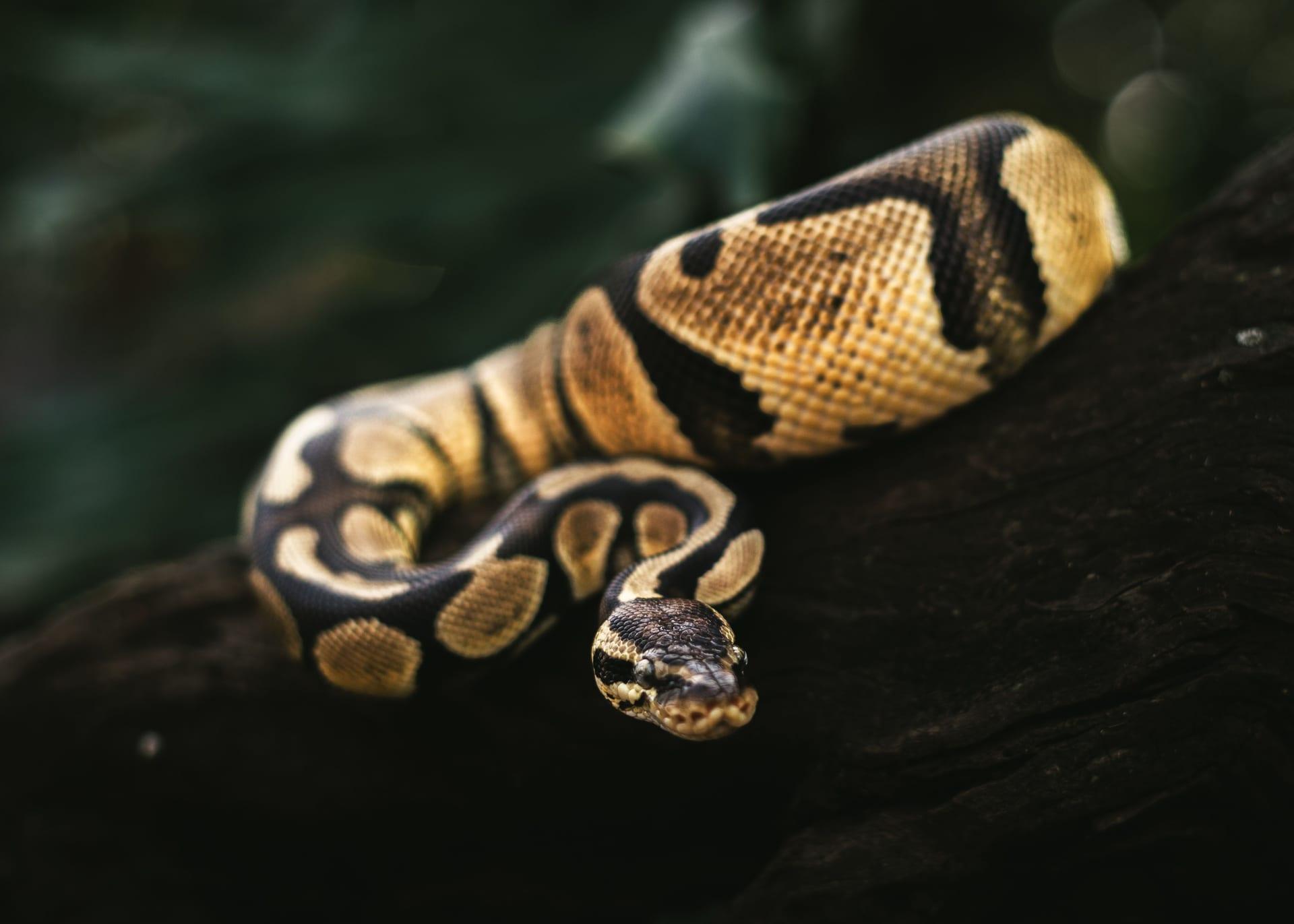
Ball python
Best UVB for ball pythons
A ball python needs a low UVB dose delivered accurately, which makes this a distance problem rather than a wattage problem. The lamp, the fixture that makes its distance figures true, and the one tool that proves it.
By Brijon M.Last updated
The best UVB for a ball python is a low-output T5 HO, not a strong one - a Zoo Med ReptiSun T5 HO 5.0, mounted 10-14 in (25-35 cm) from the snake's back through roughly 35% mesh, which lands the published basking target of UVI 2.0-3.0. Use the 22 in tube in a 4 ft enclosure, in an open reflector with no glass or plastic over the lamp, and replace it every 12 months. A 10.0 or 12% lamp is the wrong output class for this species at a normal mount height.
Shed & Bask earns a commission from qualifying Amazon purchases made through links on this page. It does not change what we recommend or the order we rank things in. Read the full disclosure.
How we picked
Every pick below is scored against these thresholds, stated as numbers. Publishing them is the point: of the competitor roundups we surveyed, not one published a numeric selection threshold.
Can hit the species UVI target
Reaches the Ferguson zone basking figure for the species at a distance the enclosure actually allows - UVI 4.0-4.5 for a bearded dragon, 2.0-3.0 for a ball python, 0.5-1.5 for a leopard gecko
Source: ReptiFiles - Bearded Dragon Temperatures & UVB Requirements
Manufacturer or care reference publishes a mount distance
A stated distance in inches, with a mesh correction, not just a percentage on the box
Source: ReptiFiles - Bearded Dragon Temperatures & UVB Requirements
Linear tube, not a compact coil
T5 HO or T5 SO linear tube, so output covers a basking zone rather than a point
Source: ReptiFiles - Bearded Dragon Temperatures & UVB Requirements
Usable in an unshielded fixture
No glass or plastic over the lamp - both block UVB completely
Source: ReptiFiles - Bearded Dragon Temperatures & UVB Requirements
Stated replacement interval
12 months for a T5 fluorescent, regardless of whether visible light continues
Source: ReptiFiles - Bearded Dragon Temperatures & UVB Requirements
These are the same criteria every roundup on this site applies. See the full methodology.
Quick picks
Every row is scored against the published criteria below. Tap a row to read the full write-up.
| # | Product | Best for | Criteria met | Price |
|---|---|---|---|---|
| 1 | Zoo Med ReptiSun T5 HO 5.0 UVB Lamp Best UVB lamp for a ball python | A ball python in a 4x2x2 (use the 22 in tube) | 5/5 | Check price on Amazon#ad We may earn a commission. Price and stock are resolved at Amazon. |
| 2 |  Zoo Med ReptiSun T8 10.0 UVB Lamp Best for a low mount or an existing T8 fixture | A low enclosure, or a replacement for an existing T8 fixture | 4/5 | Check price on Amazon#ad We may earn a commission. Price and stock are resolved at Amazon. |
| 3 |  Vivarium Electronics T5 HO Fixture Best fixture for the distance figures to be true | A low-output T5 HO over a snake enclosure | 3/5 | Check price on Amazon#ad We may earn a commission. Price and stock are resolved at Amazon. |
| 4 | 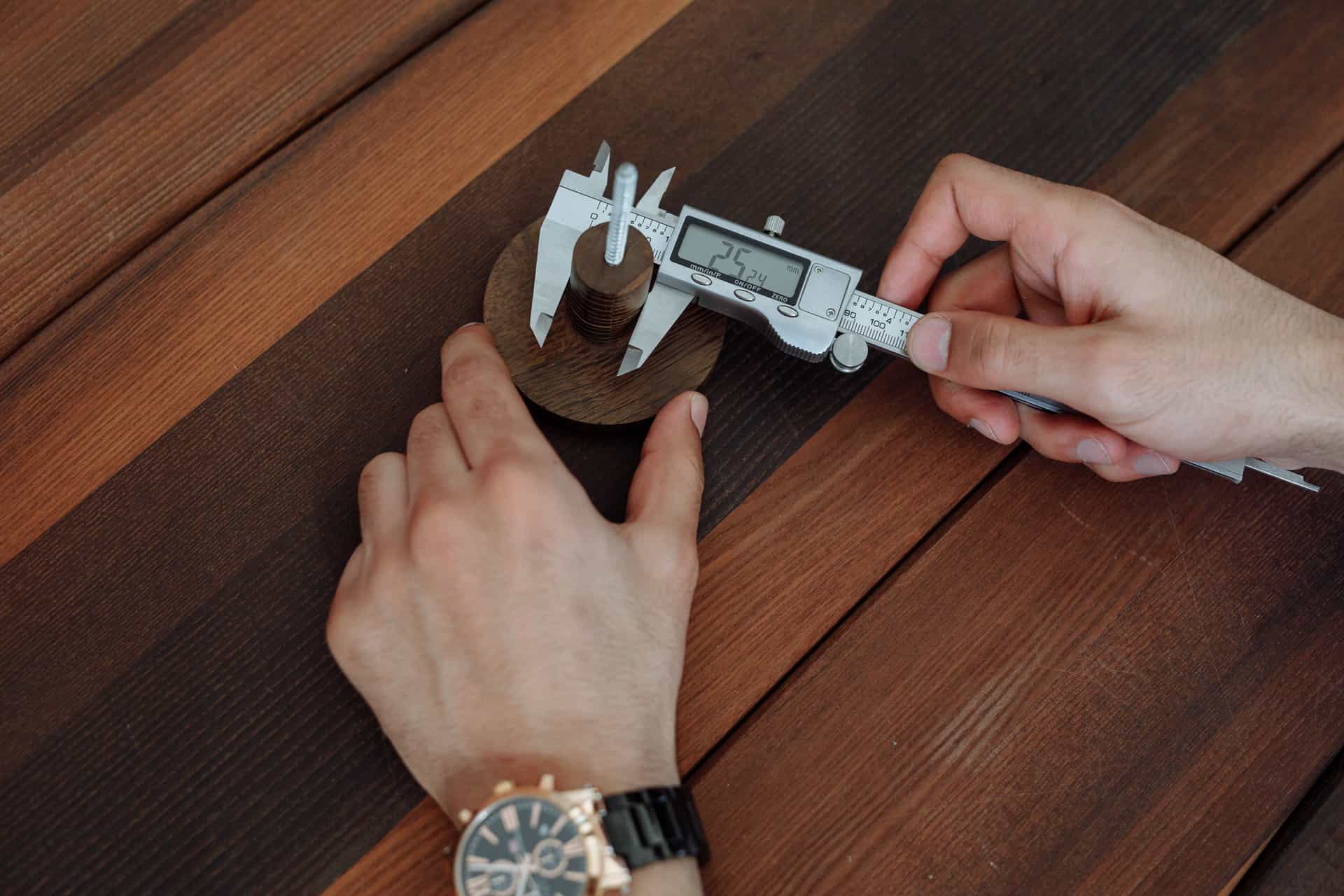 Solarmeter Model 6.5 UV Index Meter Best way to prove any of this | Verifying that your lamp actually hits the species UVI target | 2/5 | Check price on Amazon#ad We may earn a commission. Price and stock are resolved at Amazon. |
Why "best" means weakest here
Every other UVB page on this site is about reaching a figure. This one is about not overshooting it. A ball python is a Zone 2 animal with a published basking target of UVI 2.0-3.0 at the basking area per the Ferguson zone guidance, against UVI 4.0-4.5 at the basking surface for a bearded dragon. That is a fraction of the dose, and it is delivered to an animal that spends most of the day in a hide and emerges at dusk.
So the shopping instinct that works everywhere else - buy the stronger lamp, it has more headroom - is actively wrong for this species. A 12% Arcadia or a ReptiSun 10.0 mounted where a snake basks will read well above the target, and the only corrections available are distance and mesh. Buying a low-output lamp and mounting it at a published distance is simpler and more accurate than buying a strong one and trying to throttle it with geometry.
The distance, for a real enclosure
| Mount position | Distance to the snake's back | What to expect |
|---|---|---|
| On a mesh top, 4x2x2 PVC enclosure, snake on a flat hide | 10-14 in through about 35% mesh | The published range for UVI 2.0-3.0 - the configuration this lamp is specified for |
| On a mesh top, snake basking on the substrate floor | Over 20 in | Under target. Raise the basking site rather than changing the lamp |
| Inside the enclosure, no mesh between lamp and animal | 14-20 in | Remove the mesh correction and the same lamp reaches further - measure, do not assume |
| Glass or plastic shield over the lamp | Any | Zero usable UVB. A shield blocks it completely, whatever the lamp costs |
The mesh correction is the figure keepers skip. Screen takes roughly a third of the UVB passing through it, which is why the published distance for this lamp is stated through mesh rather than in free air. If your fixture sits inside the enclosure, you have removed that loss and the same lamp now delivers more at the same distance - which for this species means it needs to be further away, not closer. UVB distance and Ferguson zones has the full arithmetic.
What size tube, and what wattage
Autocomplete returns "best uvb wattage for ball python", and wattage is the wrong variable - it describes electricity, not ultraviolet. What matters is the output class (5.0 rather than 10.0) and the tube length, which should run roughly half to two-thirds of the enclosure length so the gradient has a lit end and an unlit end. In a 48 in enclosure that is the 22 in tube. A tube running the full length leaves the snake nowhere to get away from the lamp, and a Zone 2 animal needs that option. What size UVB bulb for your tank sizes the tube from the enclosure for every species.
Does a ball python need UVB at all?
It is a fair question and it has its own page - do ball pythons need UVB - because the honest answer is that a ball python can be kept alive without it and the current guidance provides a target anyway. Published Ferguson zone figures exist for the species, which means somebody measured what wild animals receive and wrote it down. If you choose to provide it, provide it correctly: a low-output lamp at a measured distance, on the same 12 hours on, 12 hours off (equatorial origin) cycle as the rest of the setup, switched off at night.
Replacement, and the part nobody does
Twelve months, then replace it. UVB output decays long before the tube stops making visible light, so a lamp that looks perfectly healthy can be delivering a small fraction of what it did when new - and for a species whose target band is already low, the lamp quietly stops doing anything at all. Date the tube with a marker when you install it. When to replace UVB bulbs covers dating a lamp you inherited and why a calendar reminder beats judgement by eye.
The complete lighting picture for this species, heat included, is in ball python lighting setup, and the wider lamp roundup across all four species is best reptile UVB bulbs.
The picks in full
1. Best UVB lamp for a ball python
Zoo Med ReptiSun T5 HO 5.0 UVB Lamp
Zoo Med · A ball python in a 4x2x2 (use the 22 in tube)
The only lamp on this page that meets all five criteria for this species, and it does it by being weak enough. A ball python is a Ferguson Zone 2 animal with a published basking target of UVI 2.0-3.0, and the guidance we work from puts this low-output T5 HO at 10-14 in from the snake's back through roughly 35% mesh to land in that band. That is a stated distance range, not a guess, which is exactly what the criteria ask for. Use the 22 in tube in a 4 ft enclosure. It is a linear tube, so output covers the length of a coiled snake rather than a point, and it goes in an open reflector with no glass or plastic shield over it - a shield blocks UVB completely. Replace it every 12 months whether or not it still lights.
Specifications
- Output
- 5.0, T5 HO linear
- Distance for UVI 2.0-3.0
- 10-14 in / 25-35 cm through about 35% mesh
- Tube length for a 4 ft enclosure
- 22 in
- Replace
- Every 12 months
How it scored against our criteria
| Can hit the species UVI targetReaches the Ferguson zone basking figure for the species at a distance the enclosure actually allows - UVI 4.0-4.5 for a bearded dragon, 2.0-3.0 for a ball python, 0.5-1.5 for a leopard gecko | Meets |
|---|---|
| Manufacturer or care reference publishes a mount distanceA stated distance in inches, with a mesh correction, not just a percentage on the box | Meets |
| Linear tube, not a compact coilT5 HO or T5 SO linear tube, so output covers a basking zone rather than a point | Meets |
| Usable in an unshielded fixtureNo glass or plastic over the lamp - both block UVB completely | Meets |
| Stated replacement interval12 months for a T5 fluorescent, regardless of whether visible light continues | Meets |
What works
- Correct output class for a Ferguson Zone 2 animal
- Published distance range, not guesswork
- Linear tube, not a coil, so output is even across the basking zone
What to know
- Needs a reflector fixture rated for T5 HO
- Too weak for a bearded dragon at any sensible distance
Who should look elsewhere
A bearded dragon needs UVI 4.0-4.5 at the basking surface. This lamp cannot deliver that at a safe mount distance. Use a 12-14% Arcadia or a ReptiSun 10.0.
2. Best for a low mount or an existing T8 fixture
Zoo Med ReptiSun T8 10.0 UVB Lamp
Zoo Med · A low enclosure, or a replacement for an existing T8 fixture
The pick for the keeper who already owns a working T8 fixture, and a legitimate lamp rather than a downgrade to apologize for. Zoo Med publishes 10% UVB and 30% UVA for it and states that it emits UVB a full 20 in from the surface of the lamp - a published reach figure, which is more than most lamps give you. The partial on the UVI target is honest: this is a 10% lamp aimed at a species that wants a low dose, so the risk here is overshooting at a close mount rather than falling short. Mount it high, measure what reaches the basking surface, and adjust distance rather than swapping lamps. Zoo Med describes its own T5 HO 10.0 as twice as strong as this one, which tells you where the format's ceiling is.
Specifications
- Output
- 10% UVB, 30% UVA (manufacturer figures)
- Stated UVB reach
- 20 in / 51 cm from the lamp surface
- Lengths
- 18 in (15 W), 24 in (17 W), 36 in (25 W), 48 in (32 W)
- Format
- T8 linear, 1 in diameter
How it scored against our criteria
| Can hit the species UVI targetReaches the Ferguson zone basking figure for the species at a distance the enclosure actually allows - UVI 4.0-4.5 for a bearded dragon, 2.0-3.0 for a ball python, 0.5-1.5 for a leopard gecko | Partial |
|---|---|
| Manufacturer or care reference publishes a mount distanceA stated distance in inches, with a mesh correction, not just a percentage on the box | Meets |
| Linear tube, not a compact coilT5 HO or T5 SO linear tube, so output covers a basking zone rather than a point | Meets |
| Usable in an unshielded fixtureNo glass or plastic over the lamp - both block UVB completely | Meets |
| Stated replacement interval12 months for a T5 fluorescent, regardless of whether visible light continues | Meets |
What works
- Manufacturer publishes both a UVB and a UVA percentage, which is rare
- Linear tube, so output is even across the basking zone rather than a point
- Drops into the T8 fixtures that came with older hoods and kits
What to know
- Zoo Med's own T5 HO 10.0 is described as twice as strong, so a T8 needs the animal closer
- Thinner tube means a reflector matters more, not less
Who should look elsewhere
If the lamp has to sit above a mesh top more than about a foot from the basking surface, a T8 is the wrong format. Buy the T5 HO version of the same lamp.
3. Best fixture for the distance figures to be true
Vivarium Electronics T5 HO Fixture
Vivarium Electronics · A low-output T5 HO over a snake enclosure
A fixture emits no UVB, so it is scored unknown on the two lamp criteria rather than credited with figures it cannot have - but it belongs on this page because fixture reflectivity changes delivered output more than most keepers expect, and every published distance figure assumes a reflector. This is one of only two fixtures named in the ball python UVB guidance as giving predictable distance behavior, which is the entire reason to buy a named fixture rather than a generic hood. It takes the common tube lengths, mounts above mesh or suspended, and is built for continuous running. Budget for the lamp separately.
Specifications
- Type
- T5 HO fixture
- Named for
- Predictable output with ReptiSun and Arcadia tubes
- Mounting
- Above mesh, or suspended
How it scored against our criteria
| Can hit the species UVI targetReaches the Ferguson zone basking figure for the species at a distance the enclosure actually allows - UVI 4.0-4.5 for a bearded dragon, 2.0-3.0 for a ball python, 0.5-1.5 for a leopard gecko | Not published |
|---|---|
| Manufacturer or care reference publishes a mount distanceA stated distance in inches, with a mesh correction, not just a percentage on the box | Meets |
| Linear tube, not a compact coilT5 HO or T5 SO linear tube, so output covers a basking zone rather than a point | Meets |
| Usable in an unshielded fixtureNo glass or plastic over the lamp - both block UVB completely | Meets |
| Stated replacement interval12 months for a T5 fluorescent, regardless of whether visible light continues | Not published |
What works
- Named in care guidance as a fixture whose distance behavior is known
- Solid build intended for long continuous runs
- Works with the common tube lengths
What to know
- Less widely stocked than the mass-market fixtures
- No integrated lamp, so budget for both
Who should look elsewhere
For a 12 in ShadeDweller over a gecko, buy the matched ShadeDweller kit rather than pairing a short tube with a large fixture.
4. Best way to prove any of this
Solarmeter Model 6.5 UV Index Meter
Solarmeter · Verifying that your lamp actually hits the species UVI target
The uncomfortable pick, and the one that turns every other recommendation on this page from a plan into a fact. A UV index meter reads UVI at the basking site, which is the unit the species target is published in - so it is the only instrument that answers the question you actually have. For a ball python the margin for error is small in one direction: the target band is narrow and low, mesh loss is roughly a third, and a lamp that has aged for a year reads far lower than a new one at the same distance. Three criteria score unknown because a meter is not a lamp. It is scored here anyway because a roundup that recommends a distance without a way to verify it is asking you to take our word for it.
Specifications
- Measures
- UV Index (UVI)
- Why this one
- Care references accept only the 6.5 / 6.5R for reptile UVI
- Use
- Measure at the basking surface, at the animal's back height
How it scored against our criteria
| Can hit the species UVI targetReaches the Ferguson zone basking figure for the species at a distance the enclosure actually allows - UVI 4.0-4.5 for a bearded dragon, 2.0-3.0 for a ball python, 0.5-1.5 for a leopard gecko | Not published |
|---|---|
| Manufacturer or care reference publishes a mount distanceA stated distance in inches, with a mesh correction, not just a percentage on the box | Meets |
| Linear tube, not a compact coilT5 HO or T5 SO linear tube, so output covers a basking zone rather than a point | Not published |
| Usable in an unshielded fixtureNo glass or plastic over the lamp - both block UVB completely | Meets |
| Stated replacement interval12 months for a T5 fluorescent, regardless of whether visible light continues | Not published |
What works
- Turns every distance chart on this site from an estimate into a measurement
- Catches a failing bulb that still produces visible light
- One purchase covers every enclosure you will ever own
What to know
- Costs more than the bulb it is checking
- Only useful if you actually use it on a schedule
Who should look elsewhere
If you will realistically never take a reading, spend the money on replacing bulbs on a 12-month calendar instead. An unused meter protects nothing.
Frequently asked questions
What UVB bulb is best for a ball python?
A low-output linear T5 HO - a ReptiSun T5 HO 5.0 or equivalent - mounted 10-14 in from the snake's back through roughly 35% mesh, which lands the published UVI 2.0-3.0 at the basking area basking target. In a 4 ft enclosure use the 22 in tube.
Is a 10.0 UVB bulb too strong for a ball python?
At a close mount, yes. A ball python is a Zone 2 animal targeting UVI 2.0-3.0 at the basking area, and a 10.0 is specified for animals needing far more. A 10.0 can be used if it is mounted high enough and verified with a meter, but a 5.0 at a published distance is the simpler and more accurate purchase.
What UVB wattage does a ball python need?
Wattage is the wrong specification - it measures electricity, not ultraviolet. Choose the output class (5.0, not 10.0) and the tube length (about half to two-thirds of the enclosure length), then set the mount distance. Wattage follows from the tube length you picked.
Do I need a special fixture for ball python UVB?
You need a T5 HO reflector fixture with no glass or plastic shield over the lamp - a shield blocks UVB completely. A reflector roughly doubles usable output, which is why every published distance figure assumes one. See best T5 fixtures.
How long should a ball python UVB light be on?
12 hours on, 12 hours off (equatorial origin), matching the species equatorial origin, and off overnight. There is no night-time UVB. See UVB hours per day.
Sources
- What Are Ferguson Zones? Reptile UVB Information — Zen Habitats
- Ball Python Humidity & Temperature Requirements — ReptiFiles
- Zoo Med ReptiSun UVB lamp information — Zoo Med Laboratories
- T8 ReptiSun 10.0 UVB lamp information — Zoo Med Laboratories
- Solarmeter Model 6.5 UV Index Meter — Solarmeter
- UVB-emitting LEDs for reptile lighting: identifying the risks of nonsolar UV spectra — Captive and Zoo Animal Welfare (CZAW)
Read next
Hub
Ball python enclosures, heating and substrate
The enclosure should be at least as long as the snake. The idea that ball pythons want to be crammed into a small dark box is a myth the published guidance names as one.
Ball python
Do ball pythons need UVB?
The honest answer on ball python UVB: optional for survival, beneficial, and a specific low-output lamp at a published distance.
Ball python
Ball python heating and lighting setup
Ball python UVB targets and distances, the photoperiod, and why snake UVB is defensible.
Lighting & heat
6 best reptile UVB bulbs (2026), judged by UVI at a stated distance
UVB bulbs ranked by whether they reach the species UVI target at a distance your enclosure allows.
Lighting & heat
UVB distance and Ferguson zones
Ferguson zones with published UVI ranges and the mount distance for every lamp class.
Lighting & heat
Best reptile UVB meters (2026)
What a UV index meter measures, why only the Solarmeter 6.5 class is accepted, and how to use one.