Lighting & heat
Do leopard geckos need UVB?
The hobby answer used to be a flat no. The current evidence is more interesting than that, and the right dose is very low.
By Brijon M.Last updated
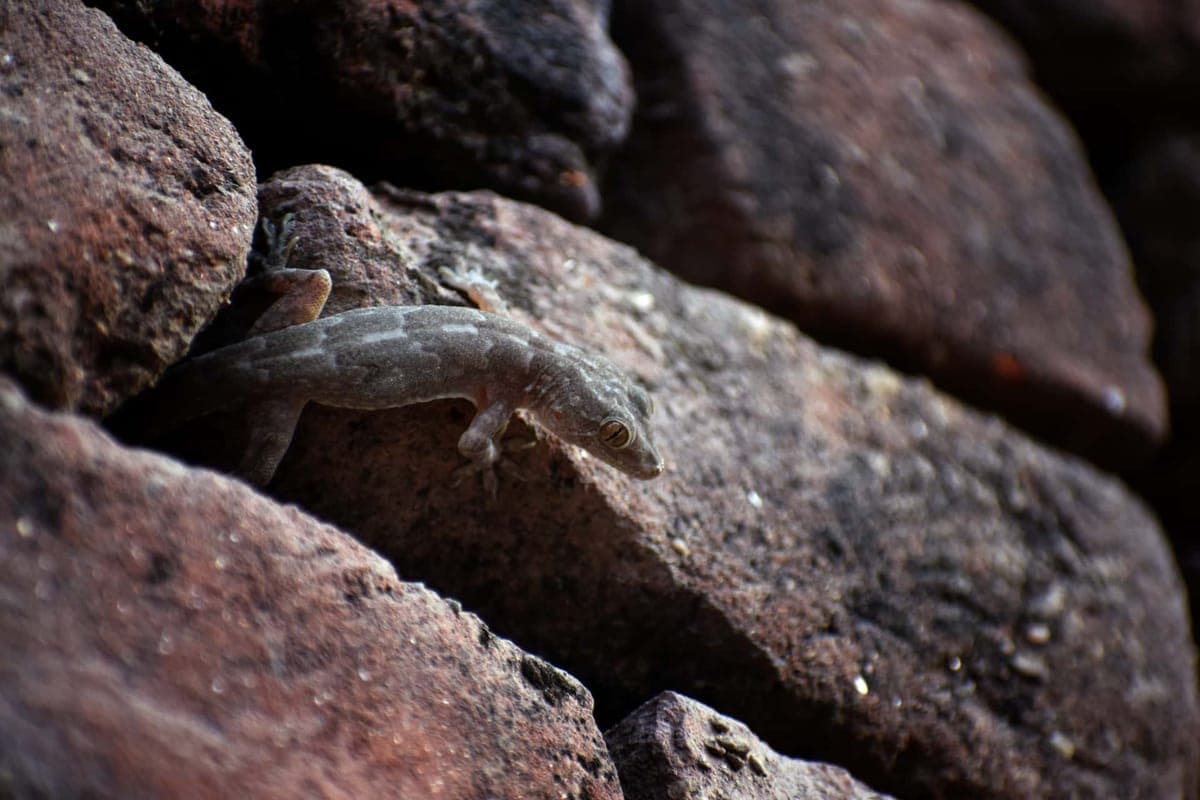
Yes - at a low level. Leopard geckos are Ferguson Zone 1 and the published basking target is UVI 0.5-1.5 at the basking spot for a normally pigmented animal, and no more than UVI 0.5-0.7 for albino, patternless and other reduced-pigment morphs, which can be burned by excess UVB.
Shed & Bask earns a commission from qualifying Amazon purchases made through links on this page. It does not change what we recommend or the order we rank things in. Read the full disclosure.
Why the old answer was "no"
Leopard geckos are crepuscular - most active at dawn and dusk - so they are not as dependent on UVA and UVB as diurnal species. For years that was translated into a flat "leopard geckos do not need UVB", and the species was kept successfully under that assumption for decades.
The current position in the guidance we cite is that this is partially true and increasingly outdated: mounting evidence shows that when UVB is offered, leopard geckos and other nocturnal species will bask under it and benefit from it. There is published work on the question in the Journal of Herpetological Medicine and Surgery. So the honest answer is not "no" and it is not "they will die without it" - it is that low-level UVB is a real improvement to quality of life and health.
The dose, which is the part that matters
| Pigmentation | Basking UVI target | Lamp | Distance (about 30% mesh) |
|---|---|---|---|
| Normal / well pigmented | UVI 0.5 - 1.5 | Arcadia ShadeDweller Max 2.5% | 8-14 in / 20-35 cm |
| Normal / well pigmented | UVI 0.5 - 1.5 | Arcadia ShadeDweller 7% | 10-18 in / 25-45 cm |
| Albino, patternless, hypo | UVI 0.5 - 0.7 | Arcadia ShadeDweller Max 2.5% | 12-14 in / 30-35 cm |
| Albino, patternless, hypo | UVI 0.5 - 0.7 | Arcadia ShadeDweller 7% | 16-18 in / 40-45 cm |
Light is not only about UVB
Even setting UVB aside, leopard geckos need a day and night cycle. Having a light on during the day helps regulate that cycle, which supports mental health and stimulates appetite. The published photoperiod is 14 hours in summer, 12 hours in winter, simulating the seasonal change. A smart timer synced to local sunrise and sunset handles it, and the guidance suggests bringing the UVB on shortly after sunrise rather than simultaneously.
Occasional daytime basking is normal, not a sign of a problem - many nocturnal species have been observed basking.
What not to do
- Do not use a desert lamp at a de-rated distance. A ShadeDweller-class lamp is purpose-built for this zone; improvising with a 10.0 lamp further away gives you a target you cannot predict.
- Do not put the lamp behind glass or plastic. It blocks UVB entirely.
- Do not use a colored night bulb for supplemental heat. Reptiles see the light and it disrupts the sleep cycle; a ceramic heat emitter in a guarded fixture is the alternative.
For a normally pigmented leopard gecko
Arcadia ShadeDweller ProT5 Kit (7% UVB)
Published distances of 10-18 in put a normal-pigment animal inside the UVI 0.5-1.5 window, through roughly 30% mesh.
For an albino or patternless morph
Arcadia ShadeDweller Max 2.5% UVB Lamp
The lower-output lamp is the correct one here. The published ceiling is UVI 0.5-0.7, and excess UVB can burn these animals.
Frequently asked questions
Do leopard geckos need UVB light?
They are less dependent on it than diurnal species, but the current evidence is that low-level UVB benefits them - they will bask under it when offered. The published target is UVI 0.5-1.5 at the basking spot.
How much UVB does a leopard gecko need?
UVI 0.5-1.5 at the basking spot for a normally pigmented animal, and no more than UVI 0.5-0.7 for albino, patternless and other reduced-pigment morphs.
How many hours of UVB for a leopard gecko?
14 hours in summer, 12 hours in winter, following the optimal photoperiod in the UV Tool referenced by the care guidance.
Can UVB hurt an albino leopard gecko?
Yes. Less-pigmented morphs are more sensitive to UVB and can be burned by excess. Use a lower-output lamp at the published longer distance, and verify with a Solarmeter if you can.
Sources
- Leopard Gecko Temperatures & Humidity — ReptiFiles
- Effects of UVB exposure in captive leopard geckos (Journal of Herpetological Medicine and Surgery, 2018) — Journal of Herpetological Medicine and Surgery
- What Are Ferguson Zones? Reptile UVB Information — Zen Habitats
- Solarmeter Model 6.5 UV Index Meter — Solarmeter
Read next
Hub
Reptile UVB, heat and thermostats
Wattage and percentage tell you almost nothing on their own. UV index at a stated mount distance is the number that decides whether a lamp is right for your animal.
Lighting & heat
6 best reptile UVB bulbs (2026), judged by UVI at a stated distance
UVB bulbs ranked by whether they reach the species UVI target at a distance your enclosure allows.
Lighting & heat
How many hours of UVB per day
Daily light and UVB hours by species, with the seasonal adjustment for each.
Lighting & heat
UVA vs UVB for reptiles
What UVA and UVB each do for a reptile, and why one lamp covers both.
Leopard gecko
Leopard gecko lighting setup
Leopard gecko UVB targets, mount distances by morph, and the seasonal photoperiod.
Leopard gecko
Leopard gecko tank size
Leopard gecko tank sizes by life stage, in floor area rather than gallons.