Lighting & heat
Best ceramic heat emitters
A ceramic emitter is bought for one job - lightless ambient heat - and sold as if it did three. These three are scored on the job it actually does, and on how much each maker is willing to put in writing.
By Brijon M.Last updated
Buy the Zoo Med ReptiCare, in the wattage its published mapping gives for your enclosure, and run it in a ceramic fixture with a wire guard - Zoo Med's own UL/cUL classification only holds in one. Fluker's is the budget pick and carries the clearest warnings. What no emitter does is replace a basking lamp: a ceramic element is lightless ambient heat, so it can carry a ball python warm hide at Warm hide 86-90 F (30-32 C) but it cannot put a bearded dragon basking surface at 108-113 F (42-45 C) surface temperature. And it only goes on a thermostat. There is no exception to that.
Shed & Bask earns a commission from qualifying Amazon purchases made through links on this page. It does not change what we recommend or the order we rank things in. Read the full disclosure.
How we picked
Every pick below is scored against these thresholds, stated as numbers. Publishing them is the point: of the competitor roundups we surveyed, not one published a numeric selection threshold.
Right infrared band for the job
Halogen for daytime basking (produces Infrared-A); lightless ceramic or radiant panel for night and ambient only
Source: ReptiFiles - Ball Python Humidity & Temperature Requirements
Thermostat-controllable
Works on the correct controller type - dimming or pulse for a light-emitting lamp, on/off acceptable only for a lightless source
Source: ReptiFiles - Ball Python Humidity & Temperature Requirements
Reaches the species basking surface figure
108-113 F surface for a bearded dragon, 94-97 F for a leopard gecko, 86-90 F warm hide for a ball python
Source: ReptiFiles - Bearded Dragon Temperatures & UVB Requirements
Can be guarded
Fits a fixture with a cage guard, so an animal that can reach it cannot contact it
Source: National Fire Protection Association - Heating equipment and home fire safety
Heats a zone, not a point
Covers enough area for the animal's whole body - a single spot is too small for a coiled adult snake in a 48 in enclosure
Source: ReptiFiles - Ball Python Humidity & Temperature Requirements
These are the same criteria every roundup on this site applies. See the full methodology.
Quick picks
Every row is scored against the published criteria below. Tap a row to read the full write-up.
| # | Product | Best for | Criteria met | Price |
|---|---|---|---|---|
| 1 | Zoo Med ReptiCare Ceramic Infrared Heat Emitter Best overall ceramic emitter | Night and ambient heat in a humid enclosure, on a thermostat | 4/5 | Check price on Amazon#ad We may earn a commission. Price and stock are resolved at Amazon. |
| 2 |  Fluker's Ceramic Heat Emitter Budget pick, with the best warnings | A straightforward lightless heat source where you already own a 150 w ceramic fixture | 1/5 | Check price on Amazon#ad We may earn a commission. Price and stock are resolved at Amazon. |
| 3 |  Exo Terra Ceramic Heater (100 W) Best inside the Exo Terra fixture range | An Exo Terra terrarium where the matching wire fixture is already in use | 1/5 | Check price on Amazon#ad We may earn a commission. Price and stock are resolved at Amazon. |
What a ceramic emitter is for, and the three jobs it is sold for
A ceramic heat emitter is a resistive element in a ceramic body. It gets hot, it radiates, and it produces no visible light. That last property is the whole reason the category exists, because it means an emitter can run after dark without breaking the photoperiod - which is exactly the job the colored night bulbs on the same shelf are sold for and are wrong for.
It gets sold for two other jobs it is not good at. The first is daytime basking. Halogen delivers far more Infrared-A, the deeply penetrating band, which is why the published guidance names incandescent and halogen for a basking zone and names ceramic emitters and radiant panels for ambient and night heat in the care references we work from. The second is as a fix for an enclosure that cannot hold heat. An emitter will mask a ventilation or material problem for a while and then present you with the electricity bill.
Everything below is scored on the first job. Read the surface temperature column with that in mind: all three emitters score partial, and that is not a defect in the products. It is the category telling you what it is.
The figures an emitter is actually aimed at
| Species | Published figure an emitter might serve | Can a CHE do it? |
|---|---|---|
| Ball python | Warm hide Warm hide 86-90 F (30-32 C) | Yes - this is the emitter's best case, on a thermostat |
| Bearded dragon | Basking surface 108-113 F (42-45 C) surface temperature | No - buy a halogen basking lamp; no emitter wattage substitutes |
| Leopard gecko | Warm surface 94-97 F (34-36 C) surface; warm hide 90-92 F (32-33 C) | Partly - a mat or overhead halogen is the better route; an emitter lifts the room |
| Crested gecko | Ceiling 82-85 F (28-29 C) at the top of the enclosure | Rarely needed - this species overheats above its range, so measure the room first |
| All four, at night | Ball python: 70-78 F (21-26 C) | Yes - and usually only if the room genuinely falls below the species night figure |
The crested gecko row is the one worth pausing on. That species tops out at 82-85 F (28-29 C) at the top of the enclosure, and sustained heat above its range is a real risk rather than a theoretical one, so adding an emitter to a crested gecko enclosure is more often a mistake than a fix. We make that argument in full on do crested geckos need a heat lamp.
The fixture is part of the product
This is the detail that separates the three picks, and almost no roundup mentions it. A ceramic emitter runs hotter at the socket than an incandescent bulb of the same wattage, so it needs a porcelain or ceramic socket rated for it - a plastic-socket work light will fail, and the failure mode is a dropped hot element.
Zoo Med puts a number on it. Its emitter is described as UL/cUL classified when used in conjunction with its Wire Cage Clamp Lamp, the LF-10, which Zoo Med also states is the only one of its clamp lamps that carries that approval with the emitter. That is unusually precise, and the practical reading is blunt: if you buy the emitter and put it in a generic clamp lamp, the approval you were relying on no longer describes your setup.
Fluker's goes the other way. It tells you not to exceed the lamp's rating - correct advice - while its own Repta-Clamp Lamp is listed as rated for up to 75 w and the emitter range runs to 150 w. Both facts are published; they just do not agree, and the buyer is the one who has to notice.
The fixture the approval depends on
Zoo Med Wire Cage Clamp Lamp (LF-10)
A heat-resistant porcelain socket rated to 150 w with the wire guard built in, and the one Zoo Med clamp lamp its ceramic emitter is UL listed in. The guard is what stops a contact burn.
Wattage: size it to the room, not to the animal
An emitter is the one heat source where the room matters more than the species. You are not aiming at a basking figure; you are closing the gap between your room temperature and the enclosure's ambient target. A 60 w emitter in a 68 F room does a different job from the same emitter in a 58 F garage.
Zoo Med is the only maker here that publishes a mapping at all - CE-60 for 10-20 gal, CE-100 for 30-40 gal, CE-150 for 50-100 gal - and even that is in gallons, which tells you about volume and nothing about the footprint the heat has to cover. Treat it as a starting point, then measure. Our what wattage heat bulb for a reptile page explains why there is no species wattage and what to target instead.
| Zoo Med ReptiCare | Fluker's | Exo Terra | |
|---|---|---|---|
| Wattages | 60 / 100 / 150 w | 60 / 100 / 150 w | 40 / 60 / 100 / 150 / 250 w |
| Enclosure mapping | Yes - 10-20, 30-40, 50-100 gal | Not published | Not published |
| Safety approval | UL/cUL, conditional on the LF-10 fixture | Not published | Not published |
| Service life | Stated up to 5 years | Not published | Not published |
| Warranty | 2 years | Not published | Not published |
| Thermostat guidance | Yes - thermostat or rheostat | Not published | Not published |
| Required fixture | Porcelain socket; LF-10 for the approval | Ceramic socket, rated for the wattage | Exo Terra Wire Light only |
| Voltage stated | Not on the page | Not on the page | Not on the page - line sold in 230 V and 120 V |
That table is the argument of this page. Three emitters that will all get hot are not three equivalent purchases, because only one of them lets you verify what you are buying.
The thermostat, which is not optional
A ceramic emitter has no upper limit of its own. It climbs until it reaches equilibrium with the enclosure, and on a warm day that equilibrium can sit well above the figure you were aiming at. It is also lightless, which means the correct controller type is the cheap one: an on/off thermostat is adequate for an emitter, because the switching is invisible to the animal. A halogen basking lamp on the same controller would visibly strobe.
Put the probe where the figure is stated. For a ball python that is inside the warm hide, not in the air at the top of the enclosure. How thermostats work covers why the control type has to match the source, and best thermostats is the scored controller roundup.
The right controller type for an emitter
Inkbird ITC-308 Temperature Controller
An on/off temperature controller with a remote probe and a published load rating - correct for a lightless source, and the cheapest adequate option rather than an upsell.
The verification step
Infrared Temperature Gun
Reads the surface the animal lies on, which is the quantity the published figures are stated in. A controller display is not a measurement of the enclosure.
Humidity: the one place ceramic beats everything else
A solid ceramic element tolerates a misted enclosure far better than a coated one, which is why both Zoo Med and Exo Terra specifically describe their emitters as suited to humid terrariums. If you are heating a tropical build - a crested gecko room that runs cold, a ball python at the humid end of its range - that property is worth more than it looks on a spec sheet.
It cuts the other way too. Overhead heat dries an enclosure, and an emitter running all night in a humid build will pull the humidity down with it. If you add one to a tropical enclosure, expect to compensate on the humidity side rather than discovering the problem three weeks later - our how to increase humidity in a reptile enclosure page is the fix list, and best reptile foggers and misters is the equipment if you end up needing it.
How we picked, and what we did not do
We did not bench-test these emitters. Every figure on this page is quoted from the manufacturer's own current product information, fetched for this page on 8 November 2026, and where a maker publishes nothing the table says "not published" rather than borrowing a number from a review site. That is the method, and it explains the ranking: all three products will heat an enclosure, so they are separated by how much of the purchase you can verify first.
It also explains what is missing. Several budget emitters sell well and are not here, because we could not find a manufacturer page stating a wattage, a fixture requirement or a certification for them. A low price with no documentation is not a bargain in a category where the failure mode is a fire. Our methodology page states the standard in full.
Alternatives worth considering before you buy one
Three of them, in the order we would check.
No night heat at all. This is the honest first answer for most keepers. The published night figures are generous - Bearded dragon tolerates 55-75 F (12-24 C), leopard gecko tolerates a drop to 60 f (16 c) - and a drop after dark is part of the husbandry rather than a problem to engineer away. Measure the room overnight before buying anything.
A radiant heat panel. Ceiling-mounted, so an animal cannot coil around it and the clamp failure mode disappears. It costs more and needs a solid ceiling to mount to. Radiant heat panel versus ceramic heat emitter runs that comparison properly.
A thermostatically controlled mat, if what you need is a warm surface rather than warm air - and for a leopard gecko that is usually the case. Best heat mat for a leopard gecko scores four of them.
The order we would buy in
Thermometer first, then a week of overnight readings, because about half of the people shopping for an emitter do not need one. If the room does fall short: the Zoo Med ReptiCare in the wattage its mapping suggests, the LF-10 fixture so the approval and the guard both apply, an on/off thermostat with the probe at the published figure, and a stand or secondary fixing so the clamp is not the only thing holding it.
Then verify with an infrared reading for three days before you trust it. For the wider decision about which heat source type belongs in your build at all, best heat sources ranks the categories rather than the models, and is a ceramic heat emitter safe covers the four failure modes in detail.
The picks in full
1. Best overall ceramic emitter
Zoo Med ReptiCare Ceramic Infrared Heat Emitter
Zoo Med · Night and ambient heat in a humid enclosure, on a thermostat
It wins on the only axis a buyer can check before the money leaves: what the maker publishes. A wattage-to-tank-size mapping across three models, a 5-year service life, a 2-year warranty, a written confirmation that a thermostat or rheostat can control it, and a UL/cUL classification that names the fixture it depends on - the LF-10 wire cage clamp lamp. Nobody else here states four of those five. It scores partial on surface temperature for the reason every emitter does: a lightless ceramic element raises air and surface temperature broadly and cannot produce a basking surface at a bearded dragon's figure. It can carry a ball python warm hide.
Specifications
- Models
- CE-60 60 w (10-20 gal); CE-100 100 w (30-40 gal); CE-150 150 w (50-100 gal)
- Approval
- UL/cUL classified when used with Zoo Med's Wire Cage Clamp Lamp (LF-10)
- Service life
- Zoo Med states it lasts up to 5 years
- Warranty
- 2 years
- Socket
- Standard porcelain incandescent socket; emits no light
- Control
- Zoo Med states a thermostat or rheostat can control its output
- Humidity
- Stated as suitable for high humidity terrariums
- Coating
- Zoo Med states there is no Teflon coating
How it scored against our criteria
| Right infrared band for the jobHalogen for daytime basking (produces Infrared-A); lightless ceramic or radiant panel for night and ambient only | Meets |
|---|---|
| Thermostat-controllableWorks on the correct controller type - dimming or pulse for a light-emitting lamp, on/off acceptable only for a lightless source | Meets |
| Reaches the species basking surface figure108-113 F surface for a bearded dragon, 94-97 F for a leopard gecko, 86-90 F warm hide for a ball python | Partial |
| Can be guardedFits a fixture with a cage guard, so an animal that can reach it cannot contact it | Meets |
| Heats a zone, not a pointCovers enough area for the animal's whole body - a single spot is too small for a coiled adult snake in a 48 in enclosure | Meets |
What works
- Publishes a wattage-to-tank-size mapping, which is the only sizing figure any of these makers gives you
- The UL/cUL classification is stated along with the condition it depends on - the LF-10 wire cage fixture
- A published 5-year service life and a 2-year warranty, both longer than the category norm
- Flat-faced design, stated as more efficient and longer lasting than a conical element
- Zoo Med confirms in writing that a thermostat or rheostat can control it
What to know
- Lightless ambient heat only - it will not produce a basking surface at a bearded dragon's 108-113 F figure, and should never be bought as a basking lamp
- The safety approval only holds in one specific fixture, so a generic clamp lamp voids the thing you were relying on
- Hot enough to burn an animal that can reach it, so the cage guard is part of the purchase rather than an upgrade
- Tank-size mapping is given in gallons, which tells you nothing about the footprint the heat has to cover
Who should look elsewhere
If what you actually need is a daytime basking surface, buy a halogen spot instead - a ceramic emitter is the wrong tool and no wattage fixes that. If your room never falls below the species night minimum, you need neither.
2. Budget pick, with the best warnings
Fluker's Ceramic Heat Emitter
Fluker's · A straightforward lightless heat source where you already own a 150 w ceramic fixture
The budget pick, and the only maker here that writes down the two warnings that matter: do not let the animal contact the emitter, and do not place it over glass or plexiglass. It also tells you to pre-run it for up to half an hour and measure before the animal goes in, which is the step most keepers skip. The marks against it are documentation. There is no thermostat guidance at all, no published temperature, service life or approval, and the fixture score is partial for a concrete reason - Fluker's own Repta-Clamp Lamp is listed as rated to 75 w, which does not cover the 100 w and 150 w emitters sold on the same page. Buy a ceramic fixture rated for your wattage and do not assume the brand's own lamp is it.
Specifications
- Wattages
- 60 w, 100 w and 150 w (SKU 26005-1)
- Light output
- None - Fluker's states it radiates infrared heat but emits no light
- Fixture
- Fluker's ceramic clamp lamp or a similar lamp with a ceramic socket
- Fixture limit
- Fluker's states the lamp's maximum wattage must not be exceeded
- Setup instruction
- Run it for up to 30 minutes before the animal goes in, then measure the temperature
- Temperature claim
- None published
How it scored against our criteria
| Right infrared band for the jobHalogen for daytime basking (produces Infrared-A); lightless ceramic or radiant panel for night and ambient only | Meets |
|---|---|
| Thermostat-controllableWorks on the correct controller type - dimming or pulse for a light-emitting lamp, on/off acceptable only for a lightless source | Partial |
| Reaches the species basking surface figure108-113 F surface for a bearded dragon, 94-97 F for a leopard gecko, 86-90 F warm hide for a ball python | Partial |
| Can be guardedFits a fixture with a cage guard, so an animal that can reach it cannot contact it | Partial |
| Heats a zone, not a pointCovers enough area for the animal's whole body - a single spot is too small for a coiled adult snake in a 48 in enclosure | Partial |
What works
- Three published wattages, so the output can be matched to a room rather than guessed
- The strongest written warnings in the category: no direct animal contact, and do not place the emitter over glass or plexiglass
- Tells you to pre-run it and measure before the animal goes in, which is the step most keepers skip
- Widely stocked, which matters when an emitter fails in a cold week
What to know
- Fluker's own Repta-Clamp Lamp is listed as rated for up to 75 w, which does not cover the 100 w or 150 w emitters on the same page - buy a fixture rated for your wattage and do not assume the brand's own lamp is it
- No thermostat guidance anywhere in the product information, which is the one instruction a heat source most needs
- No published temperature figure, service life or safety approval
- Lightless ambient heat only, so it cannot deliver a diurnal basking surface temperature
Who should look elsewhere
If you want the maker to document the fixture, the approval and the service life, the Zoo Med ReptiCare publishes all three. Buy Fluker's for the wattage range and the warnings, and pair it with a ceramic fixture rated for the bulb you chose.
3. Best inside the Exo Terra fixture range
Exo Terra Ceramic Heater (100 W)
Exo Terra · An Exo Terra terrarium where the matching wire fixture is already in use
A solid ceramic element - the right construction for a misted enclosure, where a coated element is the one that fails - sold on a stated 100% heat efficiency claim and explicitly tied to the Exo Terra Wire Light. If you already own that fixture this is the tidy answer. Two things keep it third. The product page states no voltage and the line is sold in both 230 V and 120 V versions, so a North American buyer has to confirm the unit on the listing rather than trusting the model number. And there is no thermostat guidance, no service life and no stated approval, so there is less here to check than the ranking above it.
Specifications
- Model
- 100 W, SKU PT2046 (UPC 015561220460)
- Line sizes
- Exo Terra lists 40 w, 60 w, 100 w, 150 w and 250 w as separate products
- Efficiency claim
- Stated as 100% heat efficiency, no visible light
- Fixture
- Exo Terra states it is to be used only with the Exo Terra Wire Light
- Humidity
- Solid ceramic element, stated as suitable for humid environments
- Voltage
- Not stated on the product page - retailer listings show both 230 V and 120 V units
How it scored against our criteria
| Right infrared band for the jobHalogen for daytime basking (produces Infrared-A); lightless ceramic or radiant panel for night and ambient only | Meets |
|---|---|
| Thermostat-controllableWorks on the correct controller type - dimming or pulse for a light-emitting lamp, on/off acceptable only for a lightless source | Partial |
| Reaches the species basking surface figure108-113 F surface for a bearded dragon, 94-97 F for a leopard gecko, 86-90 F warm hide for a ball python | Partial |
| Can be guardedFits a fixture with a cage guard, so an animal that can reach it cannot contact it | Partial |
| Heats a zone, not a pointCovers enough area for the animal's whole body - a single spot is too small for a coiled adult snake in a 48 in enclosure | Partial |
What works
- A solid ceramic element rather than a coated one, which is the right construction for a misted enclosure
- No visible light, so it does not break the photoperiod when used after dark
- Five wattages across the line, including a 40 w that suits a small vertical terrarium
- The fixture pairing is stated plainly rather than left to the buyer to work out
What to know
- The product page does not state a voltage, and the line is sold in both 230 V and 120 V versions - confirm the North American unit on the listing before you buy
- No thermostat guidance, no published service life and no stated safety approval
- Restricting it to one proprietary fixture means a spare generic ceramic lamp will not do
- No wattage-to-enclosure mapping published, so sizing is left to you and a thermometer
Who should look elsewhere
If you are not already in the Exo Terra fixture ecosystem, the Zoo Med ReptiCare publishes more of what you need to check and names the fixture its approval depends on.
Frequently asked questions
What is the best ceramic heat emitter for reptiles?
The Zoo Med ReptiCare, because it is the only one that publishes a wattage-to-enclosure mapping, a service life, a warranty, thermostat guidance and a safety approval - and states the fixture that approval depends on. Fluker's is the budget pick and has the clearest written warnings. All three need a thermostat and a guarded ceramic fixture.
What wattage ceramic heat emitter do I need?
It depends on your room rather than your species, because an emitter closes the gap between room temperature and the enclosure's ambient target. Zoo Med publishes the only mapping we found - 60 w for 10-20 gal, 100 w for 30-40 gal, 150 w for 50-100 gal - and that is a starting point to measure from, not an answer.
Can a ceramic heat emitter be used as a basking lamp?
No. Halogen delivers far more Infrared-A, which is why the published guidance names incandescent and halogen for basking and names ceramic emitters for ambient and night heat. An emitter can carry a ball python warm hide at Warm hide 86-90 F (30-32 C); it cannot produce a bearded dragon basking surface at 108-113 F (42-45 C) surface temperature.
Do ceramic heat emitters need a thermostat?
Always. An emitter has no upper limit of its own and climbs until it reaches equilibrium with the enclosure. Because it is lightless, an on/off thermostat is adequate - the cheap controller type is the correct one here, with the probe placed where the published figure is measured.
What fixture does a ceramic heat emitter need?
A porcelain or ceramic socket rated for the wattage, with a wire guard. Zoo Med states its emitter is UL/cUL classified only when used with its Wire Cage Clamp Lamp (LF-10), and Fluker's own clamp lamp is listed as rated to 75 w - below the 100 w and 150 w emitters it sells - so check the fixture rating rather than assuming the brand match covers it.
How long does a ceramic heat emitter last?
Zoo Med states up to 5 years for the ReptiCare and gives a 2-year warranty. Neither Fluker's nor Exo Terra publishes a service life, so for those two there is no figure we are willing to quote.
Sources
- Ball Python Humidity & Temperature Requirements — ReptiFiles
- Bearded Dragon Temperatures & UVB Requirements — ReptiFiles
- Crested Gecko Temperatures & Humidity — ReptiFiles
- Heating equipment and home fire safety — National Fire Protection Association
Read next
Hub
Reptile UVB, heat and thermostats
Wattage and percentage tell you almost nothing on their own. UV index at a stated mount distance is the number that decides whether a lamp is right for your animal.
Lighting & heat
Best reptile heat lamps and heat sources (2026)
Heat sources ranked by infrared band, thermostat compatibility and the species basking figure they can reach.
Lighting & heat
Is a ceramic heat emitter safe?
Ceramic heat emitter safety: the three conditions, the four failure modes, and which species actually needs one.
Lighting & heat
Radiant heat panel vs ceramic heat emitter
The two lightless ambient heat sources compared on mounting, burn risk and controller type - plus why neither is a basking lamp.
Lighting & heat
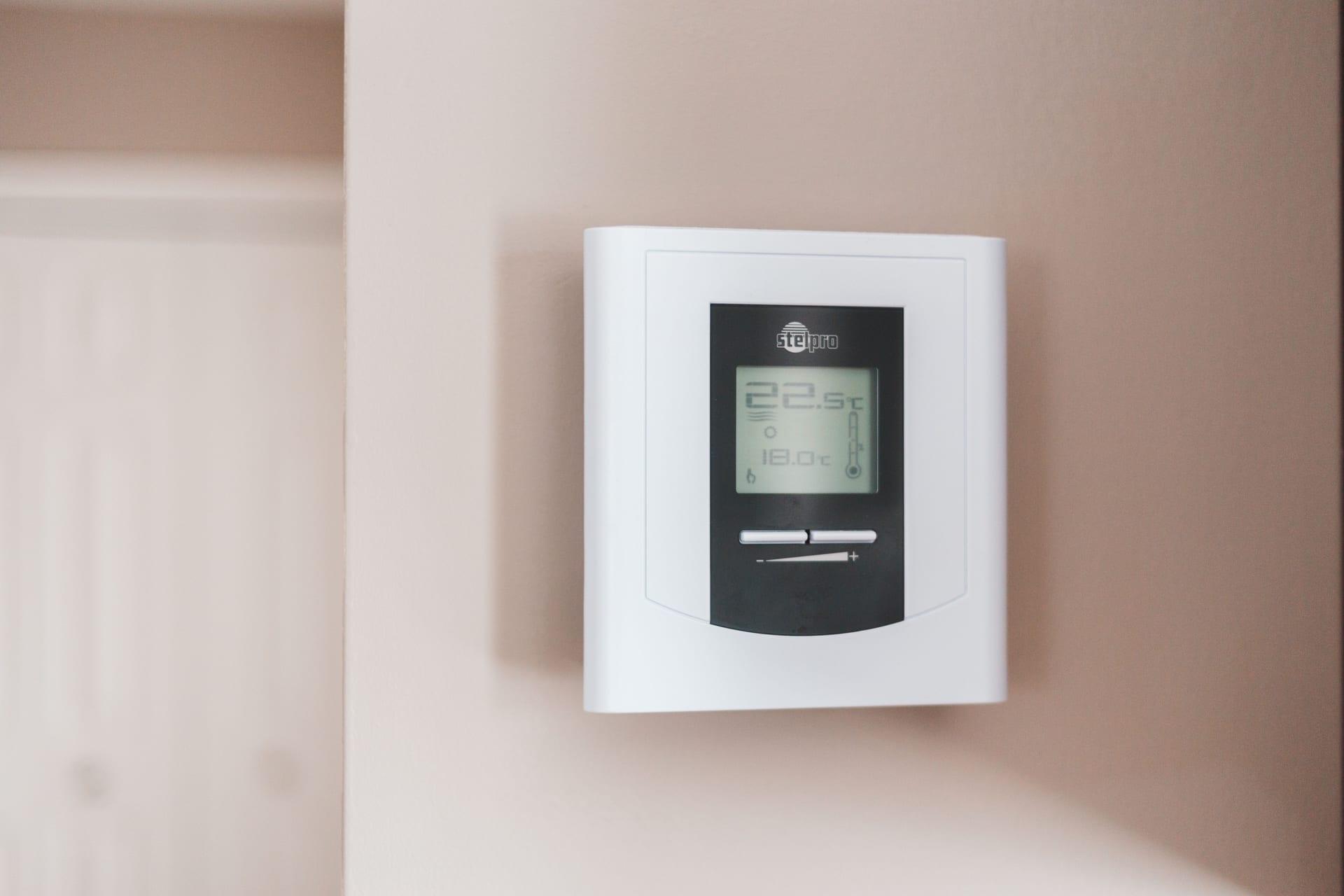
Best reptile thermostats (2026)
Thermostats ranked by control type, stated accuracy, load ceiling and whether they alarm on failure.

Leopard gecko
Best heat mat for a leopard gecko
Four leopard gecko heat mats scored on area, external thermostat control and published wattage, with the manufacturer figure quoted for each.