Lighting & heat
Best UVA bulbs for reptiles (2026)
Four lamps that genuinely emit UVA, scored on whether their maker publishes the claim or just prints the letters. The honest headline: nobody needs a UVA-only bulb, because the lamps that supply UVA are lamps you already have to buy.
By Brijon M.Last updated
No reptile needs a UVA-only bulb. UVA arrives with two lamps you are already buying: a linear UVB tube and an overhead basking lamp. Of the lamps we checked, only Zoo Med's T8 ReptiSun 10.0 publishes an actual UVA percentage (30% UVA alongside 10% UVB). Zoo Med's Repti Basking Spot publishes a UVA claim without a number, the PowerSun UV states UVA, UVB and heat from one lamp, and Arcadia publishes UVB but no UVA figure we could verify. Buy the UVB lamp your species needs; the UVA comes with it.
Shed & Bask earns a commission from qualifying Amazon purchases made through links on this page. It does not change what we recommend or the order we rank things in. Read the full disclosure.
How we picked
Every pick below is scored against these thresholds, stated as numbers. Publishing them is the point: of the competitor roundups we surveyed, not one published a numeric selection threshold.
Manufacturer publishes the UVA claim
A UVA statement or percentage on the manufacturer's own product information - 30% UVA on a Zoo Med T8 10.0, a named UVA claim on a basking lamp. Retailer copy does not count
Source: Zoo Med Laboratories - T8 ReptiSun 10.0 UVB lamp information
A UVA figure, not just the word UVA
An actual published percentage, so two lamps can be compared rather than assumed
Source: Zoo Med Laboratories - T8 ReptiSun 10.0 UVB lamp information
Does not sell UVA as a UVB substitute
Either supplies UVB with a stated output class, or states plainly that it does not supply UVB. A lamp that is vague about UVB fails
Source: ReptiFiles - Bearded Dragon Temperatures & UVB Requirements
Publishes a distance or reach figure
A stated distance in inches or a stated beam behavior, so the lamp can be positioned rather than guessed at
Source: Zoo Med Laboratories - T8 ReptiSun 10.0 UVB lamp information
The heat it adds can be controlled
Runs on a dimming or pulse thermostat, or produces no meaningful basking heat at all. A lamp that adds uncontrollable heat fails
Source: ReptiFiles - Bearded Dragon Temperatures & UVB Requirements
These are the same criteria every roundup on this site applies. See the full methodology.
Quick picks
Every row is scored against the published criteria below. Tap a row to read the full write-up.
| # | Product | Best for | Criteria met | Price |
|---|---|---|---|---|
| 1 | 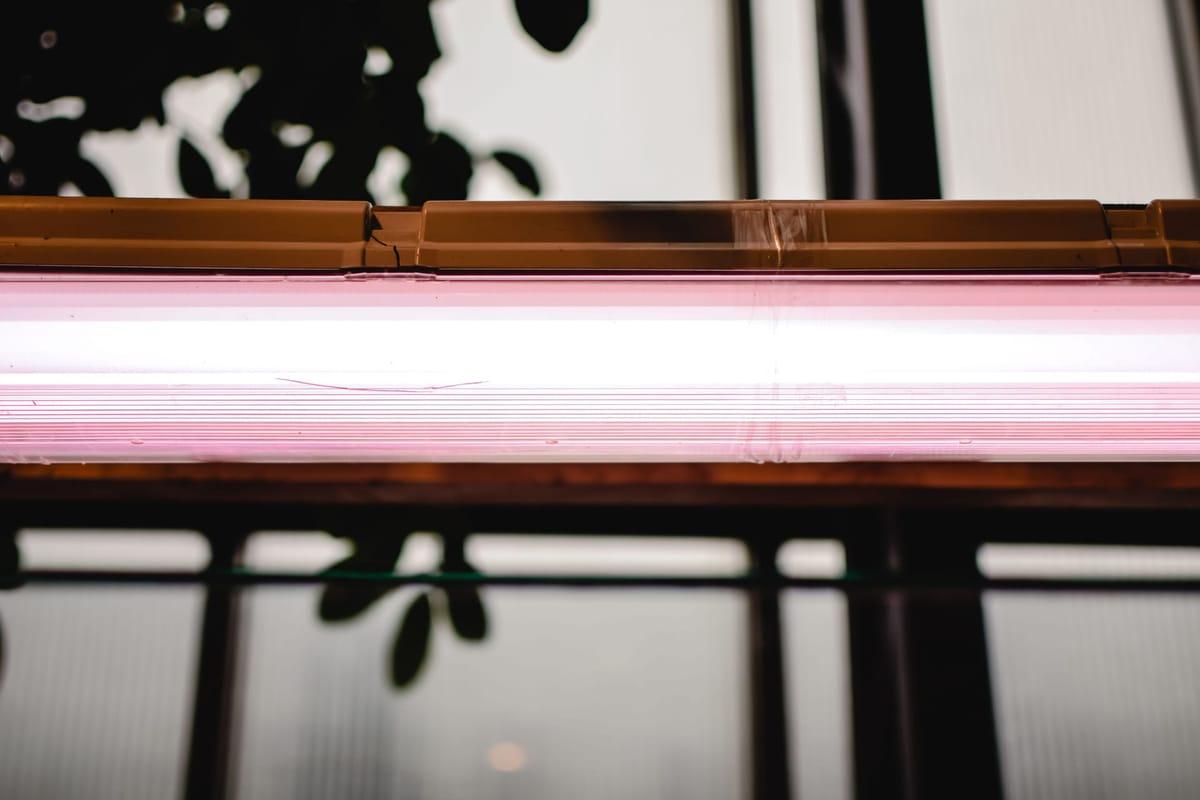 Arcadia T5 HO Desert 12% UVB Lamp Best UVA for a desert basker | A bearded dragon in a standard mesh-top enclosure | 3/5 | Check price on Amazon#ad We may earn a commission. Price and stock are resolved at Amazon. |
| 2 | Zoo Med ReptiSun T8 10.0 UVB Lamp Best published UVA figure | A low enclosure, or a replacement for an existing T8 fixture | 5/5 | Check price on Amazon#ad We may earn a commission. Price and stock are resolved at Amazon. |
| 3 |  Zoo Med Repti Basking Spot Lamp Best UVA plus basking heat | Basking heat plus UVA from a single cheap bulb on a thermostat | 3/5 | Check price on Amazon#ad We may earn a commission. Price and stock are resolved at Amazon. |
| 4 | Zoo Med PowerSun UV Mercury Vapor Lamp Best one-lamp UVA for a tall enclosure | A tall enclosure where one overhead lamp has to do all three jobs | 2/5 | Check price on Amazon#ad We may earn a commission. Price and stock are resolved at Amazon. |
What people are actually buying when they search "UVA bulb"
Two different shoppers type that phrase. One has read that reptiles see into the ultraviolet and wants to know which bulb supplies it. The other has a basking lamp on the shelf at the pet store with "UVA" printed on the box and wants to know whether it is the same thing as the UVB lamp the care sheet demanded. The answer to the second question is no, and it is the more expensive mistake, so this page answers it first: a lamp sold on a UVA claim supplies no usable UVB unless it separately states a UVB output class. If the box does not give a UVB percentage or a UVB distance, treat the UVB as zero.
The useful news for the first shopper is that there is nothing to buy. Linear UVB tubes emit UVA as part of their output - Zoo Med publishes 30% UVA for its T8 10.0 - and incandescent and halogen basking lamps emit it too. A keeper who has lit an enclosure correctly for UVB and heat has already provided UVA twice over. That is why this roundup scores lamps on whether the maker published the claim rather than on how much UVA they emit: the purchase decision is really about which lamp you were going to buy anyway.
The one number anybody publishes
UVB is a dosed husbandry parameter. Every species page on this site carries a UVI target at the basking surface and a mount distance to reach it, because the care references publish those figures: UVI 4.0-4.5 at the basking surface for a bearded dragon, UVI 2.0-3.0 at the basking area for a ball python, UVI 0.5-1.5 at the basking spot for a leopard gecko, UVI 1.0-2.0 at the basking branch for a crested gecko per the care guidance.
UVA has no equivalent. There is no UVA index, no published UVA target for any of the four species we cover, and no meter in the hobby that reads a UVA dose at the basking site the way a Solarmeter 6.5 reads UVI. So a page that ranked UVA bulbs by output would be ranking them against a threshold nobody has published. What can be verified is narrower and more useful: which manufacturers put a UVA figure in writing.
| Lamp | Published UVA | Published UVB | Adds basking heat? |
|---|---|---|---|
| Zoo Med T8 ReptiSun 10.0 | 30% UVA | 10% UVB, emits UVB to 20 in | No |
| Zoo Med T8 ReptiSun 5.0 | Not published | 5% UVB, effective to 12 in | No |
| Zoo Med Repti Basking Spot | Claim, no percentage | None claimed | Yes - it is a heat lamp |
| Zoo Med PowerSun UV | Claim, no percentage | Yes, class not published as a percentage | Yes, and it cannot be dimmed |
| Arcadia T5 Desert 12% | Not published on Arcadia's page | 12% UVB | No |
One row in that table carries two numbers, which is why the T8 10.0 is the only pick here that meets every criterion from Zoo Med's own product information. It is not the lamp we would put over most bearded dragons - that is a format question we settle on T5 vs T8 UVB - but it is the lamp that publishes the most.
Where your reptile's UVA is already coming from
Work through an enclosure that is already set up correctly. Over a bearded dragon there is a 12-14% linear T5 HO UVB lamp, because UVI 4.0-4.5 at the basking surface cannot be reached any other way at a sane distance, and a halogen basking lamp holding 108-113 F (42-45 C) surface temperature on a dimming thermostat. Both of those emit UVA. There is no third socket to fill, and adding one would mean adding heat you then have to remove.
Over a crested gecko the picture is the same with smaller numbers: a low-output T5 for UVI 1.0-2.0 at the basking branch and, in most rooms, no basking lamp at all. The UVA comes from the UVB tube. Over a ball python, UVI 2.0-3.0 at the basking area comes from a 5.0-class T5, which is also where the UVA comes from - and there is a specific UVA argument for snakes, which see into the ultraviolet, covered on do ball pythons need UVB.
How we scored the four picks
The criteria above are the whole page. The first two ask whether the manufacturer published anything verifiable; the third asks whether the lamp is honest about UVB; the fourth asks whether you can place it; the fifth asks whether the heat it adds can be controlled. That last one is where the mercury vapor pick fails, and it fails for a stated reason rather than a reviewer's impression: Zoo Med writes that these lamps need specific line voltages and cannot be used with dimmers or rheostats in its own PowerSun UV information. A lamp you cannot put on a dimming thermostat is a lamp whose basking temperature you control by moving it, which is a worse tool than the two-lamp setup it replaces.
Two picks score unknown rather than fails on the UVA criteria. Unknown means we looked at the manufacturer's own product information and found no figure. Retailer listings for the Arcadia Desert 12% describe full-spectrum output including UVA, and that is almost certainly true, but retailer copy is not a published specification and this site does not launder one into the other. Our methodology page explains why that distinction gets enforced even when it makes a pick look worse than it is.
By species: who should buy anything at all
| Species | UVB target | Lamp that supplies the UVA | Separate UVA purchase? |
|---|---|---|---|
| Bearded dragon | UVI 4.0-4.5 at the basking surface | 12-14% linear T5 HO, plus the halogen basking lamp | No |
| Leopard gecko | UVI 0.5-1.5 at the basking spot | Low-output T5 such as a 7% ShadeDweller | No |
| Ball python | UVI 2.0-3.0 at the basking area | 5.0-class T5 HO at 10-14 in | No |
| Crested gecko | UVI 1.0-2.0 at the basking branch | Low-output T5 over a planted tall enclosure | No |
Four rows, four noes. If you came here to buy a UVA bulb and leave without one, the page worked. The money is better spent on the parts of the setup that do carry a published threshold - the right UVB output class for the species, a reflector fixture that puts it at the published distance, and a thermostat under the heat source. Our best reptile UVB bulbs roundup covers the first two and best reptile thermostats covers the third.
If you are buying anyway, buy in this order
- The UVB lamp your species needs. Output class first, then length to suit the enclosure, then the fixture. This is the lamp that carries both a dose and the UVA.
- A basking lamp, only if your basking surface is below target. The Repti Basking Spot is the cheap, UVA-claimed version of this purchase. Put it on a dimming thermostat the same day.
- A mercury vapor lamp, only if your enclosure allows one lamp position. Tall enclosures with a single top vent are the real use case. Everyone else is better served by two controllable lamps.
- Nothing else. There is no fourth purchase that adds UVA you do not already have.
What these cost, in brackets
We do not print prices on this site, because a number typed into an article is wrong within a month - every buy button here resolves to the live Amazon listing instead. The brackets are stable enough to plan with, though. A T8 linear tube is the cheapest lamp on this page. An incandescent basking spot is cheaper still per bulb and sold in enough wattage steps that you will buy two while dialing in a basking temperature. A 12% Arcadia T5 tube costs noticeably more than either and lasts a published 12 months. A self-ballasted mercury vapor lamp is the most expensive single item here by a wide margin, which is worth knowing before you buy one to solve a UVA question it does not need to solve.
The only lamp here with a published UVA percentage
Zoo Med ReptiSun T8 10.0 UVB Lamp
Zoo Med states 10% UVB and 30% UVA, and a 20 in UVB reach - numbers you can plan a mount distance around.
If what you wanted was a basking lamp
Zoo Med Repti Basking Spot Lamp
Carries Zoo Med's own UVA claim, costs the least on this page, and behaves properly on a dimming thermostat.
The short version
UVA is real, reptiles see it, and it is worth having in an enclosure. It is also the easiest requirement on this site to satisfy by accident, because it rides along with the two lamps you cannot skip. Spend the attention on the UVB figure and the basking surface temperature, both of which have published targets and both of which go wrong quietly. If you want the background on how the bands differ, UVA vs UVB for reptiles is the explainer that sits behind this page.
The picks in full
1. Best UVA for a desert basker
Arcadia T5 HO Desert 12% UVB Lamp
Arcadia Reptile · A bearded dragon in a standard mesh-top enclosure
This is the lamp a bearded dragon needs for reasons that have nothing to do with UVA, and the UVA arrives with it. Arcadia publishes 12% UVB and a 12-month service life, and the retailers who carry it describe a full-spectrum output that includes UVA - but we could not find a UVA percentage on Arcadia's own product information, so it is scored unknown on both UVA criteria rather than credited with a figure we cannot verify. That is the honest position: buy it for the UVB it does publish, at the distance our Ferguson zone page gives, and treat the UVA as a free consequence. It adds no basking heat of its own, so nothing about your thermostat changes.
Specifications
- Output
- 12% UVB, T5 HO linear
- Mount distance (mesh)
- 11 in / 27 cm
- Mount distance (no mesh)
- 16-17 in / 40.5-42 cm
- Replace
- Every 12 months
How it scored against our criteria
| Manufacturer publishes the UVA claimA UVA statement or percentage on the manufacturer's own product information - 30% UVA on a Zoo Med T8 10.0, a named UVA claim on a basking lamp. Retailer copy does not count | Not published |
|---|---|
| A UVA figure, not just the word UVAAn actual published percentage, so two lamps can be compared rather than assumed | Not published |
| Does not sell UVA as a UVB substituteEither supplies UVB with a stated output class, or states plainly that it does not supply UVB. A lamp that is vague about UVB fails | Meets |
| Publishes a distance or reach figureA stated distance in inches or a stated beam behavior, so the lamp can be positioned rather than guessed at | Meets |
| The heat it adds can be controlledRuns on a dimming or pulse thermostat, or produces no meaningful basking heat at all. A lamp that adds uncontrollable heat fails | Meets |
What works
- Published distance figures, so you can set it correctly before you own a meter
- T5 HO spreads UVB across a basking zone rather than a single point
- Pairs with a reflector fixture for predictable output
What to know
- Distances assume roughly a 45% mesh block; your mesh may differ
- Needs a dedicated T5 HO fixture, which is a separate purchase
Who should look elsewhere
For a reduced-pigment dragon (hypo, translucent, silkback) the target drops to no more than UVI 3.0. Use a lower-output lamp or more distance, verified with a meter.
2. Best published UVA figure
Zoo Med ReptiSun T8 10.0 UVB Lamp
Zoo Med · A low enclosure, or a replacement for an existing T8 fixture
The only lamp on this page that meets all five criteria, and it does it by publishing numbers: Zoo Med states 10% UVB and 30% UVA for the T8 ReptiSun 10.0, and states that it emits UVB a full 20 in from the surface of the lamp. That is a UVA figure you can compare, a UVB class you can plan around and a distance you can measure. The catch is the format rather than the lamp: Zoo Med describes its own T5 HO 10.0 as twice as strong as the standard ReptiSun 10.0, so if your lamp has to sit high above a mesh top the T8 runs out of reach first.
Specifications
- Output
- 10% UVB, 30% UVA (manufacturer figures)
- Stated UVB reach
- 20 in / 51 cm from the lamp surface
- Lengths
- 18 in (15 W), 24 in (17 W), 36 in (25 W), 48 in (32 W)
- Format
- T8 linear, 1 in diameter
How it scored against our criteria
| Manufacturer publishes the UVA claimA UVA statement or percentage on the manufacturer's own product information - 30% UVA on a Zoo Med T8 10.0, a named UVA claim on a basking lamp. Retailer copy does not count | Meets |
|---|---|
| A UVA figure, not just the word UVAAn actual published percentage, so two lamps can be compared rather than assumed | Meets |
| Does not sell UVA as a UVB substituteEither supplies UVB with a stated output class, or states plainly that it does not supply UVB. A lamp that is vague about UVB fails | Meets |
| Publishes a distance or reach figureA stated distance in inches or a stated beam behavior, so the lamp can be positioned rather than guessed at | Meets |
| The heat it adds can be controlledRuns on a dimming or pulse thermostat, or produces no meaningful basking heat at all. A lamp that adds uncontrollable heat fails | Meets |
What works
- Manufacturer publishes both a UVB and a UVA percentage, which is rare
- Linear tube, so output is even across the basking zone rather than a point
- Drops into the T8 fixtures that came with older hoods and kits
What to know
- Zoo Med's own T5 HO 10.0 is described as twice as strong, so a T8 needs the animal closer
- Thinner tube means a reflector matters more, not less
Who should look elsewhere
If the lamp has to sit above a mesh top more than about a foot from the basking surface, a T8 is the wrong format. Buy the T5 HO version of the same lamp.
3. Best UVA plus basking heat
Zoo Med Repti Basking Spot Lamp
Zoo Med · Basking heat plus UVA from a single cheap bulb on a thermostat
If your search for a UVA bulb was really a search for a basking lamp, this is the answer, and it is the cheapest thing on the page. Zoo Med publishes the UVA claim in plain words - beneficial UVA rays important for the psychological well being of all reptiles - and a double reflector it says focuses 35% more heat and light than a regular spot lamp. What it does not publish is a UVA percentage, so it fails that criterion outright, and the beam claim is a behavior rather than a distance, which is a partial on placement. It supplies no UVB and Zoo Med does not pretend otherwise. On a dimming thermostat it is a well-behaved heat source; without one it is not.
Specifications
- UVA
- Manufacturer states beneficial UVA; no percentage published
- Beam
- Double reflector, stated to focus 35% more heat and light than a regular spot
- Wattages
- 25, 40, 50, 75, 100, 125, 150 and 250 W
- Fixture
- Reptile hood or clamp lamp with a ceramic socket base
How it scored against our criteria
| Manufacturer publishes the UVA claimA UVA statement or percentage on the manufacturer's own product information - 30% UVA on a Zoo Med T8 10.0, a named UVA claim on a basking lamp. Retailer copy does not count | Meets |
|---|---|
| A UVA figure, not just the word UVAAn actual published percentage, so two lamps can be compared rather than assumed | Below |
| Does not sell UVA as a UVB substituteEither supplies UVB with a stated output class, or states plainly that it does not supply UVB. A lamp that is vague about UVB fails | Meets |
| Publishes a distance or reach figureA stated distance in inches or a stated beam behavior, so the lamp can be positioned rather than guessed at | Partial |
| The heat it adds can be controlledRuns on a dimming or pulse thermostat, or produces no meaningful basking heat at all. A lamp that adds uncontrollable heat fails | Meets |
What works
- Zoo Med publishes a UVA claim for it, so the UVA is not an assumption
- Tight beam makes a defined basking spot rather than heating the whole box
- Cheap in every wattage, and sold in enough steps to tune the basking surface temperature
What to know
- No UVB at all - this lamp cannot replace a UVB lamp and Zoo Med does not claim it can
- No published UVA percentage, so the figure cannot be compared against a UVB tube's
- Visible light, so it is a daytime lamp only
Who should look elsewhere
If your basking surface is already at temperature and you only want the UVA, do not buy a second heat source. A linear UVB lamp emits UVA as well, and that is the lamp a reptile actually needs.
4. Best one-lamp UVA for a tall enclosure
Zoo Med PowerSun UV Mercury Vapor Lamp
Zoo Med · A tall enclosure where one overhead lamp has to do all three jobs
Zoo Med says it emits UVA, UVB and heat all in one lamp, and for a tall enclosure with one usable lamp position that is a real argument. It is also the pick with the most honest cons on the page. There is no published UVA percentage. The reach claim - the 160 W projects UVB up to several feet from the lamp surface - is a direction, not a mount distance. And it fails control outright, because Zoo Med states these lamps cannot be used with dimmers or rheostats: your only heat adjustments are wattage and distance. Add the mercury disposal rule and the warning that lamps which get moved or vibrated burn out quickly, and this becomes a lamp for a specific enclosure shape rather than a default.
Specifications
- Emits
- UVA, UVB and heat from one lamp
- Wattages
- 80 W, 100 W, 160 W
- Socket
- Standard ceramic socket - Zoo Med says ceramic, not plastic
- Control
- Cannot be used with a dimmer or rheostat
How it scored against our criteria
| Manufacturer publishes the UVA claimA UVA statement or percentage on the manufacturer's own product information - 30% UVA on a Zoo Med T8 10.0, a named UVA claim on a basking lamp. Retailer copy does not count | Meets |
|---|---|
| A UVA figure, not just the word UVAAn actual published percentage, so two lamps can be compared rather than assumed | Below |
| Does not sell UVA as a UVB substituteEither supplies UVB with a stated output class, or states plainly that it does not supply UVB. A lamp that is vague about UVB fails | Meets |
| Publishes a distance or reach figureA stated distance in inches or a stated beam behavior, so the lamp can be positioned rather than guessed at | Partial |
| The heat it adds can be controlledRuns on a dimming or pulse thermostat, or produces no meaningful basking heat at all. A lamp that adds uncontrollable heat fails | Below |
What works
- One lamp covers UVA, UVB and basking heat, so a tall enclosure needs one fixture
- Self-ballasted - no separate ballast to buy or mount
- Zoo Med states the 160 W projects UVB up to several feet from the lamp surface
What to know
- No dimming thermostat is possible, so the only heat control you have is lamp distance and wattage
- Contains mercury and must be disposed of under local lamp disposal rules
- Zoo Med warns that lamps which get moved or vibrated burn out quickly
Who should look elsewhere
If you need to hold a basking surface temperature to a number, this is the wrong lamp - it cannot go on a dimming thermostat. Run a linear T5 HO UVB lamp plus a separate thermostatted halogen instead.
Frequently asked questions
Do reptiles need a UVA bulb?
Not as a separate purchase. Reptiles benefit from UVA, but linear UVB tubes and incandescent or halogen basking lamps both emit it - Zoo Med publishes 30% UVA for its T8 ReptiSun 10.0 and a UVA claim for the Repti Basking Spot. Buy the UVB lamp your species needs and the UVA comes with it.
What is the best UVA bulb for a bearded dragon?
The 12-14% linear T5 HO UVB lamp you need anyway to reach UVI 4.0-4.5 at the basking surface at the basking surface, plus the halogen or incandescent basking lamp holding 108-113 F (42-45 C) surface temperature. If you want a bulb that publishes its UVA claim explicitly, Zoo Med's Repti Basking Spot does. There is no dragon-specific UVA-only bulb worth buying.
Will a UVA bulb give my reptile UVB?
No. If a lamp does not state a UVB output class and a distance, assume it emits no usable UVB. That includes most bulbs marketed on a UVA claim. The exception is a mercury vapor lamp such as the PowerSun UV, which states that it emits UVA, UVB and heat together.
How much UVA does a reptile need?
Nobody publishes a figure. Unlike UVB, which has a UVI target at the basking surface for every species we cover, UVA has no published dose, no index and no hobby meter that reads it at the basking site. That is why this page scores lamps on their published claims rather than ranking them by UVA output.
Are UVA blacklight bulbs safe for reptiles at night?
We do not recommend any lit lamp overnight. Reptiles need a dark period, and the night figures on this site are temperature figures rather than lighting ones - 55-75 F (12-24 C) for a bearded dragon, for example. See night lighting mistakes for what to use when a cold room genuinely needs night heat.
Sources
- T8 ReptiSun 10.0 UVB lamp information — Zoo Med Laboratories
- Repti Basking Spot Lamp product information — Zoo Med Laboratories
- PowerSun UV self-ballasted mercury vapor lamp information — Zoo Med Laboratories
- Bearded Dragon Temperatures & UVB Requirements — ReptiFiles
- UVB-emitting LEDs for reptile lighting: identifying the risks of nonsolar UV spectra — Captive and Zoo Animal Welfare (CZAW)
- What Are Ferguson Zones? Reptile UVB Information — Zen Habitats
Read next
Hub
Reptile UVB, heat and thermostats
Wattage and percentage tell you almost nothing on their own. UV index at a stated mount distance is the number that decides whether a lamp is right for your animal.
Lighting & heat
UVA vs UVB for reptiles
What UVA and UVB each do for a reptile, and why one lamp covers both.
Lighting & heat
T5 vs T8 UVB for reptiles
T5 HO and T8 reptile UVB lamps compared on published output, stated reach and tube length - and the mount distance that decides it.
Lighting & heat
6 best reptile UVB bulbs (2026), judged by UVI at a stated distance
UVB bulbs ranked by whether they reach the species UVI target at a distance your enclosure allows.
Lighting & heat
Best reptile heat lamps and heat sources (2026)
Heat sources ranked by infrared band, thermostat compatibility and the species basking figure they can reach.
Lighting & heat
UVB distance and Ferguson zones
Ferguson zones with published UVI ranges and the mount distance for every lamp class.