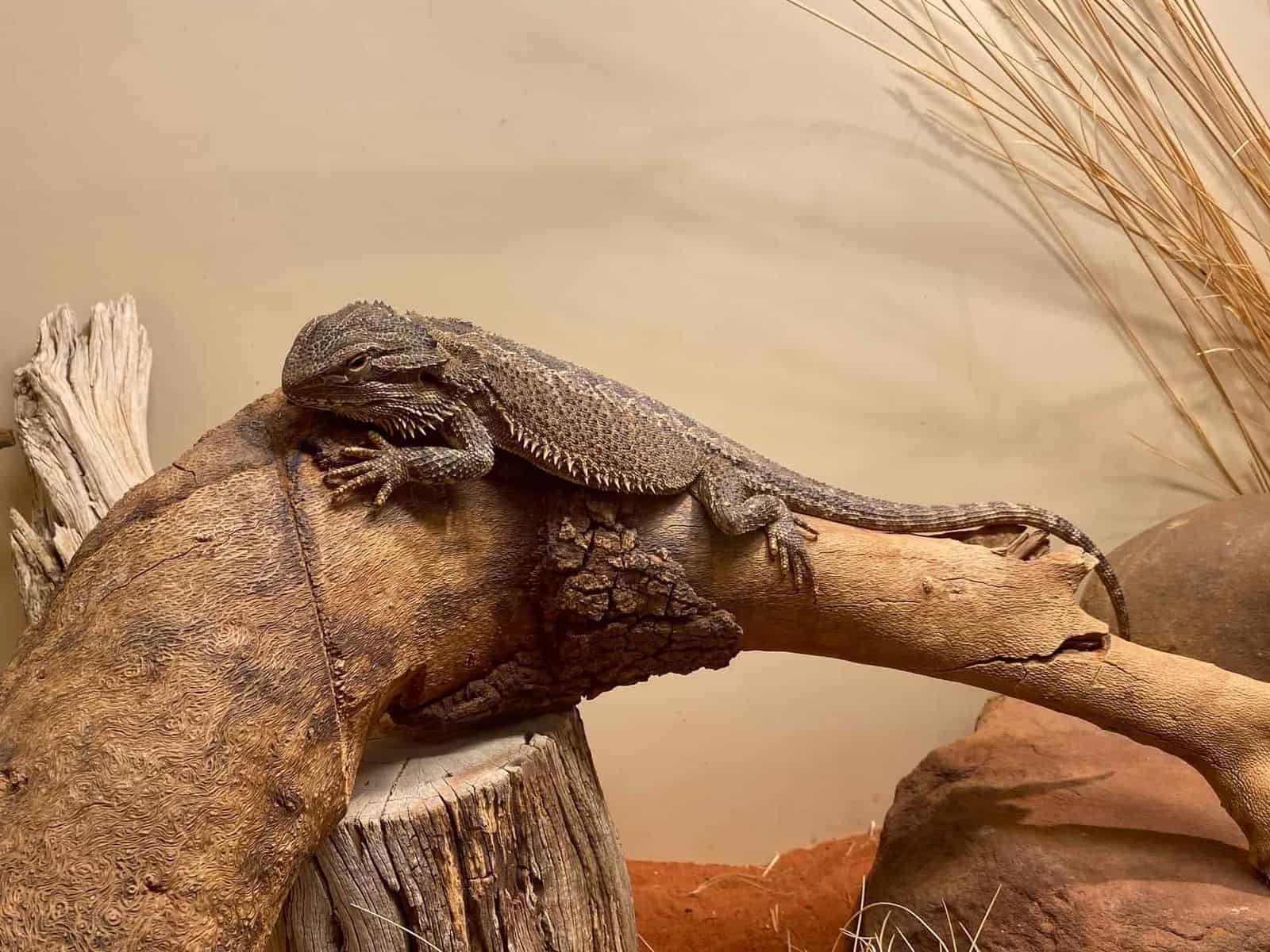
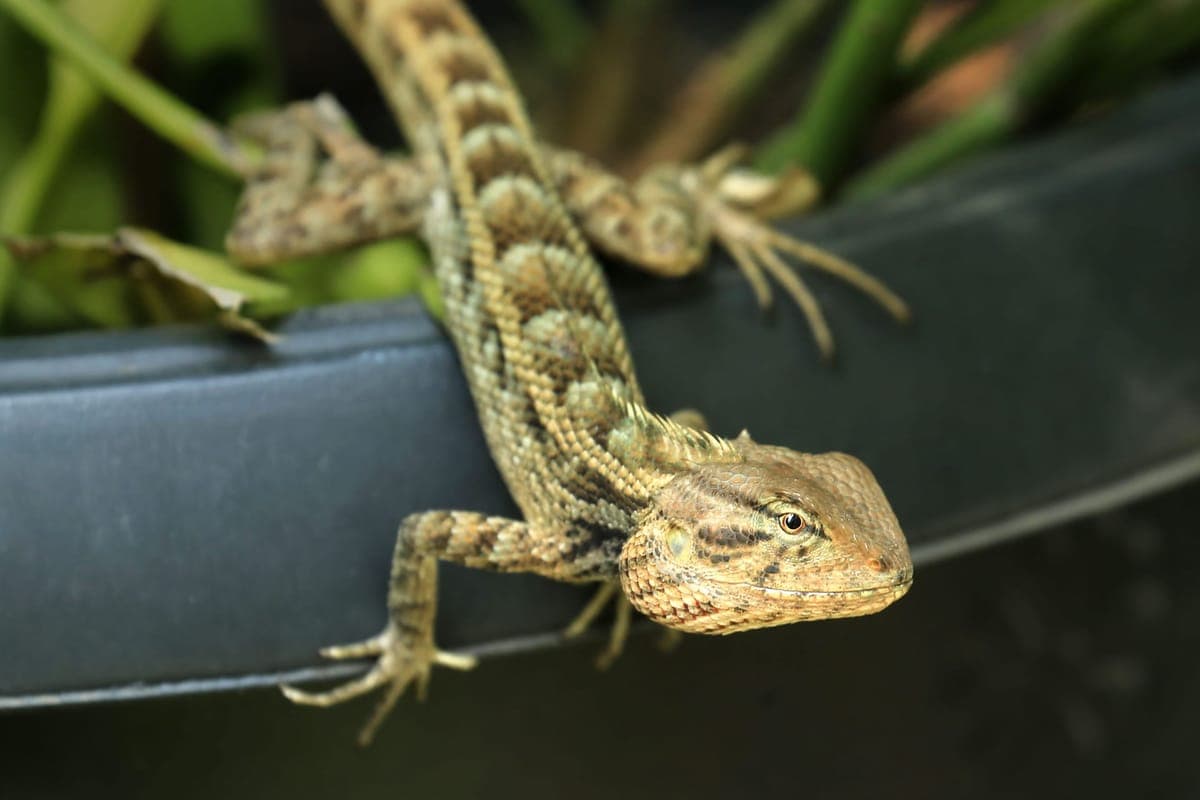
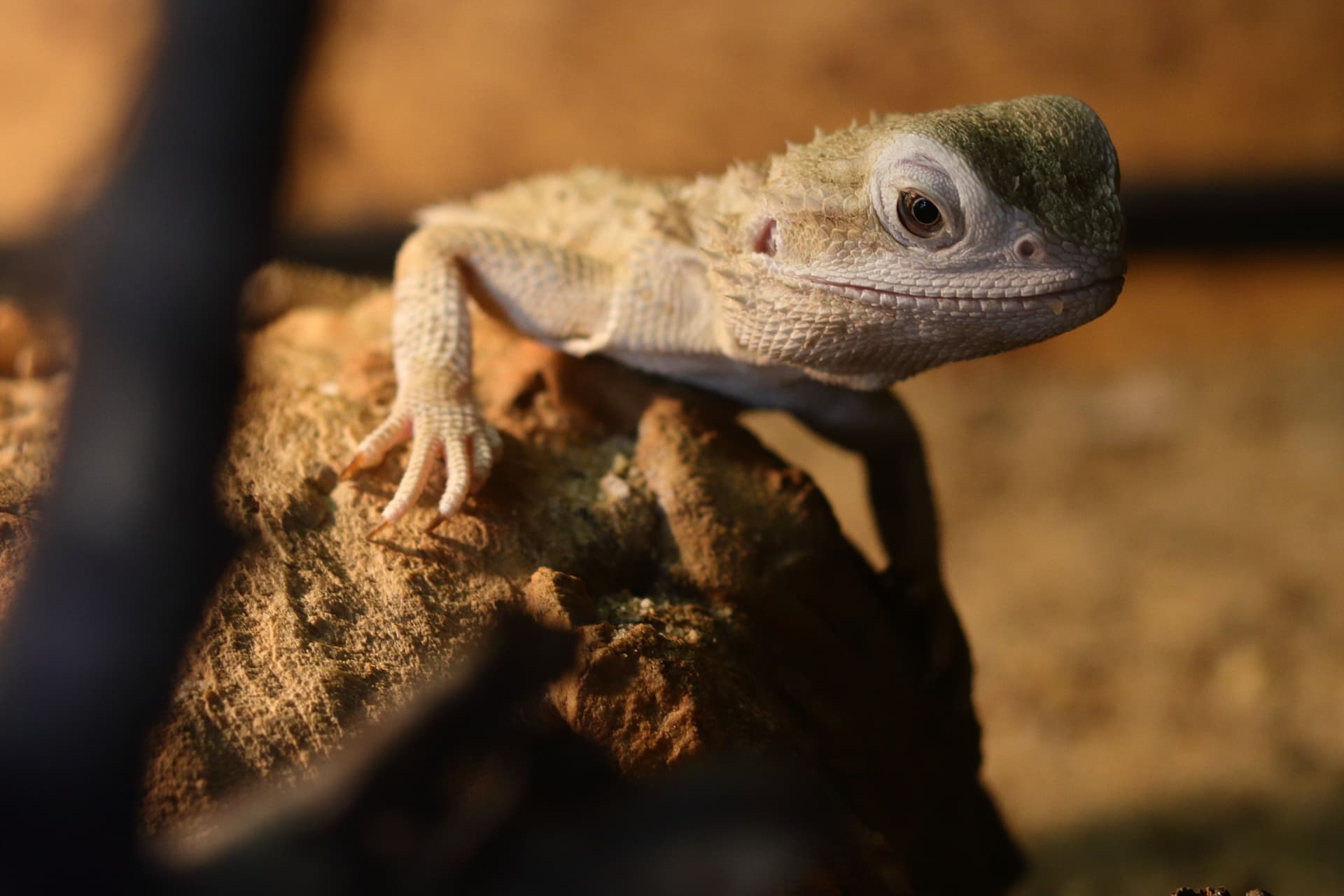
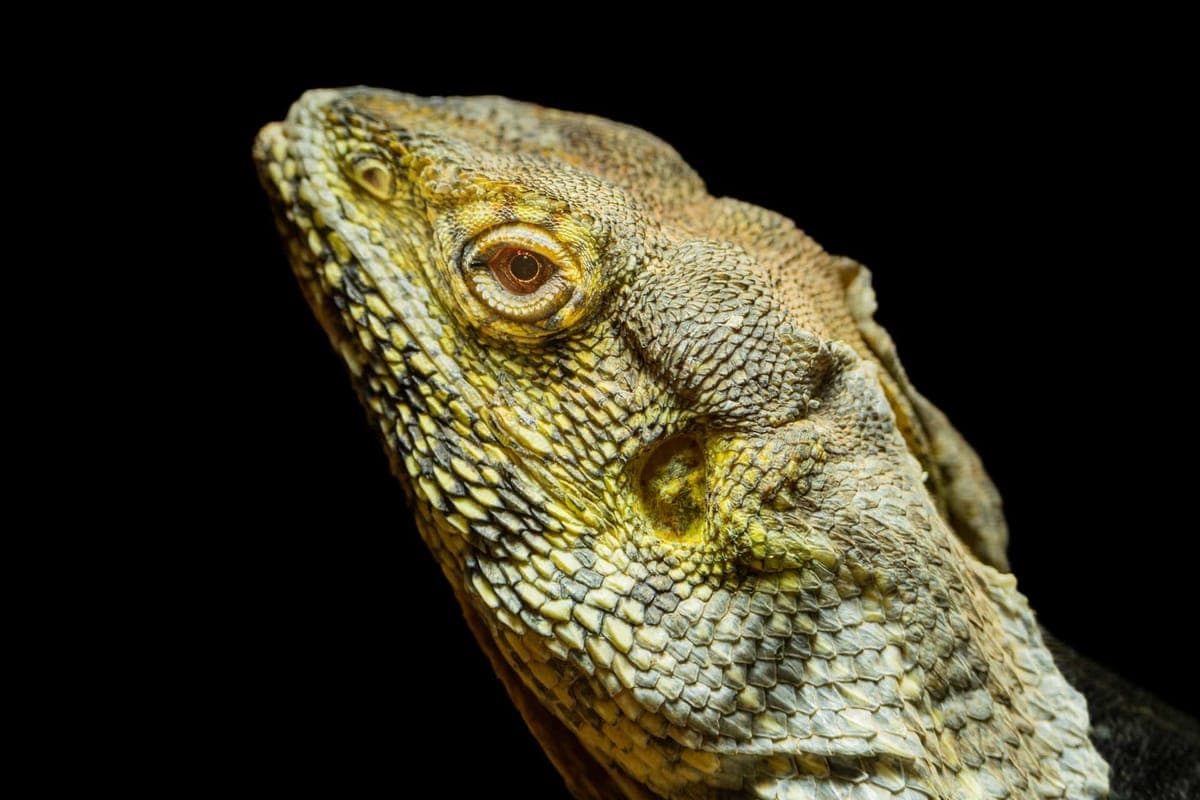
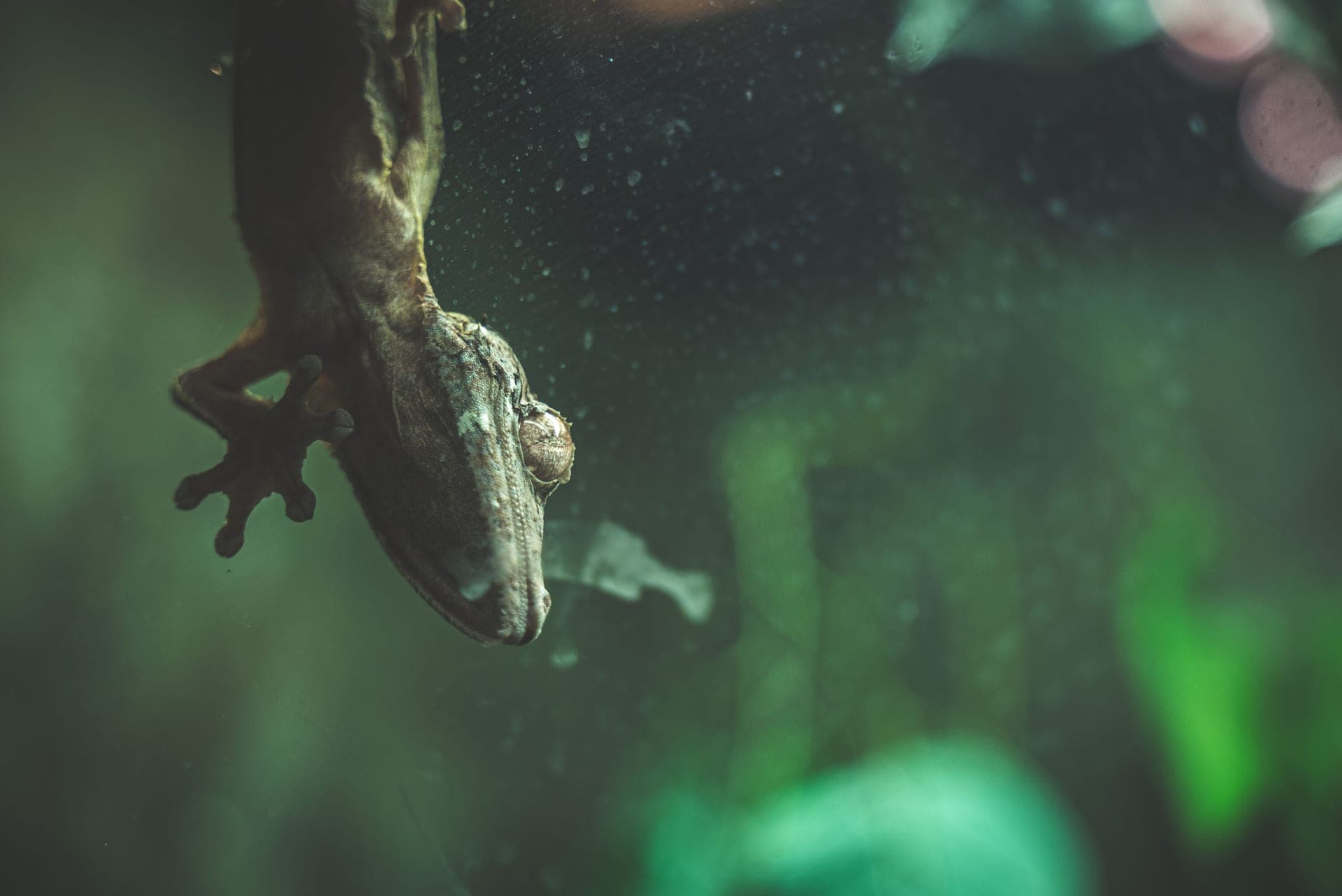
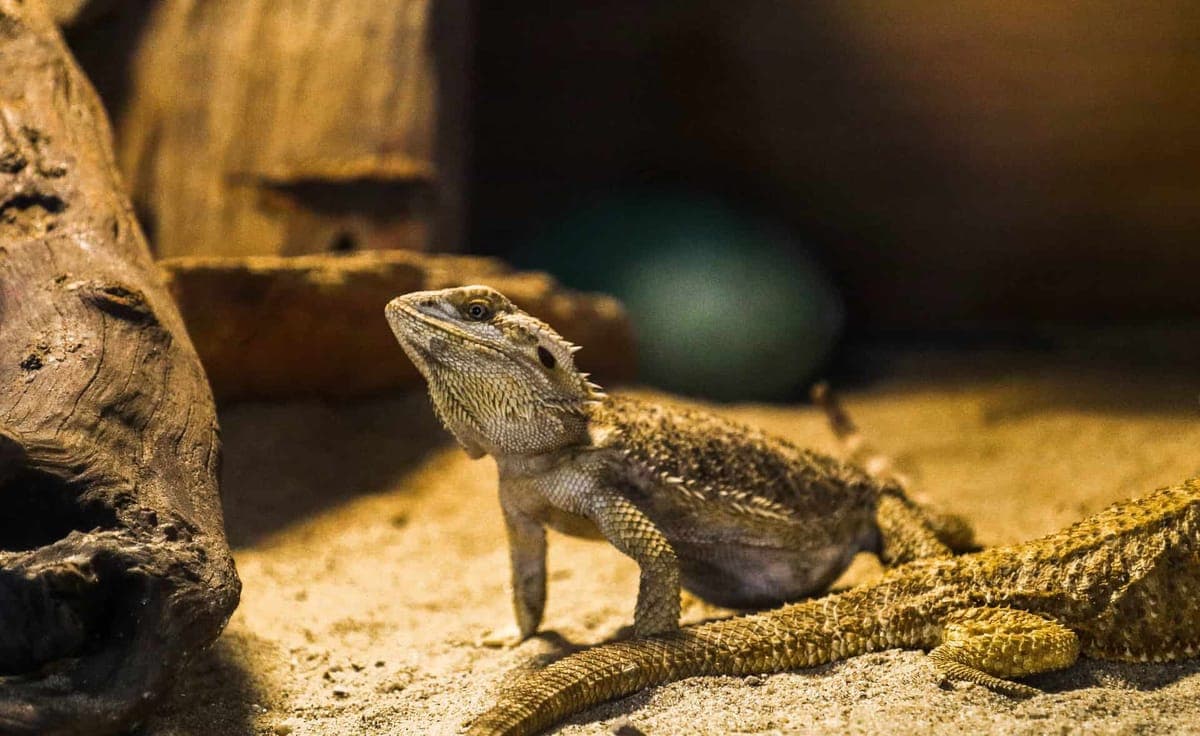
A bearded dragon is a diurnal, open-sun basking desert lizard with an average total length of 19 to 23 inches. Almost everything that goes wrong in captivity traces back to one of three numbers being wrong: the footprint, the basking surface temperature, or the UV index at the spot the animal actually lies on. Get those three right and most of the husbandry arguments online stop mattering.
The three decisions that matter
Footprint. This is where the published sources openly disagree, and we would rather show you the disagreement than pick quietly. ReptiFiles now sets the adult minimum at 6 ft long by 2 ft deep by 2 ft tall, or 24 cubic feet of internal volume, on the reasoning that the enclosure should be about three times the lizard's total length and 24 inches tall. That is a deliberate escalation: the same source records the standard rising from 36 x 18 x 18 in, to 48 x 18 x 21 in, to 48 x 24 x 24 in over the years, and argues the 4x2x2 is still not quite enough. Meanwhile 4x2x2 is what the US market sells, what most keepers run, and what the same source accepts for individuals that stay under about 18 inches. Our position: 4x2x2 is the floor you should not go below, 6x2x2 is the target for a full-size adult, and anyone telling you a 40-gallon breeder is fine for an adult is working from a standard that was abandoned twice.
Heat, measured at the surface. The published basking figure is a surface temperature of 108-113 F (42-45 C) surface temperature, not an air temperature. That number is not arbitrary: it comes from work showing the optimum core body temperature of a central bearded dragon is about 97.3 F, which requires a basking site in that 108 to 113 F band to reach. The same source notes the basking surface does not need to exceed 122 F, because beyond that you are heating the whole enclosure rather than the animal. You cannot set this with a stick-on dial thermometer. You need an infrared gun pointed at the rock, plus a probe for the air gradient.
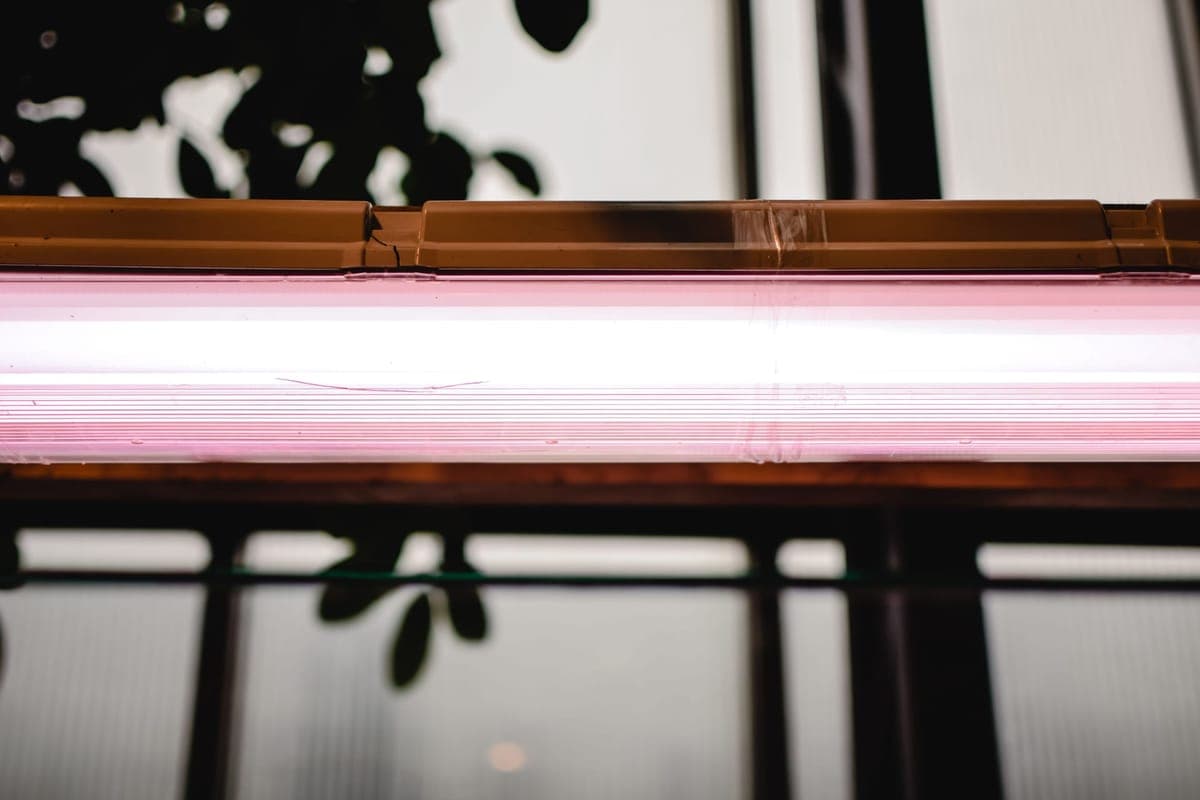
UVB, measured as UVI. Bearded dragons sit at the top of Ferguson Zone 3, occasionally into Zone 4, and the published basking target is UVI 4.0-4.5 at the basking surface. Wattage tells you nothing about this. Percentage tells you something only in combination with a mount distance and a mesh correction. The source we cite publishes both: an Arcadia T5 HO Desert 12% sits about 11 inches above the basking surface through mesh, or 16 to 17 inches with no mesh; the 14% Dragon lamp moves to 11 to 12 inches through mesh. Those figures assume roughly a 45% mesh block, which is why a meter is the only way to be certain. One more rule that catches people: a fixture with a glass or plastic shield over the lamp blocks UVB completely. A naked tube is the working tube.
Where new keepers lose money
The common failure is buying a kit. A starter kit bundles an undersized tank, a coil UVB bulb that cannot hold a Zone 3 target across a basking zone, and no thermostat. You then replace all three. The cheaper path is to buy the enclosure at the size the adult will need, one linear T5 HO fixture with a lamp matched to your mount distance, a halogen basking lamp on a dimming thermostat, and the measuring tools. Substrate and decor can wait a week; a correct thermal gradient cannot.
On substrate, this site follows the evidence rather than the folklore. Loose sand is widely called the devil's substrate, but a review of the published guidance points at a 2017 retrospective study of 529 captive bearded dragon patients in which, despite most animals being housed on loose substrate, very few were impacted - and most of the impaction cases were already sick with parasites or metabolic bone disease. The substrates to actually avoid by name are calcium sand and vitamin sand, which clump because of their calcium carbonate content, plus ground nut shell and wood products. A burrowable sand, soil and clay mix packed 4 to 6 inches deep is the recommendation, and we explain the mix on the substrate page below.
Shed & Bask earns a commission from qualifying Amazon purchases made through links on this page. It does not change what we recommend or the order we rank things in. Read the full disclosure.