Guides
Can you use a fish tank for a reptile?
Yes for one species at one size, no for the rest - and the limiting factor is almost never whether it holds water. It is the shape, the lid and where the lamp has to go.
By Brijon M.Last updated
Yes - for a leopard gecko, in a tank with a footprint of at least 36 x 18 x 18 in with at least 4.5 sq ft of floor space, once you have added a secure mesh lid, a lamp mount above it and accepted that you will be reaching in from the top. No for a crested gecko (wrong shape), a ball python (cannot hold the humidity range) or an adult bearded dragon (no aquarium is 6 ft L x 2 ft W x 2 ft H (1.8 x 0.6 x 0.6 m), or 24 cubic feet of internal volume). A 10 or 20 gallon tank is too small for any of the four.
Shed & Bask earns a commission from qualifying Amazon purchases made through links on this page. It does not change what we recommend or the order we rank things in. Read the full disclosure.
The honest answer, by species
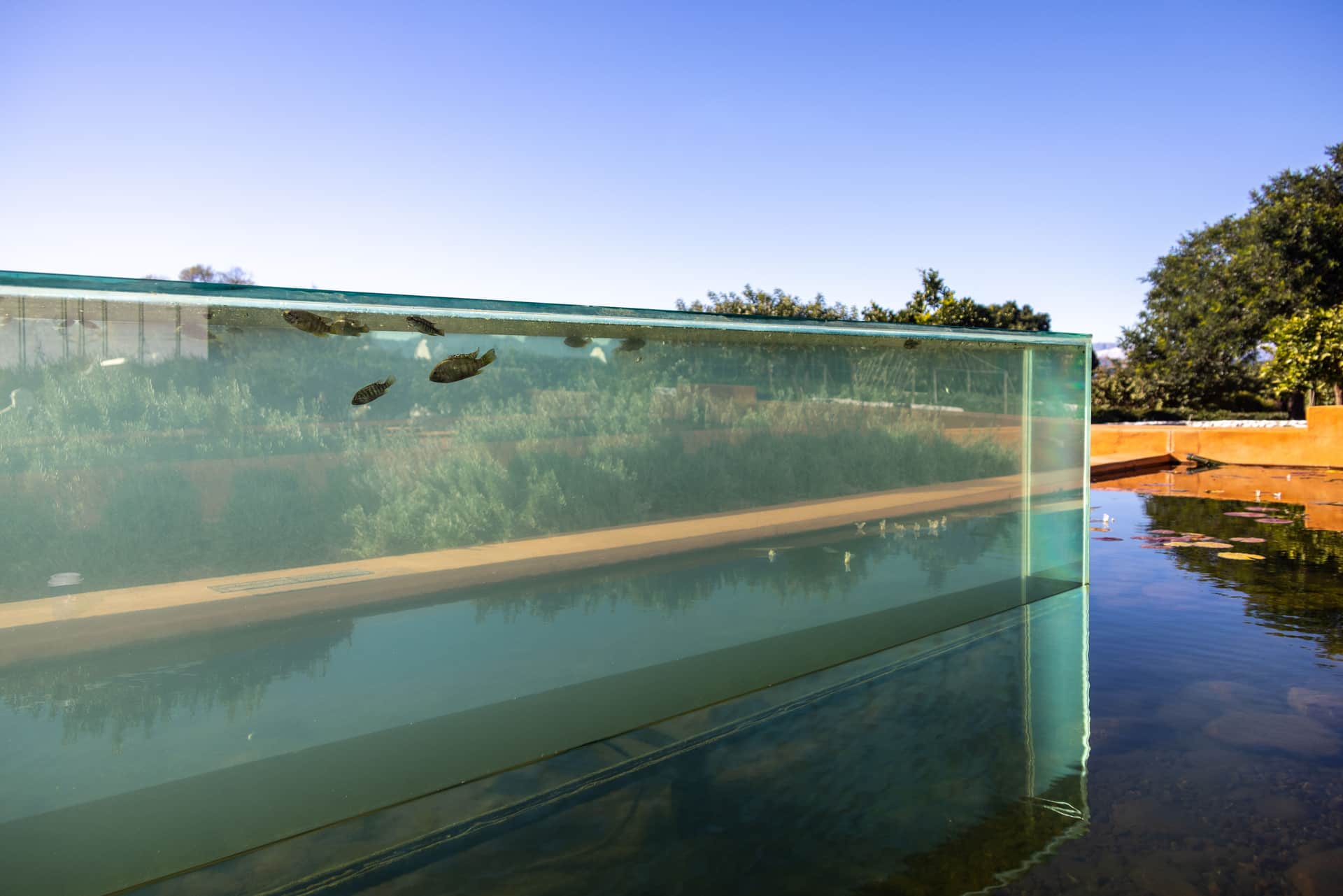
An aquarium is a glass box, and a glass box is a legitimate reptile enclosure - we recommend front-opening glass terrariums on this site for exactly that reason. What makes an aquarium different is not the material. It is three design decisions made for fish: it opens from the top, it is built to be watertight rather than ventilated, and its proportions favour height and water volume over floor length.
| Species | Published adult minimum | Verdict | The blocker |
|---|---|---|---|
| Leopard gecko | 36 x 18 x 18 in with at least 4.5 sq ft of floor space | Yes, at 36 in or longer | None that cannot be fixed - a 36 in tank meets the footprint |
| Bearded dragon | 6 ft L x 2 ft W x 2 ft H (1.8 x 0.6 x 0.6 m), or 24 cubic feet of internal volume | No, for an adult | No aquarium is made at this volume in this shape |
| Ball python | 48 x 24 x 24 in (120 x 60 x 60 cm), about 8 sq ft of floor area | No | A mesh lid cannot hold the humidity a shed needs, and a snake will test every edge |
| Crested gecko | 18 x 18 x 36 in for juveniles and adults over 12 g | No | Wrong shape - an arboreal gecko needs the height an aquarium puts into water volume |
So there is one real yes on that list. If you have a leopard gecko and a 36 in or longer aquarium, you have a usable enclosure once you convert it. Everything else is either the wrong shape or too small.
The three conversions, and what each costs you
1. A secure mesh lid. Not the glass hood that came with it - a glass lid traps humidity, blocks all UVB, and turns the tank into a greenhouse under a lamp. You need a metal mesh screen lid that clips or locks down. Expect to buy it; the aquarium lid is not adaptable.
2. A lamp mount above the mesh. An aquarium has no fixture rail, so the lamp sits on the mesh or on a stand above it, and your mount distance is whatever that geometry gives you. That distance then has to be checked against the species UVI target - UVI 0.5-1.5 at the basking spot for a leopard gecko - through roughly a third of mesh loss. UVB distance and Ferguson zones has the arithmetic, and best UVB for leopard geckos has the lamp.
3. Accepting top access permanently. This is the conversion you cannot make. Every care reference prefers front-opening access, because a hand descending from above is what a predator looks like to a small animal that is prey to birds. You can mitigate it - approach slowly, from the side, at the cool end - but you cannot cut doors into a tank whose structural integrity depends on its glass panels being whole. If the animal is nervous or new, this matters more than the saving.
Why a 10 or 20 gallon tank is not the answer
This is where most of the harm in this question actually sits, because the aquariums people already own are small ones. A 10 gallon is 20 x 10 x 12 in. A 20 gallon long is 30 x 12 x 12 in. Against a published leopard gecko minimum of 36 x 18 x 18 in with at least 4.5 sq ft of floor space, both are undersized, and no amount of clever furnishing changes a floor dimension.
A tank that small also makes a thermal gradient nearly impossible. The species needs a warm surface and a cool side at 70-77 F (21-25 C) at the same time, and 20 inches of length is not enough distance for a lamp to create both. Best enclosures for baby reptiles covers the narrow grow-out case honestly, and leopard gecko tank size has the figures by life stage.
What it actually saves, and what it costs
The honest accounting: using a tank you already own saves the price of the enclosure and nothing else. You still buy the mesh lid, the lamp, the fixture, the thermostat, the substrate and the meters - and a purpose-built front-opening terrarium at the same footprint is usually not far above the cost of the lid plus a stand once you have added it all up. What the purpose-built enclosure buys you is front access, a fixture that mounts properly and a lid designed for the job.
Where the aquarium genuinely wins is the case where you own it, the footprint is right, and the alternative is waiting. A correctly converted 36 in tank with the right lamp and a thermostat is a better home than a perfect terrarium that has not been bought yet.
The purpose-built version of the same idea
REPTI ZOO Front-Opening Glass Terrarium
A front-opening glass terrarium in 36 x 18 x 18 in - the same material and footprint as a converted tank, with doors instead of top access and a lid built for a lamp.
If your species is arboreal
Exo Terra Glass Terrarium 18 x 18 x 36
18 x 18 x 36 in matches the published crested gecko adult minimum exactly, which is the shape no aquarium is made in.
If your species needs humidity or a bigger footprint
Zen Habitats 4x2x2 PVC Reptile Enclosure
48 x 24 x 24 in PVC - the material that holds a humid range, and the footprint class an aquarium does not reach.
For the wider glass comparison, see best reptile tanks, and for the format landscape overall types of reptile enclosures.
Frequently asked questions
Can you use a fish tank as a reptile enclosure?
Yes, if the footprint meets your species published minimum and you add a secure mesh lid and a lamp mount. The permanent trade-off is top access, which every care reference prefers you avoid. For a leopard gecko in a 36 in or longer tank it works; for the other three species on this site it does not.
Is a 20 gallon fish tank big enough for a reptile?
No, for any of the four species we cover. A 20 gallon long is 30 x 12 x 12 in against a leopard gecko minimum of 36 x 18 x 18 in with at least 4.5 sq ft of floor space, and it is too short to build a thermal gradient in.
Do I need to seal a fish tank before using it for a reptile?
Only if a seam has failed. Check every internal corner for lifting silicone; if one has gone, strip it to clean glass and re-run it with 100% silicone containing no mildewcide. Otherwise clean it with hot water and no detergent.
Can I put a reptile lamp on a fish tank?
On a metal mesh screen lid, yes. Never on the glass hood that came with the aquarium - glass blocks UVB completely and traps heat. Check the resulting mount distance against your species UVI target rather than assuming it.
Is a fish tank or a terrarium better for a reptile?
A terrarium, because it front-opens and its lid is built to take a lamp. The aquarium is the right answer only when you already own one at a footprint that meets the species minimum and the alternative is housing the animal in something smaller.
Sources
- Leopard Gecko Terrarium Size & Lighting Requirements — ReptiFiles
- Leopard Gecko Temperatures & Humidity — ReptiFiles
- Crested Gecko Terrarium Size & Cohabitation Notes — ReptiFiles
- Ball Python Terrarium Size & Lighting — ReptiFiles
- Bearded Dragon Terrarium Size Requirements — ReptiFiles
Read next
Hub
Reptile enclosure guides and comparisons
The cross-species decisions: what material to buy, how big it has to be, whether to build it yourself, and which beginner mistakes are expensive.
Guides
Best reptile tanks
Glass tanks and their PVC alternatives scored on published footprint, humidity retention and lamp mounting - with the species line that decides which material you want.
Guides
Types of reptile enclosures
The six enclosure form factors compared on humidity, lamp mounting and which species each one suits.
Guides
Best enclosures for baby reptiles, and when to skip the grow-out
Hatchling enclosures split into the grow-out route and the buy-once route, with the clutter rule that makes buy-once work.
Leopard gecko
Leopard gecko tank size
Leopard gecko tank sizes by life stage, in floor area rather than gallons.
Substrate & safety
How to seal a reptile enclosure
The sealing sequence for a wooden, plywood, PVC or foam enclosure - prep, panel coating, seams, cure - with the products for each layer.