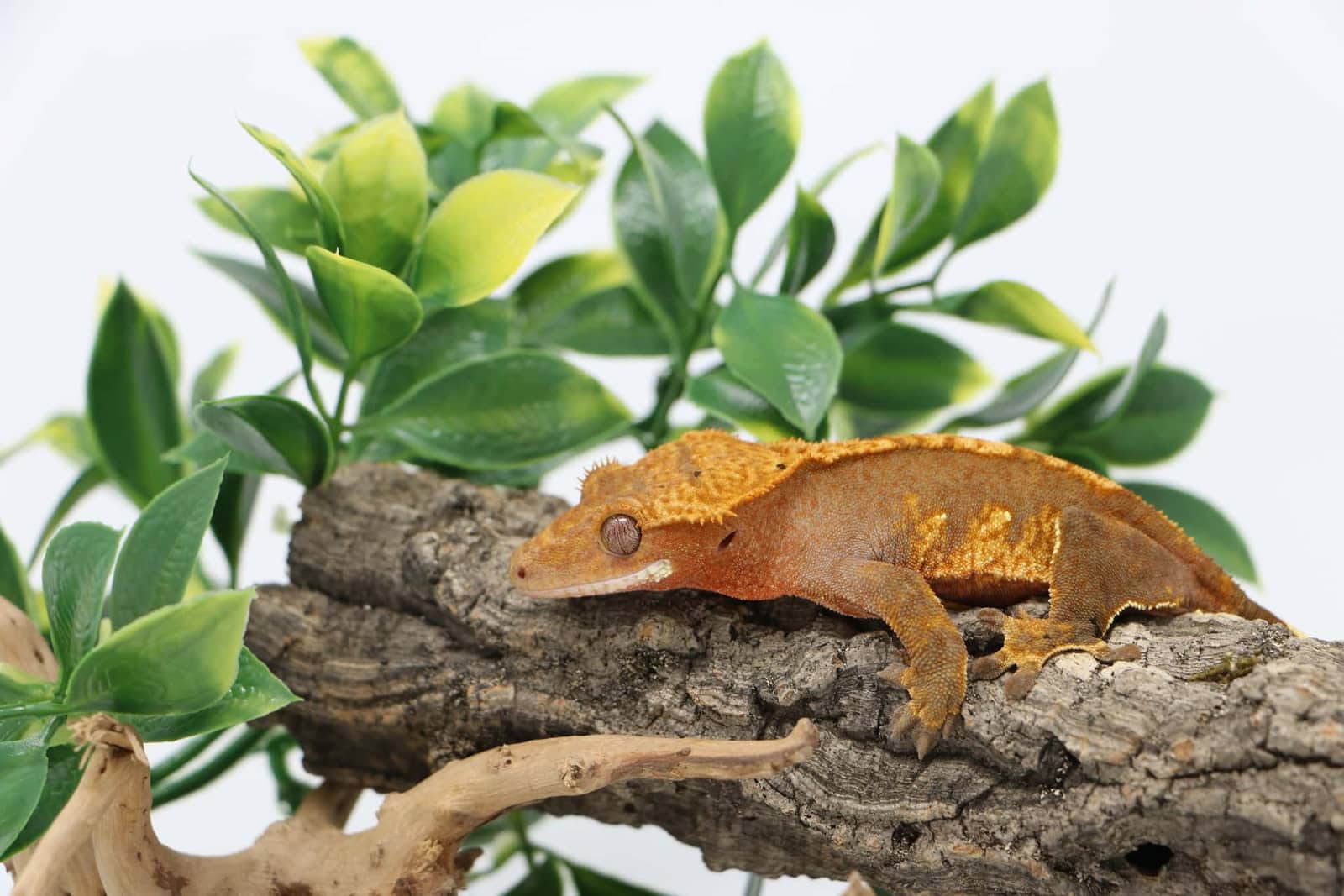
Crested gecko
Crested gecko UVB setup
Low output, mounted above the mesh, measured to the branch rather than the floor - and a specific warning about hatchling cages.
By Brijon M.Last updated
Target UVI 1.0-2.0 at the basking branch at the basking branch. A 12 inch Arcadia ShadeDweller 7% sits 8 to 12 inches above the branch, or a 24 inch ShadeDweller Max 2.5% at 6 to 9 inches, with the lamp above the mesh and about a 35% mesh block assumed. Photoperiod 14 hours in summer, 10 hours in winter.
Shed & Bask earns a commission from qualifying Amazon purchases made through links on this page. It does not change what we recommend or the order we rank things in. Read the full disclosure.
How we picked
Every pick below is scored against these thresholds, stated as numbers. Publishing them is the point: of the competitor roundups we surveyed, not one published a numeric selection threshold.
Can hit the species UVI target
Reaches the Ferguson zone basking figure for the species at a distance the enclosure actually allows - UVI 4.0-4.5 for a bearded dragon, 2.0-3.0 for a ball python, 0.5-1.5 for a leopard gecko
Source: ReptiFiles - Bearded Dragon Temperatures & UVB Requirements
Manufacturer or care reference publishes a mount distance
A stated distance in inches, with a mesh correction, not just a percentage on the box
Source: ReptiFiles - Bearded Dragon Temperatures & UVB Requirements
Linear tube, not a compact coil
T5 HO or T5 SO linear tube, so output covers a basking zone rather than a point
Source: ReptiFiles - Bearded Dragon Temperatures & UVB Requirements
Usable in an unshielded fixture
No glass or plastic over the lamp - both block UVB completely
Source: ReptiFiles - Bearded Dragon Temperatures & UVB Requirements
Stated replacement interval
12 months for a T5 fluorescent, regardless of whether visible light continues
Source: ReptiFiles - Bearded Dragon Temperatures & UVB Requirements
These are the same criteria every roundup on this site applies. See the full methodology.
Quick picks
Every row is scored against the published criteria below. Tap a row to read the full write-up.
| # | Product | Best for | Criteria met | Price |
|---|---|---|---|---|
| 1 | 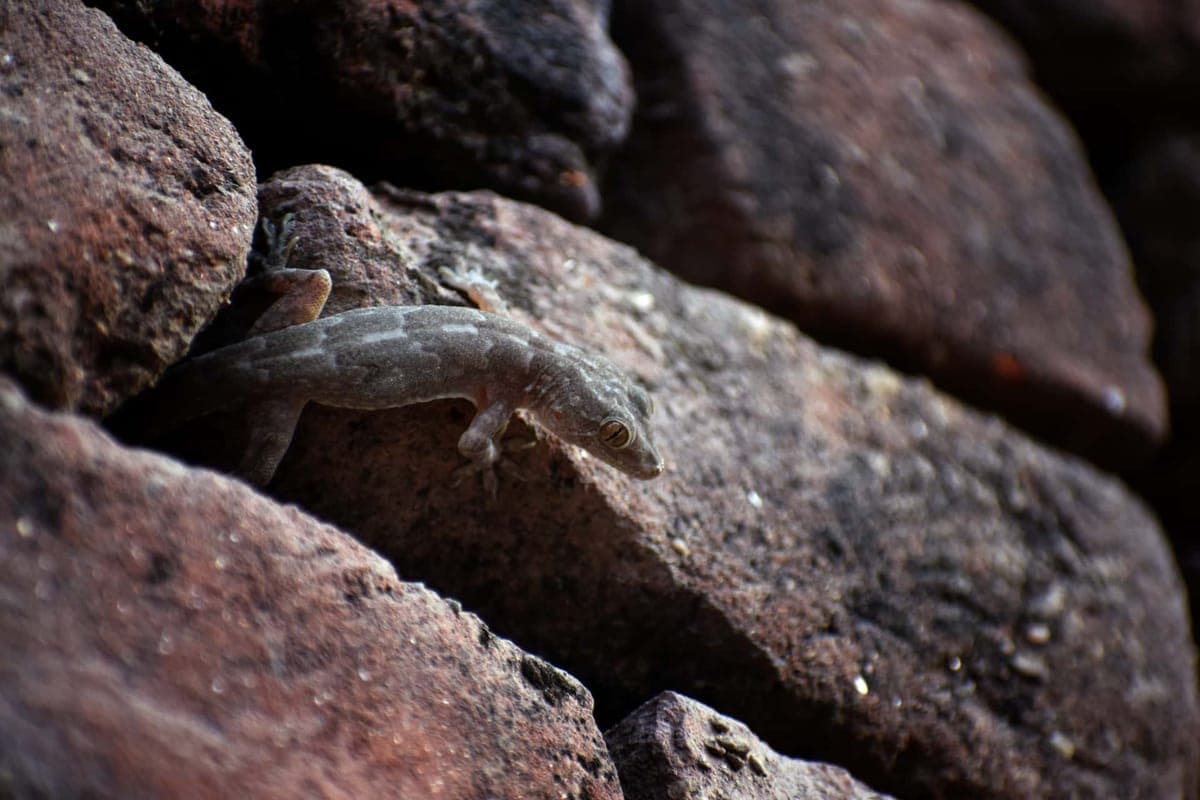 Arcadia ShadeDweller ProT5 Kit (7% UVB) Best for an adult crested gecko | Leopard geckos and crested geckos | 5/5 | Check price on Amazon#ad We may earn a commission. Price and stock are resolved at Amazon. |
| 2 |  Arcadia ShadeDweller Max 2.5% UVB Lamp The lower-output option | Albino, patternless and other reduced-pigment geckos | 5/5 | Check price on Amazon#ad We may earn a commission. Price and stock are resolved at Amazon. |
| 3 |  Solarmeter Model 6.5 UV Index Meter To confirm the branch reading | Verifying that your lamp actually hits the species UVI target | 3/5 | Check price on Amazon#ad We may earn a commission. Price and stock are resolved at Amazon. |
Is UVB required?
Not strictly. A crested gecko can live on a high-quality prepared diet without UVB, and the published guidance says as much - and then recommends UVB for all reptiles including crested geckos, on the grounds that there is a growing body of evidence it substantially increases health and quality of life for species previously thought not to need it. There is also the UVA argument: UVB bulbs emit UVA, which reptiles perceive as an additional color.
The full answer is on the dedicated page. This page is about how to set it up.
The distances
| Lamp | Distance to basking branch | Assumption |
|---|---|---|
| 12 in Arcadia T5 SO ShadeDweller 7% | 8-12 in / 20-30 cm | About 35% mesh block |
| 24 in Arcadia T5 SO ShadeDweller Max 2.5% | 6-9 in / 15-23 cm | About 35% mesh block |
The measurement is to the branch, not to the substrate. That sounds obvious and is the most common error in an arboreal setup, because the gecko's resting position may be 20 inches above the floor. It also means the distance changes whenever you move the hardscape - which is a reason to take a reading after rearranging rather than assuming the setup is unchanged.
Photoperiod
14 hours in summer, 10 hours in winter, preferably with gradual transitions in between. This helps regulate circadian rhythms and seasonal cycling and improves activity, appetite and overall health. The seasonal swing for this species is large - 14 hours down to 10 - and it costs nothing but a timer.
Nothing at night
The guidance is direct: do not bother with black, blue or red light bulbs for night viewing or supplemental heat. Crested gecko eyes function perfectly in the dark, and providing light at night can disrupt the day-night rhythm. Nightly temperature drops are healthier than providing heat at night anyway.
The rules that apply to every lamp
- No glass or plastic over the lamp - both block UVB completely.
- Linear tube for an adult; the hatchling compact bulb is a specific exception.
- Replace the tube every 12 months regardless of visible output.
- Measure to the resting position, not to the floor.
The standard adult choice
Arcadia ShadeDweller ProT5 Kit (7% UVB)
12 in 7% lamp at 8-12 in above the branch. Matched kit, so the fixture is not a variable.
Worth it in an arboreal setup
Solarmeter Model 6.5 UV Index Meter
Branches move, and the distance that matters is to the gecko's resting spot. A reading beats an estimate when the geometry is not fixed.
The picks in full
1. Best for an adult crested gecko
Arcadia ShadeDweller ProT5 Kit (7% UVB)
Arcadia Reptile · Leopard geckos and crested geckos
A 12 inch ShadeDweller 7% sits 8 to 12 inches above the basking branch with the lamp above the mesh, assuming about a 35% mesh block. Sold as a matched kit, which removes the fixture guesswork that matters most at low output.
Specifications
- Output
- 7% UVB, T5 SO
- Leopard gecko (normal pigment)
- 10-18 in / 25-45 cm, about 30% mesh
- Crested gecko (12 in lamp)
- 8-12 in / 20-30 cm, about 35% mesh
- Replace
- Every 12 months
How it scored against our criteria
| Can hit the species UVI targetReaches the Ferguson zone basking figure for the species at a distance the enclosure actually allows - UVI 4.0-4.5 for a bearded dragon, 2.0-3.0 for a ball python, 0.5-1.5 for a leopard gecko | Meets |
|---|---|
| Manufacturer or care reference publishes a mount distanceA stated distance in inches, with a mesh correction, not just a percentage on the box | Meets |
| Linear tube, not a compact coilT5 HO or T5 SO linear tube, so output covers a basking zone rather than a point | Meets |
| Usable in an unshielded fixtureNo glass or plastic over the lamp - both block UVB completely | Meets |
| Stated replacement interval12 months for a T5 fluorescent, regardless of whether visible light continues | Meets |
What works
- Purpose-built for Zone 1 targets instead of a de-rated desert lamp
- Sold as a kit, so the fixture and lamp are already matched
- Published distances for both normal and reduced-pigment morphs
What to know
- Short tube lengths only, so it lights a zone rather than the whole enclosure
- Still needs a meter if you keep an albino
Who should look elsewhere
For an albino or patternless leopard gecko the ceiling drops to UVI 0.5-0.7. Use the ShadeDweller Max 2.5% at the published distance instead of this 7%.
2. The lower-output option
Arcadia ShadeDweller Max 2.5% UVB Lamp
Arcadia Reptile · Albino, patternless and other reduced-pigment geckos
A 24 inch Max 2.5% sits 6 to 9 inches above the branch. Useful when your branch placement cannot give the 7% lamp its distance, and the easier lamp to get wrong in the safe direction.
Specifications
- Output
- 2.5% UVB, T5 SO
- Leopard gecko (normal pigment)
- 8-14 in / 20-35 cm
- Leopard gecko (hypo pigment)
- 12-14 in / 30-35 cm
- Crested gecko (24 in lamp)
- 6-9 in / 15-23 cm
How it scored against our criteria
| Can hit the species UVI targetReaches the Ferguson zone basking figure for the species at a distance the enclosure actually allows - UVI 4.0-4.5 for a bearded dragon, 2.0-3.0 for a ball python, 0.5-1.5 for a leopard gecko | Meets |
|---|---|
| Manufacturer or care reference publishes a mount distanceA stated distance in inches, with a mesh correction, not just a percentage on the box | Meets |
| Linear tube, not a compact coilT5 HO or T5 SO linear tube, so output covers a basking zone rather than a point | Meets |
| Usable in an unshielded fixtureNo glass or plastic over the lamp - both block UVB completely | Meets |
| Stated replacement interval12 months for a T5 fluorescent, regardless of whether visible light continues | Meets |
What works
- Lets you provide UVB to a light-sensitive morph without risking a burn
- Published distances for both pigment classes
- Low enough output that small mounting errors are forgiving
What to know
- Output is low enough that distance errors in the other direction give you nothing
- Not a substitute for any Zone 2 or Zone 3 animal
Who should look elsewhere
A normally pigmented leopard gecko can use the 7% at a sensible distance and will get a more useful gradient from it.
3. To confirm the branch reading
Solarmeter Model 6.5 UV Index Meter
Solarmeter · Verifying that your lamp actually hits the species UVI target
The distance you care about is lamp-to-branch, and branches move. A reading at the resting spot the gecko actually uses is more useful here than in a fixed-platform setup.
Specifications
- Measures
- UV Index (UVI)
- Why this one
- Care references accept only the 6.5 / 6.5R for reptile UVI
- Use
- Measure at the basking surface, at the animal's back height
How it scored against our criteria
| Can hit the species UVI targetReaches the Ferguson zone basking figure for the species at a distance the enclosure actually allows - UVI 4.0-4.5 for a bearded dragon, 2.0-3.0 for a ball python, 0.5-1.5 for a leopard gecko | Meets |
|---|---|
| Manufacturer or care reference publishes a mount distanceA stated distance in inches, with a mesh correction, not just a percentage on the box | Meets |
| Linear tube, not a compact coilT5 HO or T5 SO linear tube, so output covers a basking zone rather than a point | Not published |
| Usable in an unshielded fixtureNo glass or plastic over the lamp - both block UVB completely | Meets |
| Stated replacement interval12 months for a T5 fluorescent, regardless of whether visible light continues | Not published |
What works
- Turns every distance chart on this site from an estimate into a measurement
- Catches a failing bulb that still produces visible light
- One purchase covers every enclosure you will ever own
What to know
- Costs more than the bulb it is checking
- Only useful if you actually use it on a schedule
Who should look elsewhere
If you will realistically never take a reading, spend the money on replacing bulbs on a 12-month calendar instead. An unused meter protects nothing.
Frequently asked questions
Do crested geckos need UVB?
Not strictly - they can live on a quality prepared diet - and the published guidance recommends it anyway, at UVI 1.0-2.0 at the basking branch at the basking branch.
How far should a UVB lamp be from a crested gecko?
8 to 12 inches above the basking branch for a 12 inch ShadeDweller 7%, or 6 to 9 inches for a 24 inch Max 2.5%, with the lamp above the mesh.
How many hours of light does a crested gecko need?
14 hours in summer, 10 hours in winter, preferably with gradual transitions.
Can you put a UVB light on a baby crested gecko tank?
Not directly on top of a small grow-out - the distance is too short and exposure can be dangerously high. Use a forest-strength compact bulb in a 5.5 inch dome on a lamp stand, off at night.
Sources
- Crested Gecko Temperatures & Humidity — ReptiFiles
- Crested Gecko Terrarium Size & Cohabitation Notes — ReptiFiles
- What Are Ferguson Zones? Reptile UVB Information — Zen Habitats
- Solarmeter Model 6.5 UV Index Meter — Solarmeter
Read next
Hub
Crested gecko terrariums, humidity and substrate
Arboreal, so height is the constraint. And the number most new keepers miss is the ceiling: sustained temperatures above 85 F cause heat stress.
Lighting & heat
Do crested geckos need UVB?
Recommended at UVI 1.0-2.0 at the basking branch, with a specific hatchling caution.
Lighting & heat
6 best reptile UVB bulbs (2026), judged by UVI at a stated distance
UVB bulbs ranked by whether they reach the species UVI target at a distance your enclosure allows.
Lighting & heat
UVB distance and Ferguson zones
Ferguson zones with published UVI ranges and the mount distance for every lamp class.
Lighting & heat
How many hours of UVB per day
Daily light and UVB hours by species, with the seasonal adjustment for each.
Crested gecko
Crested gecko enclosure ideas
Crested gecko decor organized by function, starting with climbing routes at height.