Crested gecko
Crested gecko enclosure ideas
An empty tall tank is functionally a small enclosure. For an arboreal animal, the structure is the habitat.
By Brijon M.Last updated
Shed & Bask earns a commission from qualifying Amazon purchases made through links on this page. It does not change what we recommend or the order we rank things in. Read the full disclosure.
Why structure counts as size
The published minimum asks for 36 inches of height because crested geckos are arboreal. But height only becomes usable space when there is something to climb on and rest in. A bare 18 x 18 x 36 in enclosure gives the gecko glass walls; the same enclosure furnished with cork, branches and broad foliage gives it a vertical landscape.
That is why we treat decor for this species as part of meeting the size requirement rather than as a separate aesthetic exercise.
The jobs
| Job | What it delivers | Typical item |
|---|---|---|
| Climbing routes | Vertical movement across the full height | Cork tubes, branches at varying angles, vines |
| Resting spots at height | Somewhere to sit at the warm end of the vertical gradient | A broad branch or cork flat near the top |
| Basking branch | A spot at 82-85 F (28-29 C) at the top of the enclosure, under the UVB at its distance | A stable branch positioned for the lamp distance |
| Daytime cover | Crested geckos hide behind leaves during the day | Broad-leaved live or artificial foliage |
| Humidity buffer | Slows the drying cycle near the floor | Moss and leaf litter top layer |
| Drinking surfaces | The gecko drinks misted droplets off walls and decor | Broad leaves and smooth surfaces |
| Egg-laying / retreat | A floor-level damp retreat | A moss box at substrate level |
Foliage is cover, not decoration
The published lighting guidance notes that cresties typically hide behind leaves during the day, which is part of why they are classified Ferguson Zone 1. Broad-leaved cover at multiple heights is therefore functional: it is what lets the gecko choose its light exposure as well as its temperature. A tank with branches and no foliage offers routes but no shade.
It is also the drinking surface. The gecko drinks droplets off the terrarium walls and decorations after misting, so broad leaves do a second job.
The floor layer
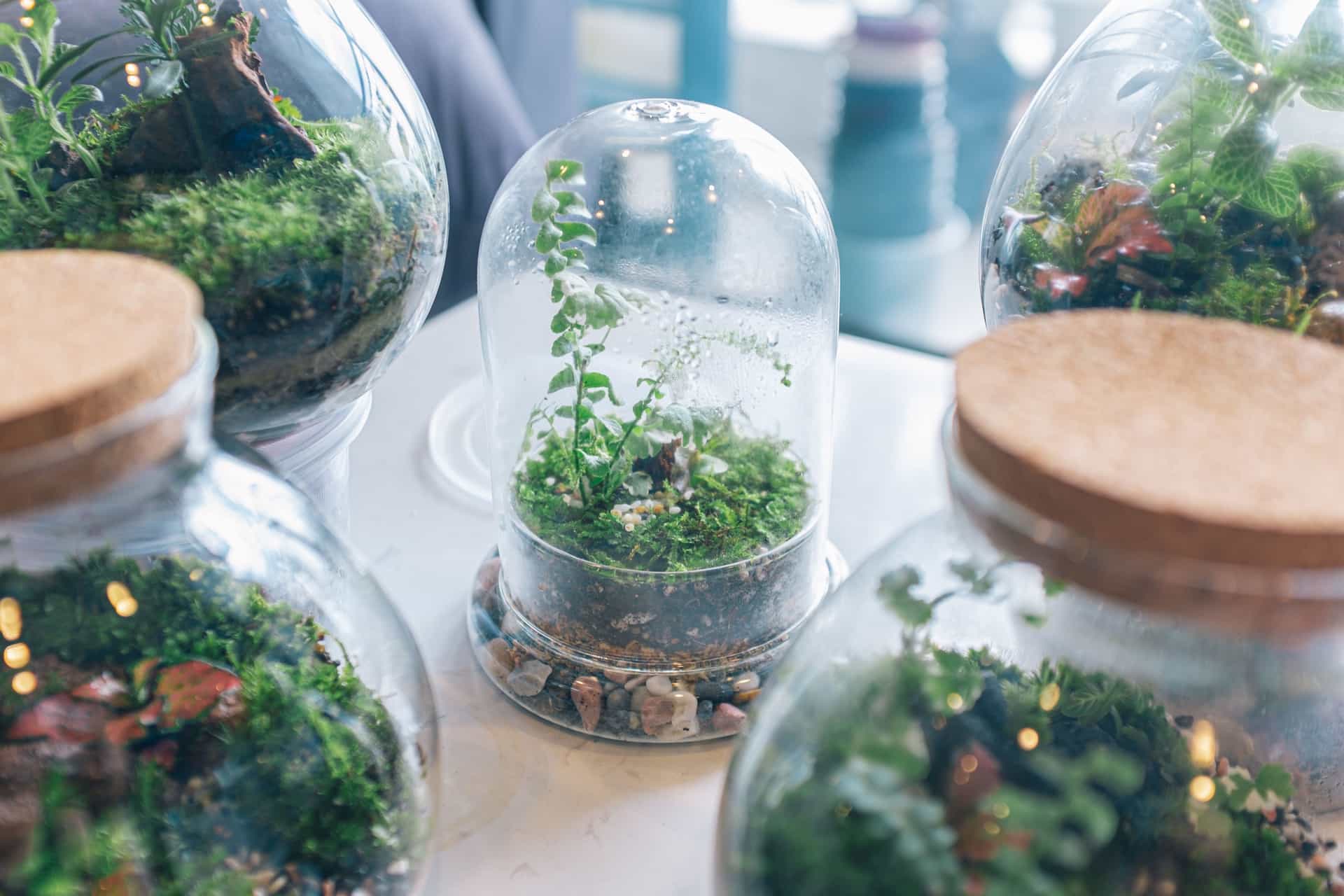
Sphagnum Moss
Buffers the humidity swing near the substrate, where it drops fastest in a tall enclosure, and gives a clean-up crew cover.
The basking branch, positioned for the lamp
This is the one piece of decor with a measurement attached. The UVB distance figures are lamp-to-branch: 8 to 12 inches for a 12 inch ShadeDweller 7%, or 6 to 9 inches for a 24 inch Max 2.5%, with the lamp above the mesh. Position the branch to give that distance, and check the temperature there too - the top of the enclosure is where the 85 F ceiling applies.
Live plants
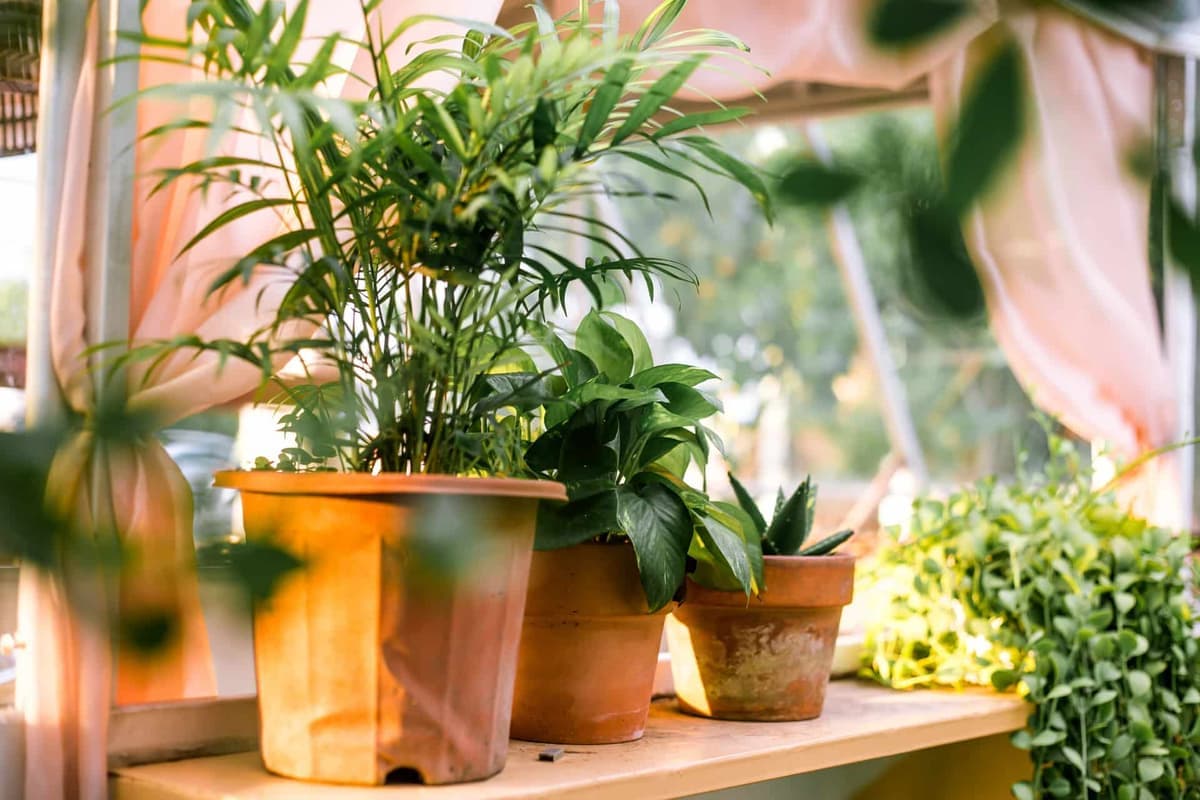
A good fit for this enclosure: they hold humidity, provide cover, and give the gecko surfaces to drink from. Check the species by botanical name against a toxicity reference, and handle the nursery pesticide question - bare-root, rinse, repot into clean substrate and quarantine the plant before it goes in. The safe plants guide covers both.
If you go planted and bioactive
The BioDude Terra Sahara Bioactive Substrate Kit
A bioactive-ready kit is built to support plants and a clean-up crew together. Choose the tropical line for a humid build rather than the arid one.
Secure everything
A branch that shifts under a climbing gecko is a fall risk, and in a tall enclosure a fall is a real one. Anchor branches mechanically rather than wedging them, and check the fixings at every clean.
The enclosure this assumes
Exo Terra Glass Terrarium 18 x 18 x 36
Tall front doors make installing and adjusting climbing structure straightforward, which matters because you will rearrange it more than you expect.
What to avoid
- An empty tall tank. The most common crested gecko setup error.
- Decor only in the lower third. The gradient is vertical, and the gecko needs routes to the top.
- Unsecured branches. A fall from height is a genuine injury risk.
- Painted or coated ornaments with no published data - and in a misted enclosure, coatings get wet daily. See the materials guide.
- Anything that blocks the UVB path between the lamp and the basking branch.
Frequently asked questions
What should I put in a crested gecko enclosure?
Climbing routes at multiple heights, a stable basking branch positioned for the UVB distance, broad-leaved cover, a moss and leaf litter floor layer, a water dish, and a damp moss retreat at substrate level.
Do crested geckos need plants in their enclosure?
Not strictly, but they suit the species well - they hold humidity, provide the behind-the-leaves cover crested geckos use during the day, and act as drinking surfaces. Check species toxicity and handle nursery pesticide residue first.
How do crested geckos drink?
Mostly from droplets on the terrarium walls and decorations after misting, which is why broad leaves and smooth surfaces matter and why a water dish alone is not sufficient.
Sources
- Crested Gecko Temperatures & Humidity — ReptiFiles
- Crested Gecko Terrarium Size & Cohabitation Notes — ReptiFiles
- Crested Gecko Substrate Options — ReptiFiles
- Toxic and Non-Toxic Plant List — ASPCA Animal Poison Control Center
Read next
Hub
Crested gecko terrariums, humidity and substrate
Arboreal, so height is the constraint. And the number most new keepers miss is the ceiling: sustained temperatures above 85 F cause heat stress.
Crested gecko
Crested gecko enclosure size
Crested gecko enclosure minimums by weight, and why height is the constraint.
Crested gecko
Crested gecko UVB setup
Crested gecko UVB targets and distances, the hatchling caution, and the photoperiod.
Crested gecko
Best substrate for a crested gecko terrarium
Crested gecko substrate options, the drainage layer, and why it has to dry back.
Substrate & safety
Non-toxic plants for reptile enclosures
How to check a plant species for toxicity, and why nursery pesticide residue is the bigger risk.
Crested gecko
Crested gecko temperature and humidity
The crested gecko temperature limits and the humidity cycle, with both failure modes.