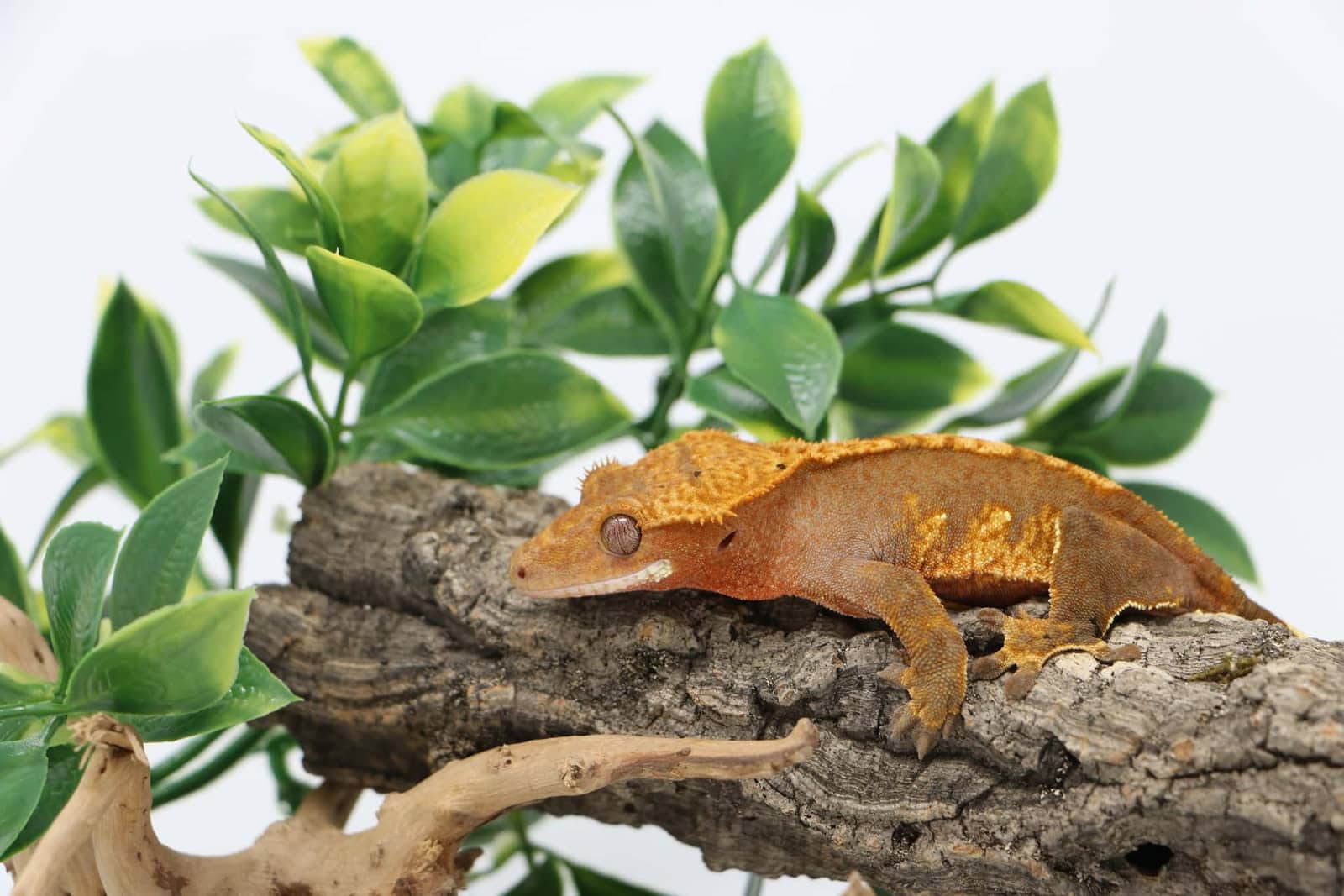
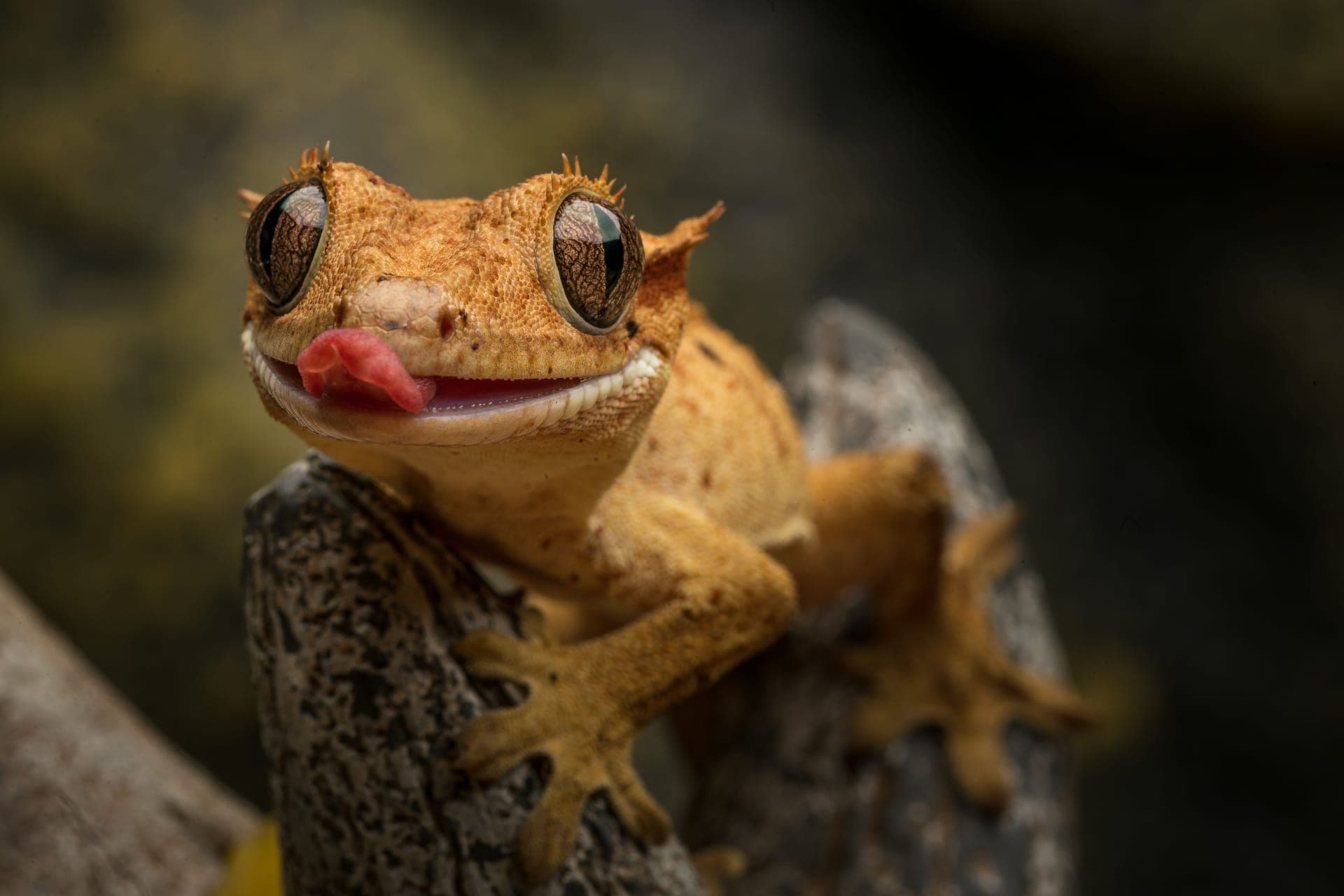
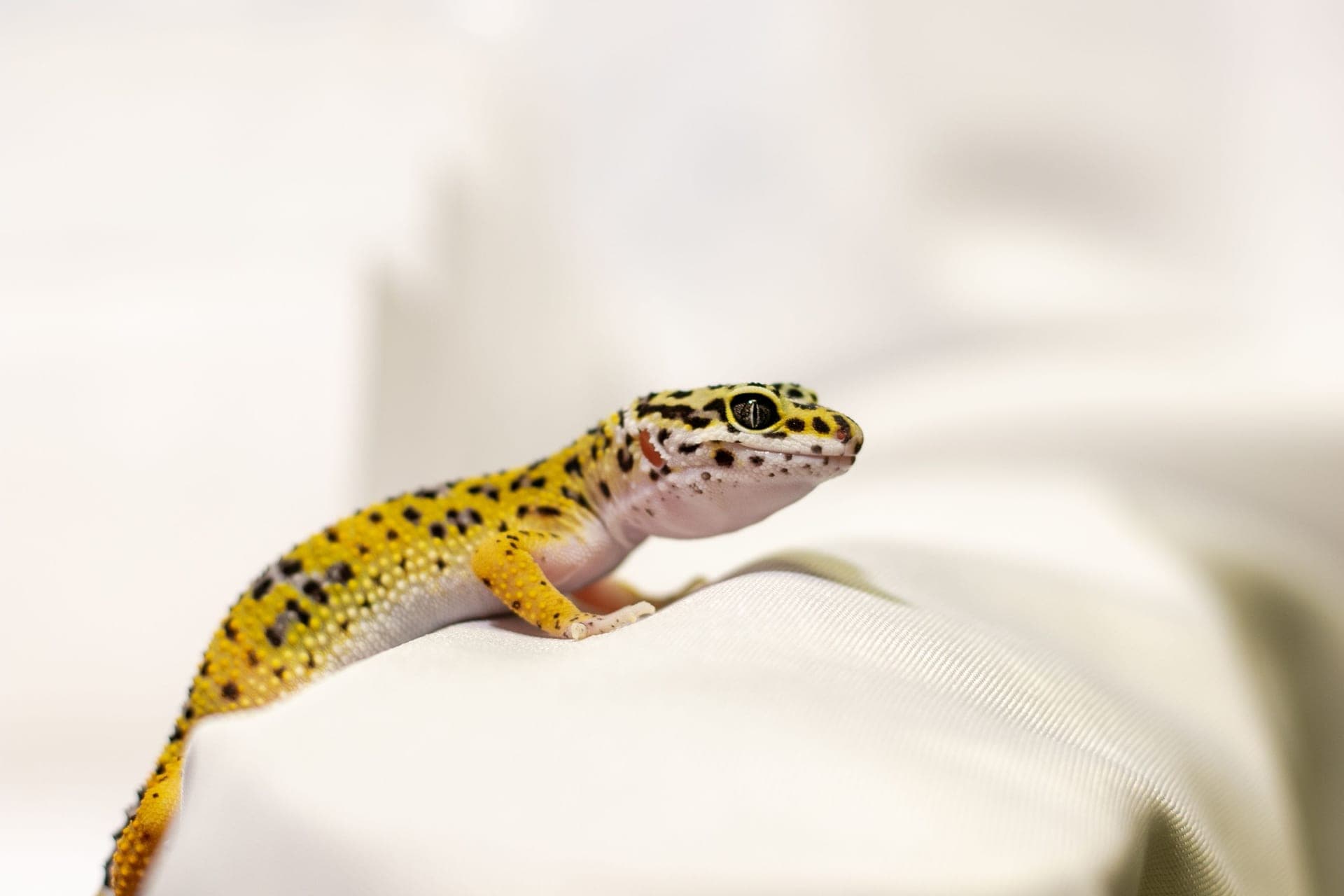
Crested geckos are crepuscular, arboreal geckos from New Caledonia, and they are the one species on this site where the risk is usually too much heat rather than too little. They are also the species most often sold with a setup that is the wrong shape: wide and short when it needs to be narrow and tall.
The three decisions that matter
Height. The published minimum for a juvenile or adult over 12 g is 18 x 18 x 36 in for juveniles and adults over 12 g, with hatchlings under 12 g in a 12 x 12 x 12 in grow-out so you can actually find them and monitor weight, per ReptiFiles. The 18 x 18 x 36 in figure is the exact dimension of a common tall glass terrarium, which makes this the easiest species on the site to size correctly - there is nothing to convert.
The temperature ceiling. This is the number that matters most and gets stated least. Target 82-85 F (28-29 C) at the top of the enclosure at the top of the enclosure and 70-75 F (21-24 C) at the bottom at the bottom, with nights at 65-72 F (18-22 C). The published guidance is explicit about both failure directions: sustained temperatures above 85 F can cause stress and heat stroke, and sustained temperatures at or below 72 F cause lethargy, poor appetite and illness. In a lot of US homes a crested gecko needs no supplemental heat at all for most of the year - and in a hot room it needs cooling, not a lamp. Check your room before you buy a heat source.
A humidity cycle, not a humidity level. The target is 60-80%, allowed to dry back to 40-50% between mistings. The second half of that sentence is the part people skip: constant moisture encourages mold and mildew, which makes geckos ill. Mist in the evening, let it dry back, mist again in the morning if needed. The gecko drinks droplets off the glass and the leaves, which is also why a water bowl alone is not enough.
UVB, and a hatchling warning
Crested geckos are Ferguson Zone 1, and the published basking target at the branch is UVI 1.0-2.0 at the basking branch. A 12 inch Arcadia ShadeDweller 7% sits 8 to 12 inches above the branch, or a 24 inch ShadeDweller Max 2.5% at 6 to 9 inches, assuming roughly a 35% mesh block with the lamp above the mesh rather than inside.
The hatchling warning is worth stating plainly: putting a UVB lamp on top of a tiny grow-out cage exposes the animal to dangerously high UV, because the distance is simply not there. For hatchlings the published advice is a forest-strength compact bulb in a 5.5 inch dome on a lamp stand, off at night - the one place on this site where a compact bulb is the right answer rather than the wrong one.
What to buy first
The 18 x 18 x 36 in terrarium, a probe thermometer and hygrometer, a moisture-retentive substrate, and climbing structure - cork, branches and broad foliage - before any lamp. Crested geckos use vertical space constantly, and an empty tall tank is functionally a smaller enclosure than a well-furnished short one. Heat is the last thing to add, and only after you have measured the room.
Shed & Bask earns a commission from qualifying Amazon purchases made through links on this page. It does not change what we recommend or the order we rank things in. Read the full disclosure.